Sarah Cameron for Oceana (oceana.ca) on ocean animals that naturally distance themselves. Our snorkel tours bring you up close and personal to the sea life off the Big Island.
What a strange moment in time. As we all adapt to the realities of social distancing, some marine animals have been doing it their whole lives. From rockfish to solitary whales, these animals can teach us that a little separation doesn’t necessarily have to be a bad thing.
Here are five ocean animals that are great at social distancing:
Polar bears
Polar bears are considered marine mammals because they depend on the ocean. However, they don’t depend on each other. Aside from cubs, who remain with their mothers for up to two years, polar bears are masters of the solitary life: they typically live alone and do not form social groups. When not hunting, polar bears are often sleeping or resting – not a bad idea if you ask us!
Some whales
While most whales are known for their complex social relationships, there are a few exceptions. The single, unidentified “52Hz whale” sings a very different tune. Specifically, its song registers at a frequency of 52 hertz, much higher than any other recorded whale in the world with similar migration patterns. It has been dubbed “the loneliest whale,” but we really don’t know if that’s true – maybe it really likes singing only to itself.
Sea turtles
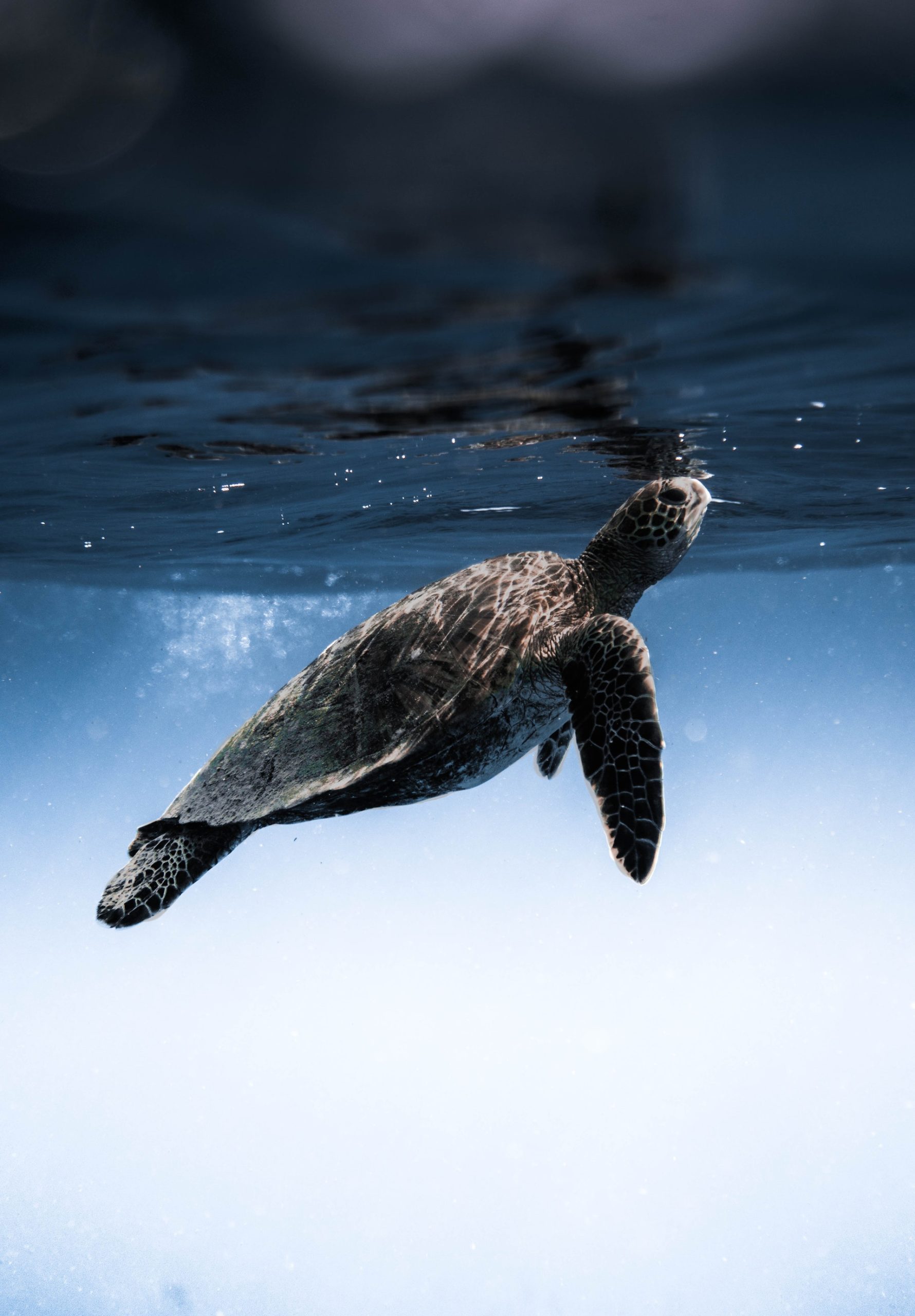
Sea turtles have been roaming our oceans for more than 100 million years, and for all 100 million years, they’ve been doing it alone. Sea turtles spend almost their entire lives at sea, with females only returning to the beaches where they were born to nest. They travel incredibly long distances, some even crossing entire oceans, to travel from feeding areas to nesting beaches and only meeting up with others to mate.
Rockfish
There are more than 30 species of rockfish living off the coast of British Columbia. Some, like the yelloweye rockfish, live extremely long lives – longer than 100 years. They can be found in the deep ocean and never stray too far from home. Some have even been known to spend their entire lives on a single rock pile! How’s that for a homebody?
Octopuses
Octopuses are typically solitary animals. Giant Pacific octopuses hunt at night for shrimp, clams, lobsters and fish, spending almost all of their time alone. They also have sophisticated camouflage capabilities. Specialized cells called chromatophores allow these and other octopuses to change their skin colour and texture in one tenth of a second, keeping them out of sight and alone for as long as they please.