Responsible Tourism & Ocean Conservation
Sea Paradise Hawaii operates as a certified eco-tourism company on the Kona Coast, holding active membership in the Hawaii Ecotourism Association and meeting the standards of multiple conservation organizations. Every Sea Paradise tour is designed around a core principle: the best ocean experience and the most responsible ocean experience are the same experience. This page documents the specific practices, certifications, and partnerships that make that principle real.
Quick Details — Responsible Tourism at Sea Paradise
Quick Details
Certifications and Memberships
Independently Verified Responsible Tourism Standards
Sea Paradise Hawaii’s responsible tourism commitments are not simply self-described — they are independently certified and publicly accountable through recognized environmental and marine stewardship programs.
Hawaii Ecotourism Association
Sea Paradise is a certified member of the Hawaii Ecotourism Association, the leading organization establishing sustainable tourism standards for Hawaii’s nature-based visitor industry. Certification requires demonstrated compliance with environmental, operational, and cultural responsibility standards.
Coral Reef Alliance
Sea Paradise follows the West Hawaii Voluntary Standards for Marine Tourism developed by the Coral Reef Alliance. These standards promote reef protection, responsible wildlife interaction, and careful use of marine resources along the Kona Coast.
Dolphin SMART
Dolphin SMART is a collaborative NOAA and nonprofit program promoting responsible dolphin viewing practices. Sea Paradise crew follow established protocols that emphasize proper viewing distance and avoidance of disturbance to feeding or resting spinner dolphins.
NOAA Wildlife Guidelines
Sea Paradise follows National Oceanic and Atmospheric Administration guidelines for marine wildlife encounters, including best practices related to sea turtles, dolphins, whales, and manta rays.
Manta Ray Tour Operator Guidelines
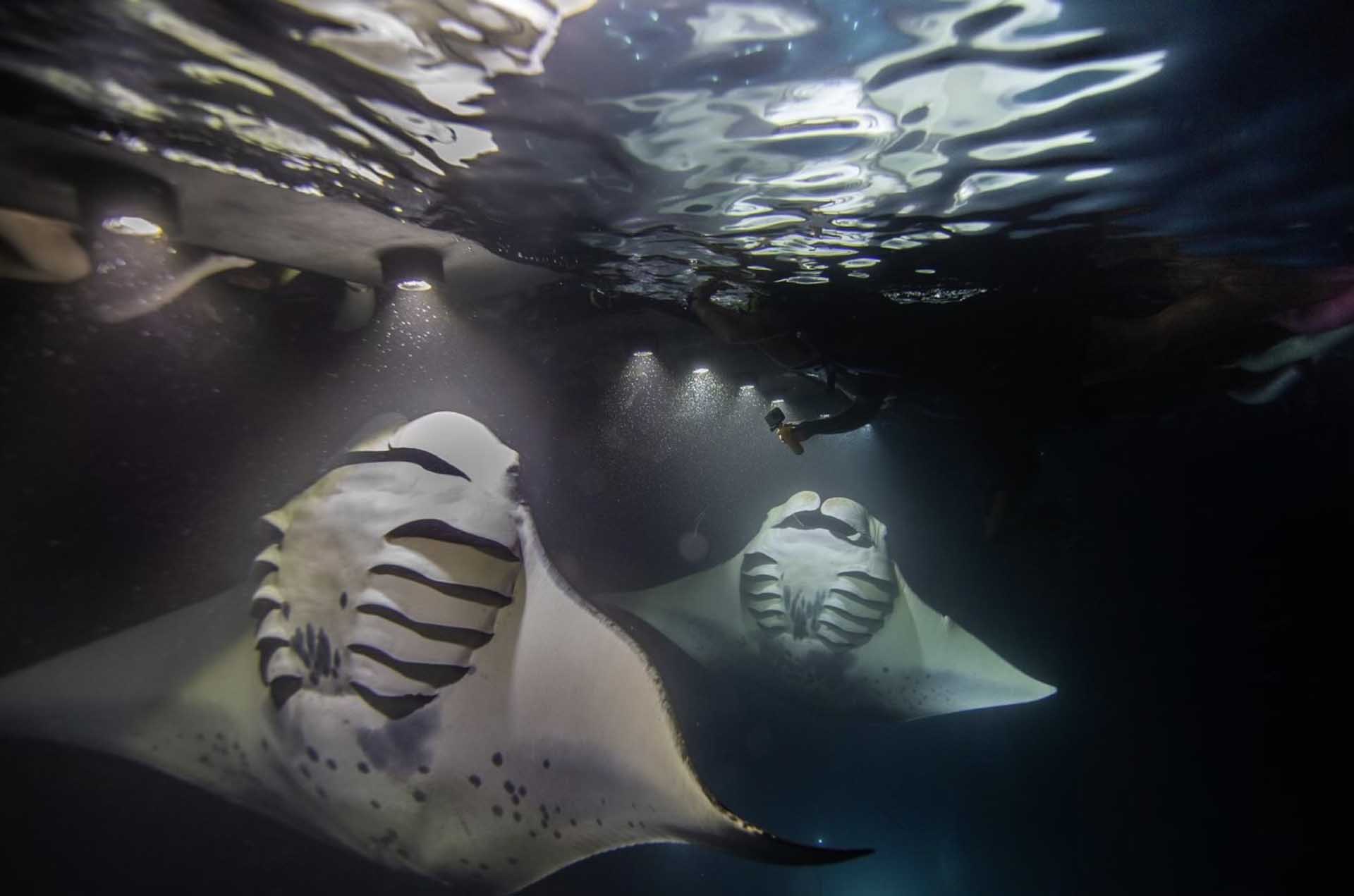
Sea Paradise adheres to recognized industry standards for responsible manta ray tour operations, including underwater light board placement, guest conduct in the water, and active crew supervision throughout the experience.
Reef-Safe Practices
The coral reefs Sea Paradise visits are living ecosystems that require active protection. Sea Paradise’s approach to reef stewardship is embedded in every tour, not added as an afterthought.
- Reef-safe sunscreen is required on all Sea Paradise tours — the crew provides it onboard. Many sunscreens marketed as “reef safe” still contain chemicals harmful to coral. Sea Paradise avoids all products containing oxybenzone, octinoxate, octisalate, avobenzone, octocrylene, homosalate, and nanoparticles.
- Reef etiquette briefings on every snorkel tour — guests learn before entering the water that coral is alive, that contact kills coral polyps, and that proper buoyancy and fin awareness are conservation practices, not just safety tips.
- No-touch, no-chase wildlife policy on all tours — guests are instructed never to touch, chase, or block any marine animal, including turtles, rays, and dolphins.
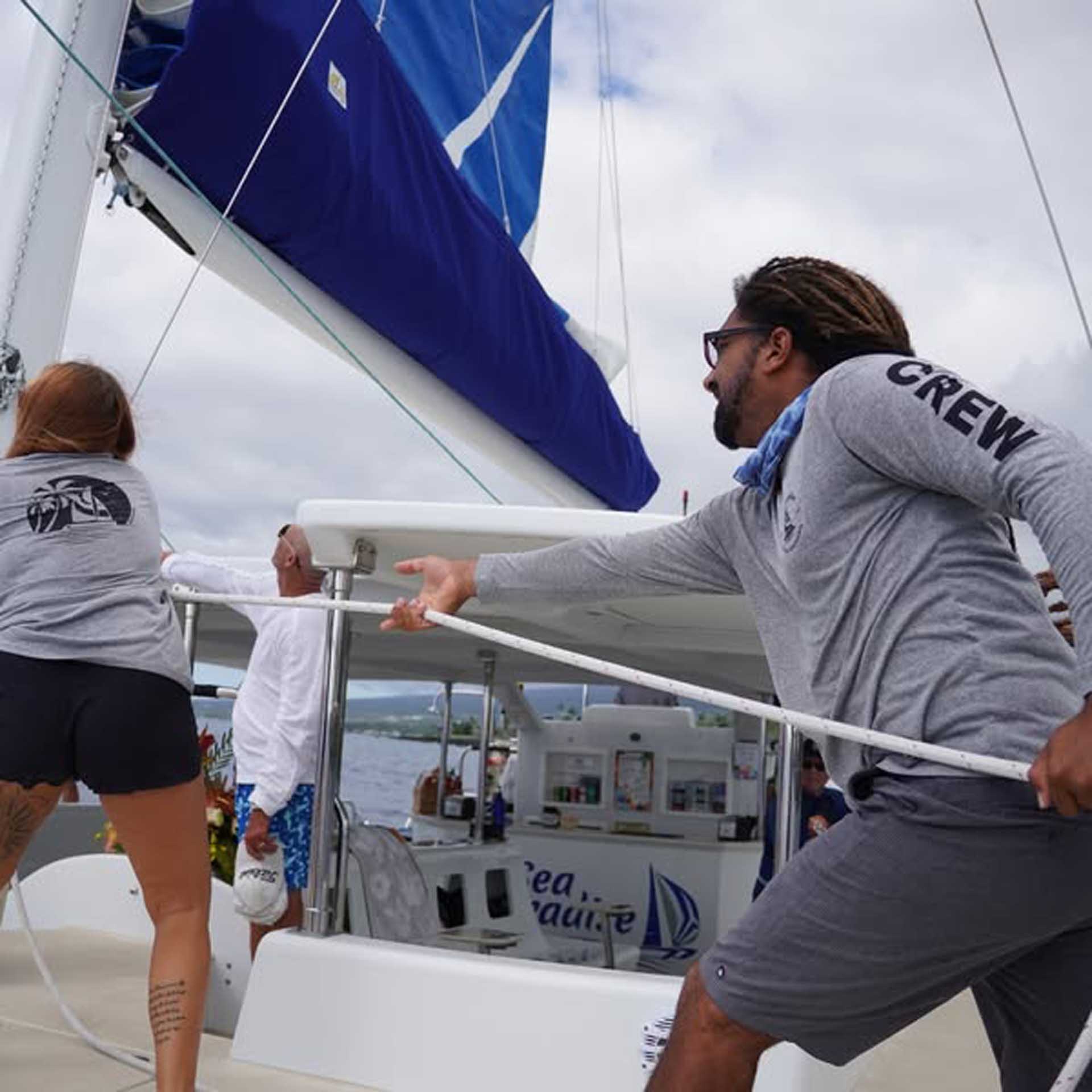
Crew actively monitors guest behavior in the water and will intervene if reef etiquette guidelines are being violated.
Manta Ray Conservation Practices
Manta rays at Manta Village are one of the world’s most closely studied and carefully monitored wildlife populations. Sea Paradise’s role in manta conservation goes beyond compliance with tour operator guidelines.
- Sea Paradise crew follow all Manta Ray Tour Operator Guidelines without exception — no touching, no chasing, no flash photography in the water, no diving toward rays.
- Sea Paradise partners with the Manta Pacific Research Foundation and supports the Manta Ray Advocates Hawaii photo-identification programme.
- Guests are actively encouraged to photograph manta belly patterns during tours and submit images to the Manta Ray Tracker citizen science database — contributing to the ongoing research catalogue that has now identified over 450 individual reef mantas on the Kona Coast.
- Captains log manta sightings after every departure, contributing to the operational dataset that tracks which individuals appear at Manta Village on which nights.
Hawaiian Cultural Respect
The snorkel sites and manta viewing areas Sea Paradise visits are not generic ocean locations — they are places of deep cultural significance to the Hawaiian people. Kealakekua Bay — “Pathway of the Gods” — was a sacred site and an ancient Hawaiian village. The marine environment of the Kona Coast has sustained Hawaiian communities for centuries.
Sea Paradise honors this context through the tradition of “talk story” — the marine naturalists and crew share accurate, respectful accounts of Hawaiian history, marine ecology, and cultural connections to the ocean on every tour. Guests learn not only what they are seeing in the water, but what it has meant to the people who have lived alongside it for generations. Sea Paradise actively includes the Hawaiian perspective on Kealakekua Bay, the significance of the honu (sea turtle) in Hawaiian culture, and the cultural and spiritual dimensions of the ocean in crew briefings.
Sea Paradise is locally owned, employs local crew, supports local non-profit organizations, and makes decisions about its operations in the context of what is good for the Kona community and the reefs on which that community depends.
Our Commitment
Malama i ke kai means “to care for the ocean” in Hawaiian. It is Sea Paradise’s operating philosophy, expressed in the briefings on every tour, the practices aboard every departure, and the conservation partnerships the company maintains year after year.
Every guest who leaves a Sea Paradise tour having snorkeled responsibly, learned something real about the reef or the mantas, and understood why it matters is part of that commitment. Sea Paradise does not operate tours despite caring about the ocean. The ocean is the reason the tours exist, and caring for it is built into everything.
Responsible Tourism FAQ
The Hawaii Ecotourism Association (HEA) is the primary body setting and certifying sustainable tourism standards for nature-based tour operators in Hawaii. HEA-certified operators are independently evaluated against standards covering environmental practices, cultural sensitivity, guest education, and community responsibility. Sea Paradise Hawaii is a certified HEA member.
Reef-safe sunscreens use mineral-based UV filters — primarily zinc oxide and titanium dioxide — rather than the chemical UV absorbers found in conventional sunscreens. Look for sunscreens that are free of oxybenzone, octinoxate, octisalate, avobenzone, octocrylene, homosalate, and nanoparticles. Sea Paradise provides compliant reef-safe sunscreen on all tours. If guests bring their own, the crew can review the label before entry to the water.
No. Sea Paradise has a no-touch, no-chase policy for all marine life on every tour. Coral is a living organism — even brief contact kills the polyps and can damage areas of reef that took decades to develop. Hawaiian green sea turtles (honu) are protected under both federal and state law; touching, chasing, or harassing them is illegal and can result in significant fines. The crew briefs guests on these standards before every entry into the water.
Sea Paradise partners with the Manta Pacific Research Foundation and supports Manta Ray Advocates Hawaii, the organizations that maintain the photo-identification catalogue of the Kona Coast’s 450+ named individual mantas. Sea Paradise encourages guests to photograph manta undersides during tours and submit images to the Manta Ray Tracker citizen science database. Captains also log sighting data after every manta tour departure, contributing to operational records that complement formal research.
Sea Paradise volunteers with and supports Hawaii Wildlife Fund, Keep Puako Beautiful, and the Surfrider Foundation. These organizations work on habitat protection, shoreline cleanups, ocean debris removal, and reef conservation across the Big Island. Supporting these organizations is part of Sea Paradise’s commitment to the broader health of the Kona Coast ecosystem.