Keauhou Bay — History, Marine Life & Sea Paradise Departures
Keauhou Bay is a historic bay on the Kona Coast of Hawaii’s Big Island, located approximately 5 miles south of Kailua-Kona. Its Hawaiian name — ke au hou — means “the new era,” a name that has proven fitting: from its significance as the birthplace of King Kamehameha III, to its role as the accidental origin of manta ray viewing in the 1970s, to its position today as the departure point for Sea Paradise Hawaii’s snorkel and manta ray tours since 1985, Keauhou Bay has been at the center of moments that changed the course of Hawaiian history and ocean tourism.
Quick Details — Keauhou Bay
Quick Details
The History of Keauhou Bay
The name Keauhou — ke au hou, “the new era” — was given to this bay at a moment of profound historical change in Hawaiian history. Keauhou Bay is the birthplace of King Kamehameha III, born approximately 1813 on the bay’s shore. Kamehameha III was the longest-reigning monarch in the history of the Kingdom of Hawaii — governing from 1825 to 1854 — and his reign marked a pivotal transition for Hawaii, including the first written constitution and the establishment of private land ownership through the Mahele of 1848.
The bay holds several other historical sites of cultural significance. Ahu A Umi Heiau is an ancient Hawaiian temple located above the bay, dedicated to the god of war. The Keauhou Holua Slide — a traditional Hawaiian sledding track — was used for the competitive sport of holua, in which participants raced downhill on narrow wooden sleds. These sites remain markers of the vibrant pre-contact Hawaiian culture that centered on this coastline.
How Keauhou Bay Gave Birth to Manta Ray Tourism
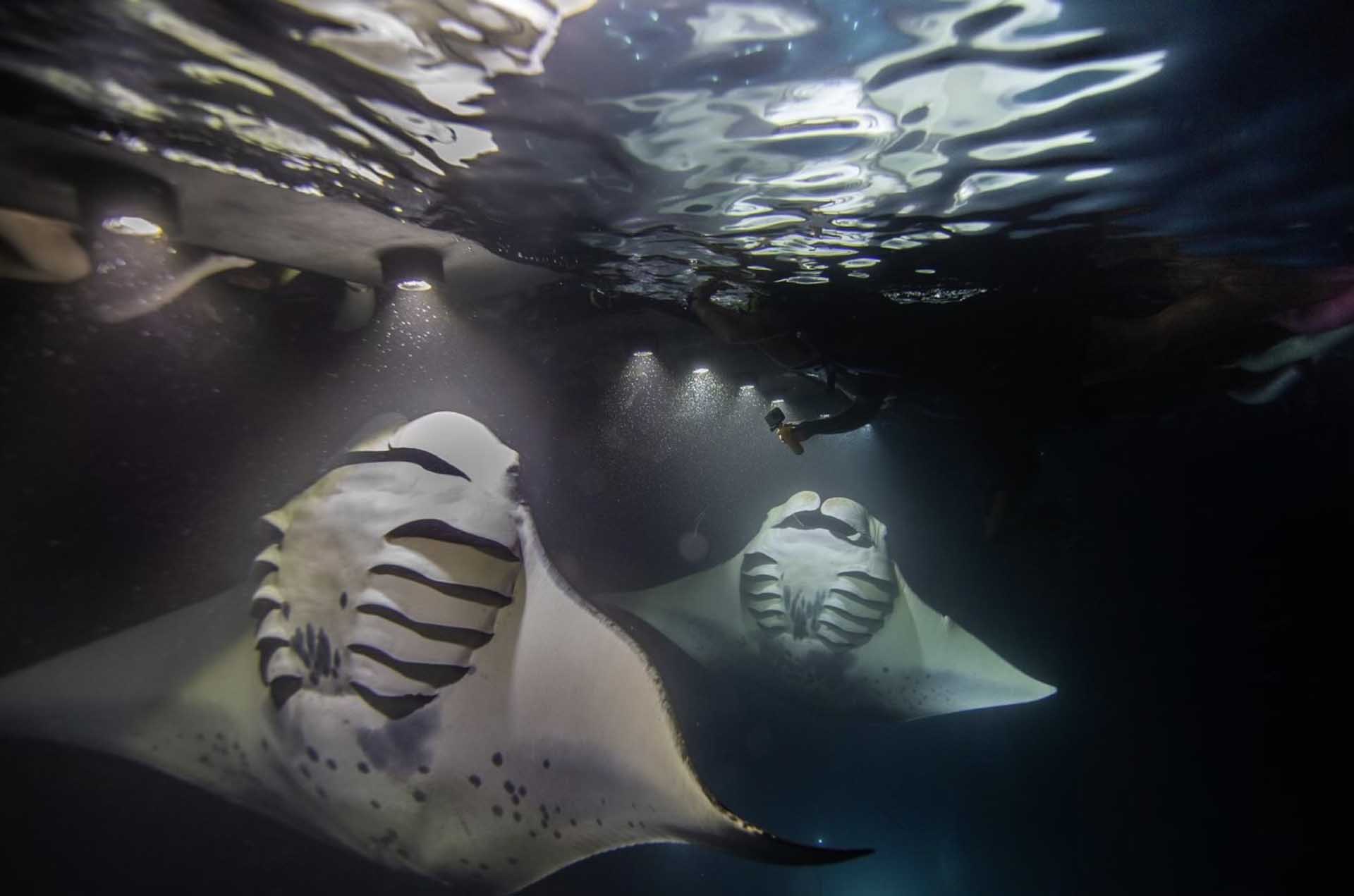
The most consequential thing that ever happened at Keauhou Bay — at least from the perspective of modern ocean tourism — was entirely accidental. In the 1970s, workers constructing what is now the Outrigger Kona Resort and Spa began working overnight under powerful floodlights to meet a construction deadline. Those lights extended over the water. Plankton congregated in the illuminated surface water. One night, a lone manta ray followed the plankton. It returned the next night. Over time, the behavior spread through the resident manta population.
That accident — a construction deadline and a set of floodlights — gave birth to what is now one of the most extraordinary wildlife viewing experiences on Earth. Sea Paradise recognized the significance of what was developing at this site and began organized manta ray tours from Keauhou Bay in 1985. Today, tour operators deploy custom underwater lights that replicate what those construction lights created, drawing the manta rays to Manta Village night after night, year-round.
What to See at Keauhou Bay
Even before boarding the Hoku Nui, guests waiting at the Keauhou Bay pier may see remarkable marine life. Hawaiian green sea turtles (honu) may be spotted in the shallows. Spinner dolphins pass through the bay, and their acrobatic displays – leaping, spinning, and surfing in the wake of boats – can be a memorable morning sight from the pier. Spotted eagle rays may be seen gliding along the sandy bottom just offshore.
The waters of Keauhou Bay itself are part of the broader Kona Coast reef system — clear, calm, and rich with marine life. The bay’s protected character makes it an excellent entry and exit point for the snorkel tours that sail south to the World Famous Captain Cook Monument at Kealakekua Bay, and the manta ray tours that run to Manta Village just off the bay.
Finding the Sea Paradise Pier
Sea Paradise departs from the finger pier at Keauhou Bay — located at the end of Kaleiopapa Street, Kailua-Kona, HI 96740. This is approximately 5 miles south of central Kailua-Kona, just off Highway 11.
- Do not check in at any buildings — go directly to the end of the finger pier
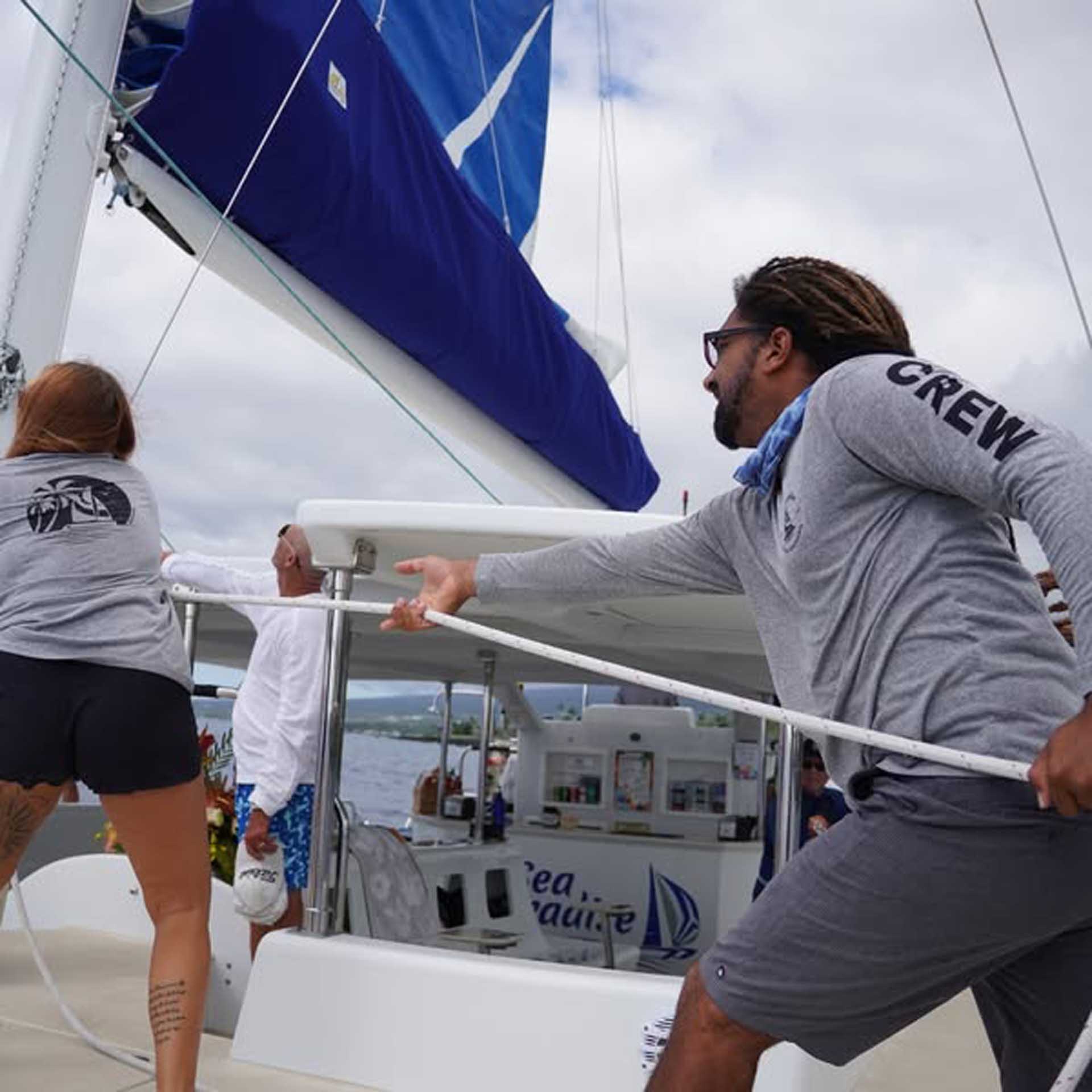
- Look for crew members in blue shirts, who check guests in 15 minutes before departure
- Public restrooms are located on the east side of Kaleiopapa Street near the parking area
- Restrooms are also available aboard the Hoku Nui
- Limited parking is available at the pier — free parking is available along Kaleiopapa Street
- Allow 3–5 minutes to walk from your vehicle to the boat
Keauhou Bay FAQ
Keauhou comes from the Hawaiian phrase ke au hou, meaning “the new era.” The name was given to this bay at a moment of historical transition in Hawaiian history and has remained apt — the bay has repeatedly been at the center of consequential changes, from the birth of King Kamehameha III on its shores to the accidental origin of the world’s most reliable manta ray viewing experience in the 1970s.
Keauhou Bay has several significant cultural and historical sites. The birthplace of King Kamehameha III — the longest-reigning monarch of the Kingdom of Hawaii — is marked on the bay’s shore. Ahu A Umi Heiau, an ancient Hawaiian temple, is located above the bay. The Keauhou Holua Slide, a traditional Hawaiian sled track used for the competitive sport of holua, is another surviving pre-contact site in the area.
Manta ray tourism at Keauhou Bay began entirely by accident in the 1970s, when construction workers building what is now the Outrigger Kona Resort and Spa used floodlights to work overnight. Those lights attracted plankton to the surface, which attracted reef manta rays. The manta rays learned the association between lights and food — a process of Classical Conditioning — and began returning nightly. Sea Paradise recognized what was developing and began organized manta tours from this site in 1985.
Sea Paradise departs from the finger pier at Keauhou Bay — at the end of Kaleiopapa Street, Kailua-Kona, HI 96740. Do not check in at any buildings. Meet the crew at the end of the finger pier 15 minutes before your scheduled departure. Free parking is available along Kaleiopapa Street; pier parking is limited. Public restrooms are on the east side of Kaleiopapa Street near the parking area, and restrooms are also onboard the Hoku Nui.