Henry ʻŌpūkahaʻia was a Hawaiian boy who left Kealakekua Bay aboard an American trading ship around 1808, studied in New Haven, Connecticut, and died there in 1818. His published memoirs inspired the first company of missionaries to sail for Hawaii in 1819. In 1993, his remains came home to Nāpōʻopoʻo, overlooking the bay.
Sea Paradise Hawaii sails past Nāpōʻopoʻo on every trip to Kealakekua Bay. This is the story of the young man from that shoreline whose life changed the islands.
Who was Henry ʻŌpūkahaʻia?
ʻŌpūkahaʻia was born around 1792 in Kaʻū, on the southern end of Hawaiʻi Island. English records spell his name Obookiah, the spelling used on his famous memoirs. When he was about 10, his parents and infant brother were killed in the warfare that followed Kamehameha I’s rise to power.
He was taken in by an uncle in Nāpōʻopoʻo, at the south end of Kealakekua Bay. There he trained in priestly ritual, preparing to follow his uncle as a kahuna at Hikiau Heiau, the same temple where Captain Cook had been honored a generation earlier.
How did a boy from Kealakekua Bay end up at Yale?
Around 1807 to 1808, the trading ship Triumph, under Captain Caleb Brintnall, anchored in Kealakekua Bay. ʻŌpūkahaʻia and another boy, Hopu, went aboard and sailed with her. He was about 16. Accounts differ on the details, and some say he swam out to the ship. By 1809 he was in New Haven, Connecticut.
The best-known story comes next. Yale student Edwin Dwight found him sitting on the steps of a college building, crying, because no one would teach him. Dwight began tutoring him, and he later lived with the family of Yale’s president, Timothy Dwight.
He was a gifted student. He studied Latin, Hebrew, geometry and geography, began translating parts of the Bible into Hawaiian, and started work on a Hawaiian dictionary and grammar. In 1817 he enrolled at the new Foreign Mission School in Cornwall, Connecticut.
The school itself owed a great deal to him. Founded in 1816 and moved to Cornwall in 1817, it educated about 100 students over the next ten years, many of them young men from Hawaii and other Pacific islands.
How did his story bring missionaries to Hawaii?
ʻŌpūkahaʻia died of typhus fever in Cornwall on February 17, 1818, at about 26, before he could return home. Edwin Dwight gathered his letters and journals into Memoirs of Henry Obookiah, published that same year. The book spread across New England and moved young people to volunteer for a Hawaiian mission.
The first company of missionaries sailed from Boston aboard the brig Thaddeus on October 23, 1819. After a 164-day voyage, they landed at Kailua-Kona on April 4, 1820, just up the coast from Keauhou Bay. Elisha Loomis, the mission’s printer, said reading the Memoirs was what led him to join.
The mission board’s written instructions to that first company named his influence directly and urged them to remember his example. Few people have changed Hawaiian history so much without ever coming home.
His language work mattered too. It helped the missionaries prepare early printed Hawaiian lessons, part of the path that made Hawaiian a written language within a few decades.
Where is ʻŌpūkahaʻia buried today?
He rests at Kahikolu Church in Nāpōʻopoʻo, overlooking Kealakekua Bay. After 175 years in a hillside cemetery in Cornwall, his remains were brought home by descendants and placed in a vault at the church on August 15, 1993.
The setting is fitting. Kahikolu was the third church founded in Hawaii by the missionaries his story inspired, and it sits on the same hillside where he grew up, above the same bay he sailed from as a teenager.
Many Hawaiian churches still honor him on the third Sunday in February. When you sail into Kealakekua Bay, the hillside above Nāpōʻopoʻo is where his journey began and where it ended.
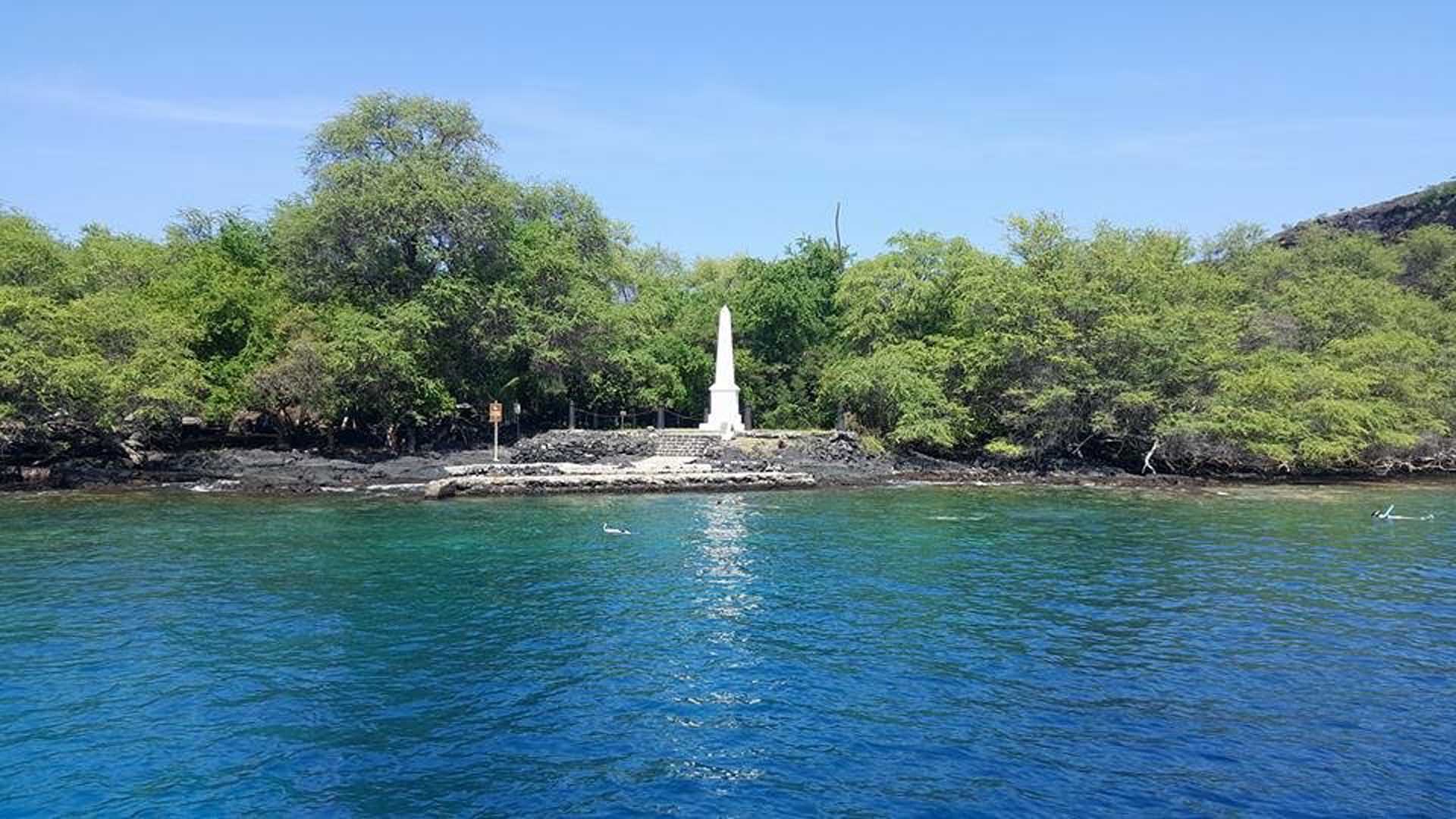
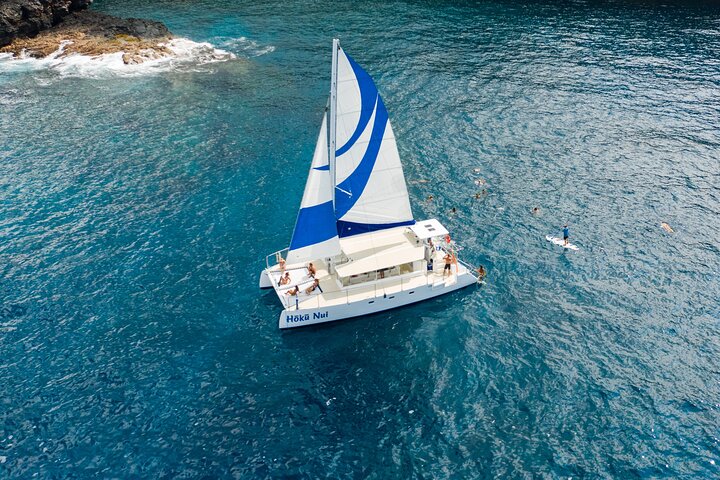
You can see that shoreline for yourself on Sea Paradise’s Afternoon Snorkel Tour, departing Keauhou Bay at 2:00 PM aboard the Hoku Nui, our 50-foot luxury sailing catamaran. The tour visits the World Famous Captain Cook Monument at Kealakekua Bay in about three hours. To plan your visit, start with our Kealakekua Bay guide.
Frequently Asked Questions
Who was Henry ʻŌpūkahaʻia?
Henry ʻŌpūkahaʻia was a Hawaiian boy who left Kealakekua Bay aboard the ship Triumph around 1808, studied in New Haven, Connecticut, and died there in 1818. His published memoirs inspired the first missionaries, who landed at Kailua-Kona in 1820.
Where is Henry ʻŌpūkahaʻia buried?
At Kahikolu Church in Nāpōʻopoʻo, overlooking Kealakekua Bay on the Big Island. His remains were returned from Cornwall, Connecticut, and placed in a vault there on August 15, 1993.
What did Henry ʻŌpūkahaʻia have to do with Kealakekua Bay?
He grew up in Nāpōʻopoʻo at the south end of Kealakekua Bay, training to become a kahuna at Hikiau Heiau. He sailed from the bay around 1808 and was reburied above it in 1993.