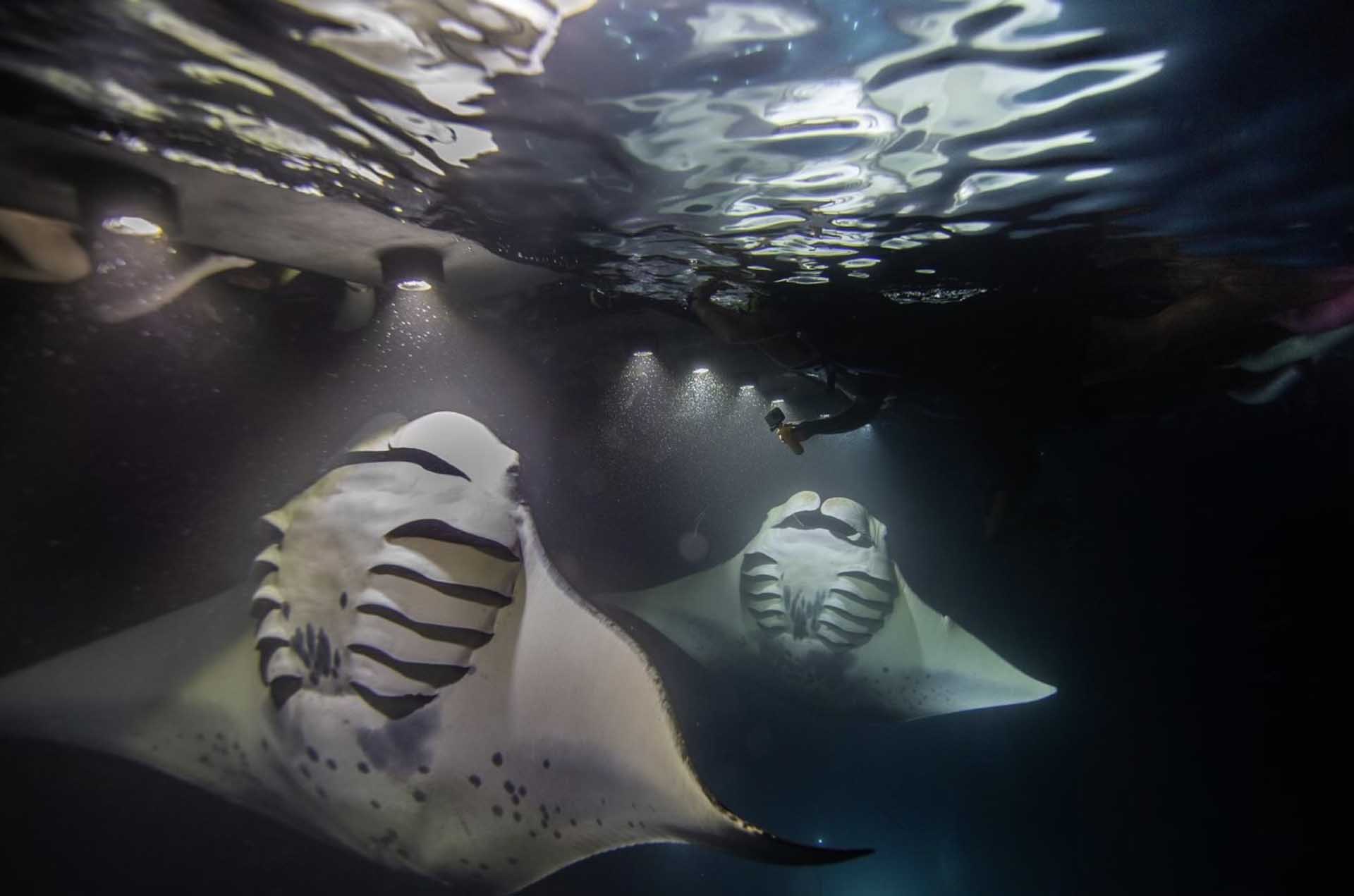

To Hawaii on the underwater world of Hawaii. Join us to experience this underworld paradise on a snorkel or manta ray tour you’ll never forget!
Discover the underwater paradise of Hawaii
Many argue that the beauty of Hawaii is unsurpassed by any other location on Earth. And what continues to draw millions of visitors a year is often below sea level. Humpback whales, bottlenose dolphins, stingrays, sea lions, manta rays, colorful reef fish and giant sea turtles – these are just a few of the amazing and diverse sea creatures that frequent the Pacific coastlines of the Hawaiian Islands. Snorkeling, scuba diving and snuba, a combination of the two, are popular activities that allow us land dwellers to peek into the environment that these marine animals call home.
Malama I Ke Kai
Malama i ke kai means to “care for or protect the ocean,” an integral Hawaiian value that dates back over centuries. The Hawaiian chant of creation, the kumulipo, explains that all life began in the sea – that humanity is tied to all living things, especially marine life. The Hawaiian archipelago is not described as islands in a sea, but rather, a sea of islands, thereby acknowledging the ocean as being equally important with the aina, or land. The ancient Hawaiians shared an intimate knowledge of the sea and showed ultimate respect to its inhabitants. The unique ecosystem of Hawaii has existed in isolation for years and relies on continuous conservation for survival. Visitors to Hawaii can “malama i ke kai” in several ways:
- Learn about Hawaii’s delicate ecosystem before visiting.
- Respect all warning signs near the ocean.
- Help keep Hawaiian beaches clear of litter and debris.
- Pick up anything you brought with you, and if you spot rubbish, take a minute to help it into a trash can.
- Report any knowledge of poaching or dumping.
- Do not desecrate important cultural sites, rock formations, or coral reef.
- Don’t feed or harm marine life.
- Leave coral, sand and rocks in their place.
Diving and Snorkeling
The topographical layout of the Hawaiian coasts presents an underwater world that draws divers from around the world. The volcanic activity that formed the Hawaiian Islands continues to expand the island layout with the help of the active volcano Kilauea on the Big Island, constantly adding to the long lava tubes, ornate arches and coral gardens on the sea floor. Accessing these underwater cities also allows divers to see rare and unique indigenous aquatic species found only in Hawaii.
The Coral Reef
The ubiquitous coral reef ecosystem that surrounds the Hawaiian coastlines is a complex structure that supports countless life forms and nourishes Hawaii’s interdependent marine community. From filtering water and providing nourishment to protecting the shores from sediment and storms, the coral reef is the lifeblood of the symbiotic underwater community. Divers will find literally thousands of life forms present in the coral reef, including hard and soft corals, colorful fish of all sizes, octopus, eels, algae, sea anemones, sponges, crustaceans, worms, turtles and many others. Although the massive coral reef is in constant expansion, it also faces difficult challenges, such as pollution, damage from chemicals and other wastes, damage from human destruction, disease and bleaching. Coral reef branches are incredibly delicate and can be destroyed with even minor contact.
While we have the privilege of viewing the amazing marine communities, we must recognize that we are guests and practice respect. The general rule is look but don’t touch!
Protect Hawaii’s Ocean Ecosystem
- Do not step on the coral with feet or fins.
- Do not grab onto coral for balance or out of curiosity.
- Even the slightest touch can kill a coral colony.
- Do not attempt to touch or hold any kind of marine life.
- Support reef friendly businesses.
- Use fewer chemicals in your home – even chemical use thousands of miles away from the islands can end up in the Pacific Ocean.
- Wear floatation devices while snorkeling to help keep you off the reef.
- When diving, use a mooring buoy or sand anchor to keep you away from reef formations.
- Support organizations that protect coral reefs.
- Don’t use chemically enhanced pesticides and fertilizers.
- Educate yourself on the importance of the reef and share your knowledge.
- Buy only sustainably harvested reef fish.
- Recycle
- Conserve water
- Report dumping or illegal fishing.
Hawaii’s underwater world is truly unique and beautiful, and with help from all who visit these Pacific communities, our ocean ecosystem will continue to thrive and grow for generations to come. Wherever you are exploring along the Hawaiian shores, remember the cardinal rule of ocean respect: look but don’t touch.
The Humuhumunukunukuapua’a
The humu…what? To pronounce the state fish of Hawaii, break it up into six parts: humu humu nuku nuku apua a. Hawaiian for “triggerfish with a pig-like snout,” the “humu” is a brightly-colored, indigenous fish that populates the waters around all islands.