Most guides to snorkeling in Kona are written by people who visited once. This one is written by an operator that has been in this water since 1985.
Two sites on the south Kona Coast stand apart, and they are nothing alike: the World Famous Captain Cook Monument at Kealakekua Bay, and Red Hill.
What Makes Kealakekua Bay Hawaii’s Most Protected Snorkel Site?
Kealakekua Bay is a 315-acre Marine Life Conservation District on the Kona Coast of Hawaii’s Big Island, protected since 1969. No fishing. No collecting. More than fifty years of that has produced a reef environment that unprotected, easily accessible sites cannot replicate.
Water clarity commonly runs 60 to 80 feet on clear mornings — enough to see the full structure of the reef and the open water past it from the surface. Coral cover is among the healthiest on the coast, and the fish population is dense, diverse, and accustomed to slow-moving snorkelers overhead.
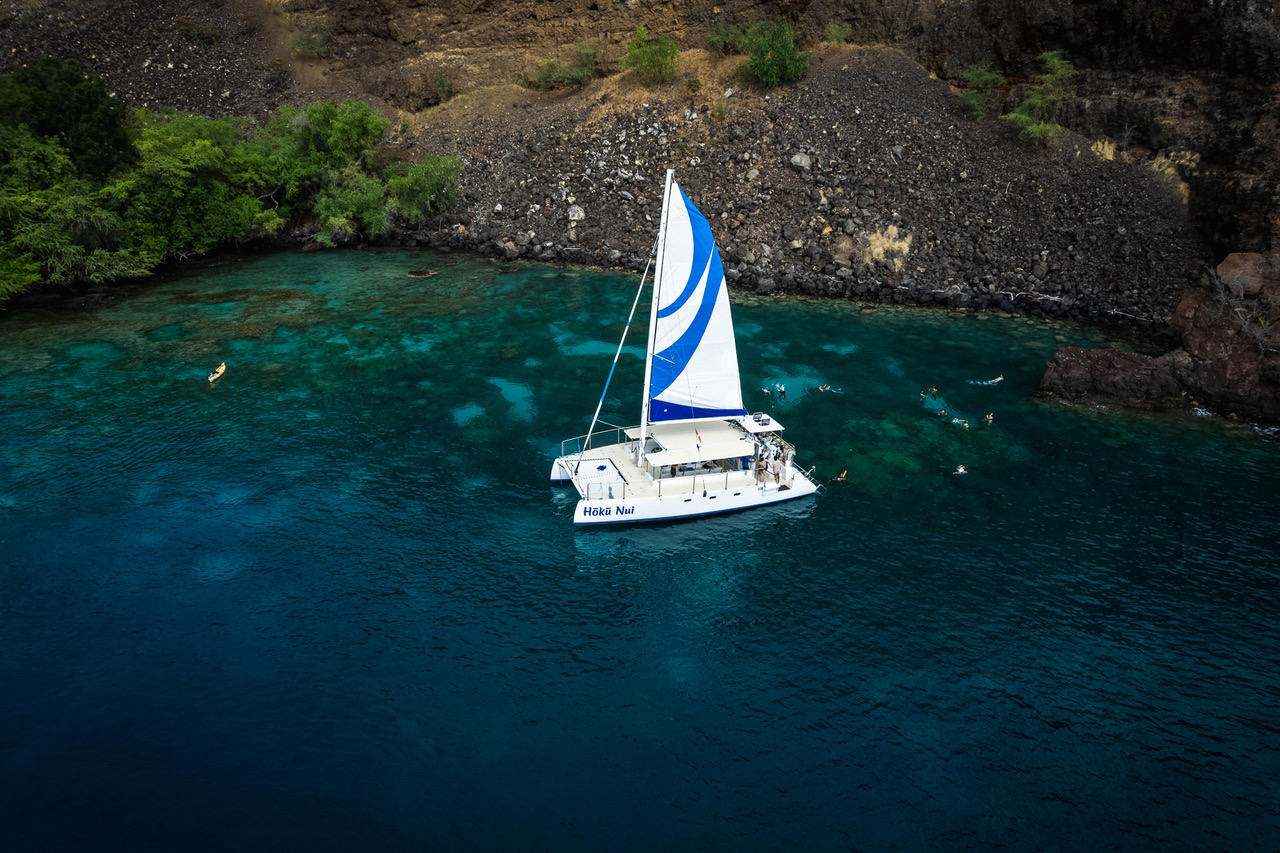
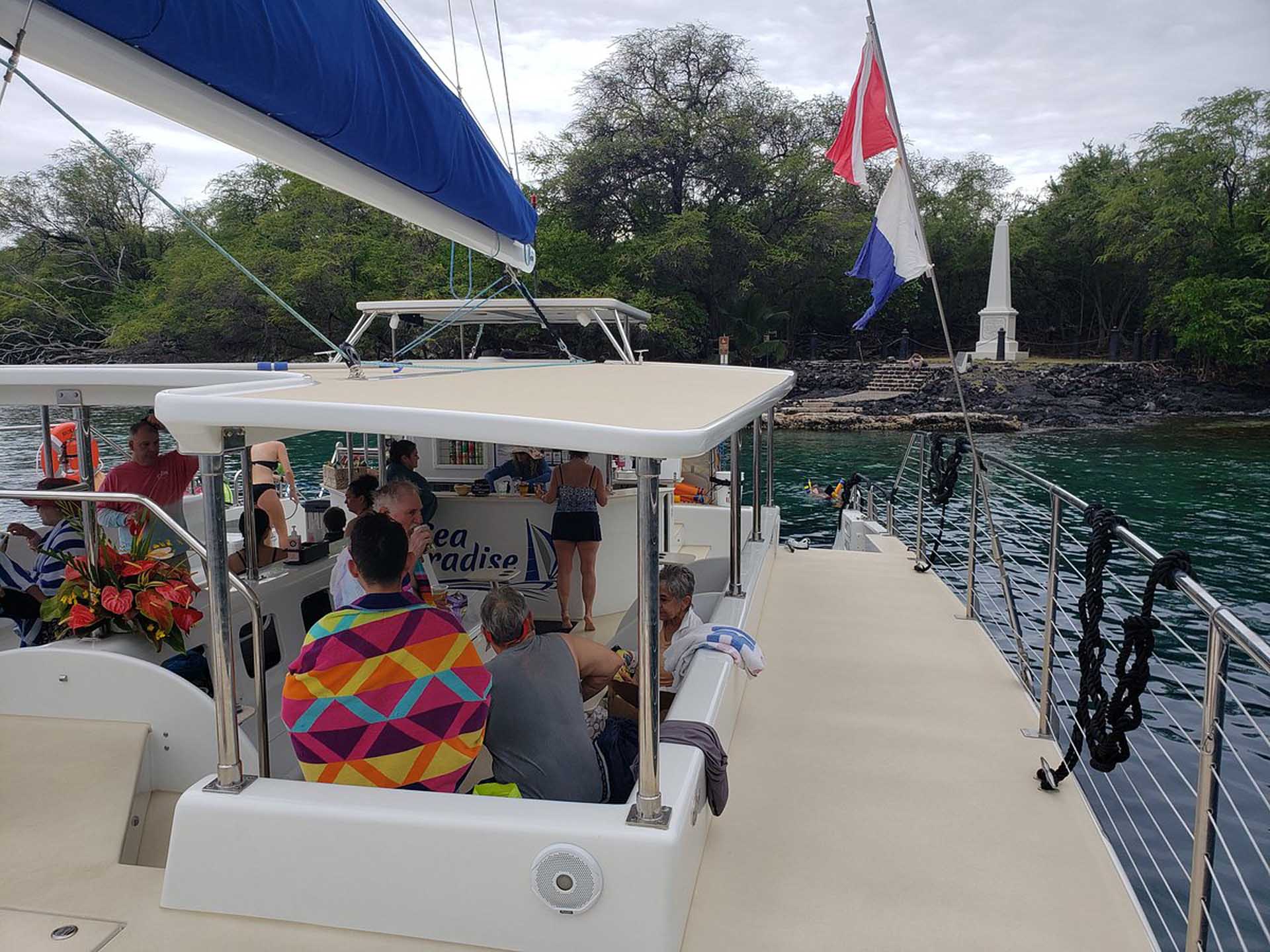
The World Famous Captain Cook Monument at Kealakekua Bay stands at the north end of the snorkel area. The bay is reached by boat; there is no shore snorkel access to this section of reef, which is a significant part of why it remains in the condition it is in.
Conditions matter as much as the site itself. Mornings on this coast are lightest on wind and clearest underwater, which is why Sea Paradise has run its primary snorkel departure at 8:30 AM since 1985. Snorkeling inside the bay is well protected from wind even when the open water outside it has chop. http://seaparadise.com/kealakekua-bay/
What May You See at the World Famous Captain Cook Monument at Kealakekua Bay?
Hawaiian green sea turtles (honu) are common and often rest on the reef at snorkeling depth. Spotted eagle rays patrol the deeper water along the reef edge. Octopus are present, though their camouflage makes them hard to find without knowing what to look for.
Among the reef fish: Moorish idols with their trailing dorsal filaments, yellow tang schooling in bright dense formations, parrotfish in several species whose crunching on coral is audible underwater, butterflyfish, Hawaiian cleaner wrasse working cleaning stations, and humuhumunukunukuapuaʻa — Hawaii’s state fish, the reef triggerfish, named state fish in 1985 and permanently reinstated in 2006. Moray eels occupy crevices throughout the coral system. Small whitetip reef sharks, a non-aggressive reef-dwelling species, occasionally rest under lava ledges.
Spinner dolphins are present along this coast year-round and humpback whales pass between December and April. Both are watched from the boat at a distance under NOAA guidelines and the Dolphin SMART program, never from the water. http://seaparadise.com/captain-cook-monument/
What Is Red Hill and Who Is It For?
Red Hill is a volcanic headland south of Kealakekua Bay that most Kona travel guides never mention. Sea Paradise visits it as the second stop on morning tours when conditions permit. The underwater terrain is entirely different from the bay: volcanic rock, lava arches at snorkeling depth, and tubes forming shaded corridors through the rock.
This is an experienced-level site. The terrain calls for more active navigation than the open reef at the bay, and conditions can be livelier. For confident swimmers, it is a genuinely distinctive Kona snorkel — and almost always uncrowded, because it is accessible by boat only and few tours include it.
Octopus turn up more often here than at the bay. Moray eels are abundant in the rock crevices. Larger parrotfish, goatfish, and pelagic species above the arch openings are all regulars, and honu often rest on the rock surfaces between feeding forays.
How Do You Get to These Sites?
Both are reached by boat. There is no shore snorkel access to either. Sea Paradise visits the World Famous Captain Cook Monument at Kealakekua Bay on both the Morning Snorkel Tour (8:30 AM departure, check-in 8:15 AM) and the Afternoon Snorkel Tour (2:00 PM departure, check-in 1:45 PM), and adds Red Hill on morning departures when conditions allow.
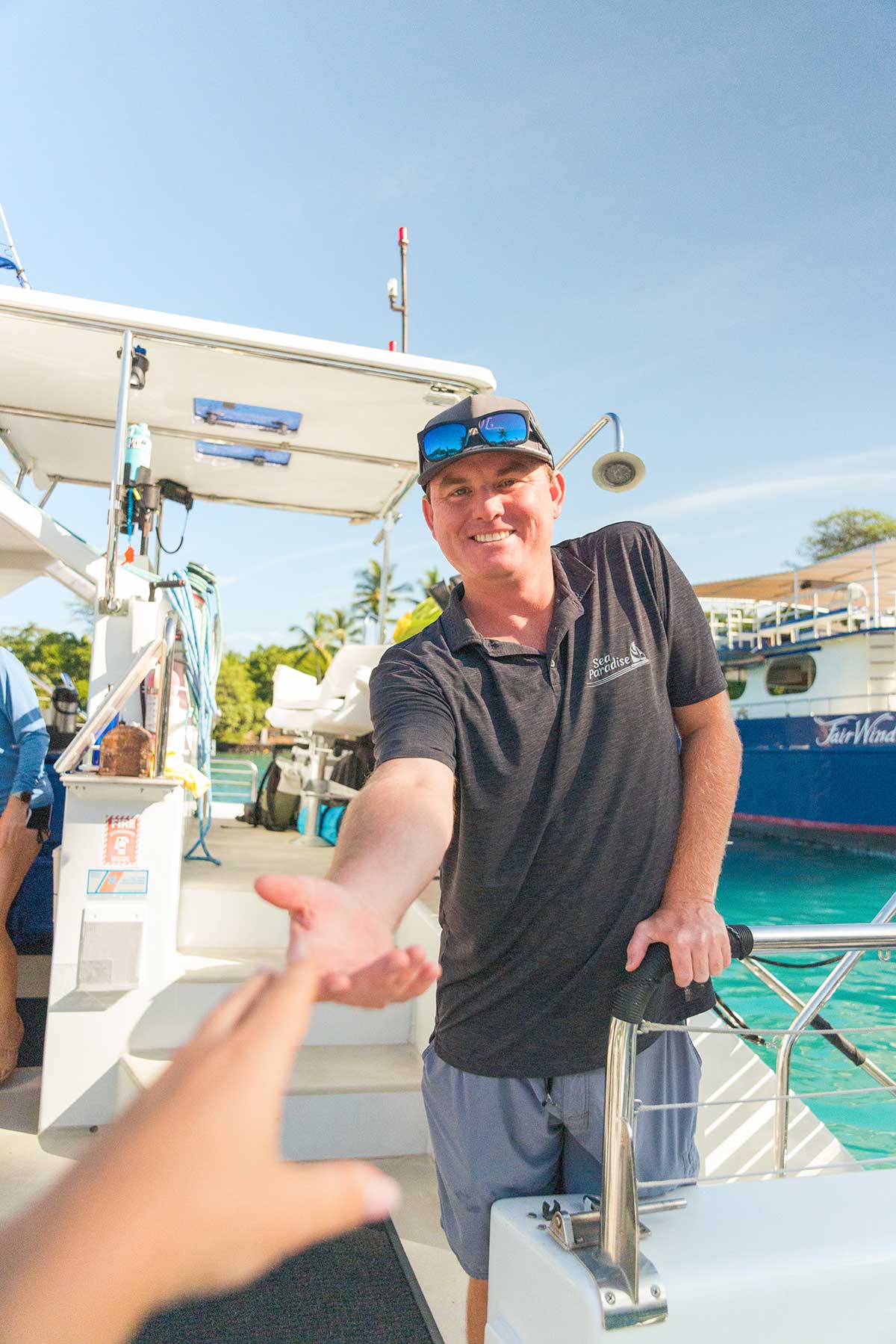
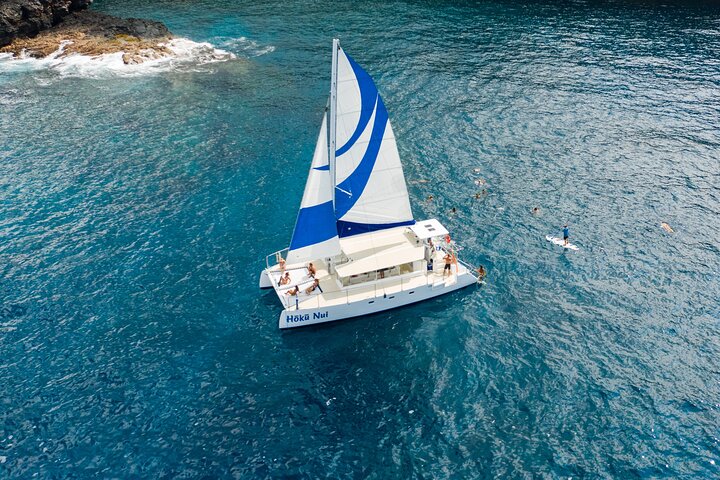
Both tours leave from the end of the finger pier at Keauhou Bay, end of 78-7130 Kaleiopapa Street, Kailua-Kona, aboard the Hoku Nui, a 50-foot luxury sailing catamaran spaciously designed for 49 guests.
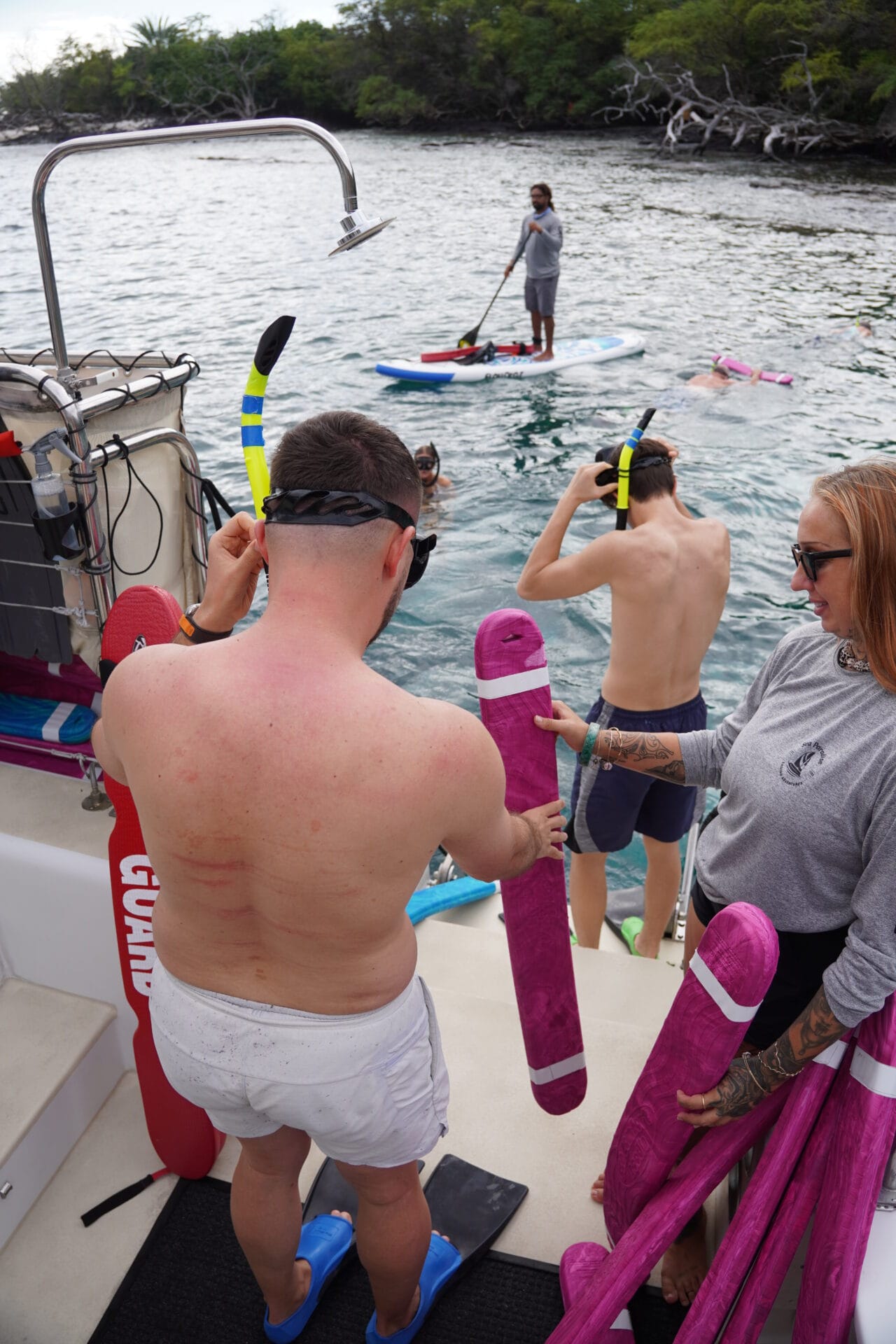
All snorkeling guests must be confident swimmers; non-swimmers may not enter the water. Reef-safe mineral sunscreen is required and provided onboard, and all snorkel gear and flotation devices are included.
What are the best snorkeling spots in Kona, Hawaii?
The World Famous Captain Cook Monument at Kealakekua Bay and Red Hill are the two standout sites on the south Kona Coast. The bay is a protected Marine Life Conservation District with exceptional visibility and dense reef life. Red Hill offers volcanic lava arches and tubes at snorkeling depth. Both are accessible by boat only.
Can I snorkel Kealakekua Bay without a tour?
There is no shore snorkel access to the reef near the World Famous Captain Cook Monument at Kealakekua Bay. Kayakers can paddle roughly a mile across from Nāpōʻopoʻo on the south shore, and activity inside the conservation district is regulated. Most visitors reach the reef by tour vessel.
What makes Kealakekua Bay so good for snorkeling?
Protection. The bay has been a 315-acre Marine Life Conservation District since 1969 — no fishing, no collecting. More than fifty years of that produces coral health, fish density, and water clarity of 60 to 80 feet on clear mornings that unprotected sites cannot match.
What may you see at Kealakekua Bay?
Hawaiian green sea turtles (honu), spotted eagle rays, octopus, Moorish idols, yellow tang, parrotfish, humuhumunukunukuapuaʻa, butterflyfish, Hawaiian cleaner wrasse, moray eels, and occasional small whitetip reef sharks. Spinner dolphins are often near the bay and are watched from the vessel. Nothing is guaranteed — this is wild marine life.
What is Red Hill in Kona?
Red Hill is a volcanic headland south of Kealakekua Bay with underwater lava arches and tubes at snorkeling depth, formed where ancient flows met the ocean. It is accessible by boat only and is visited as a second stop on Sea Paradise morning tours when sea conditions permit.
Is Red Hill better than Kealakekua Bay for experienced snorkelers?
They are different experiences rather than better or worse. Kealakekua Bay offers dense reef life, exceptional visibility, and open reef structure. Red Hill offers volcanic terrain, lava arches and tubes, and a rawer, far less trafficked environment. Many experienced snorkelers name the Red Hill stop the most memorable part of the morning.
What may you see at Red Hill?
Lava arches and tubes at snorkeling depth, octopus in the lava formations more often than at the bay, moray eels abundant in the rock crevices, larger parrotfish species, goatfish, pelagic fish above the arch openings, and Hawaiian green sea turtles resting on the rock surfaces.
Can you snorkel Red Hill from shore?
No. Red Hill is accessible by boat only, and that is a large part of why it stays uncrowded. Sea Paradise visits it as a second stop on morning tours when conditions permit. Captain’s judgment determines access and it is not part of every departure.
What is the best time of year to snorkel in Kona?
Year-round. The Kona Coast sits on the lee side of the Big Island, sheltered from most Pacific swell, and morning conditions are generally calmer than afternoon in every season. Humpback whales pass between December and April and are watched from the vessel.
How warm is the water for snorkeling in Kona?
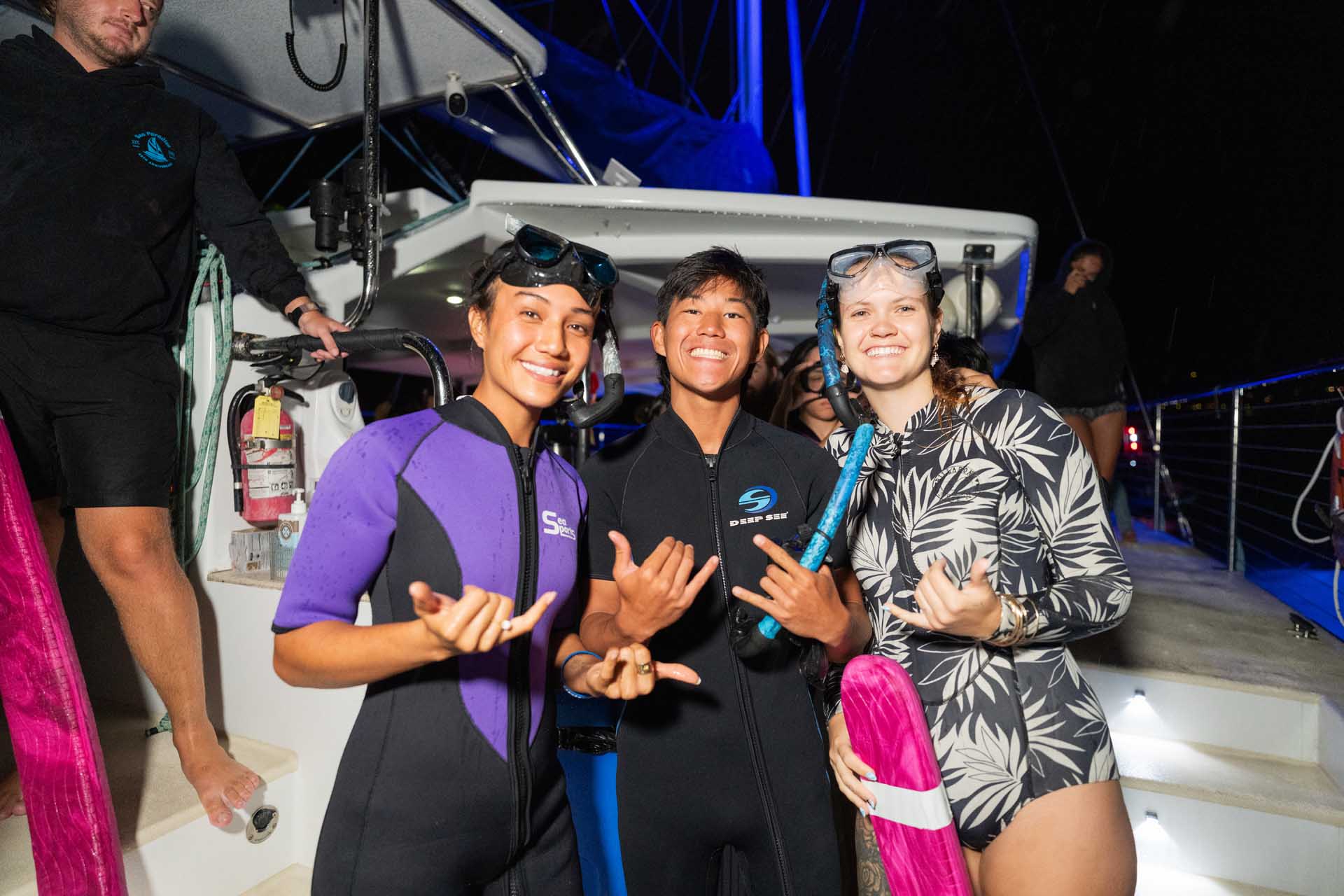
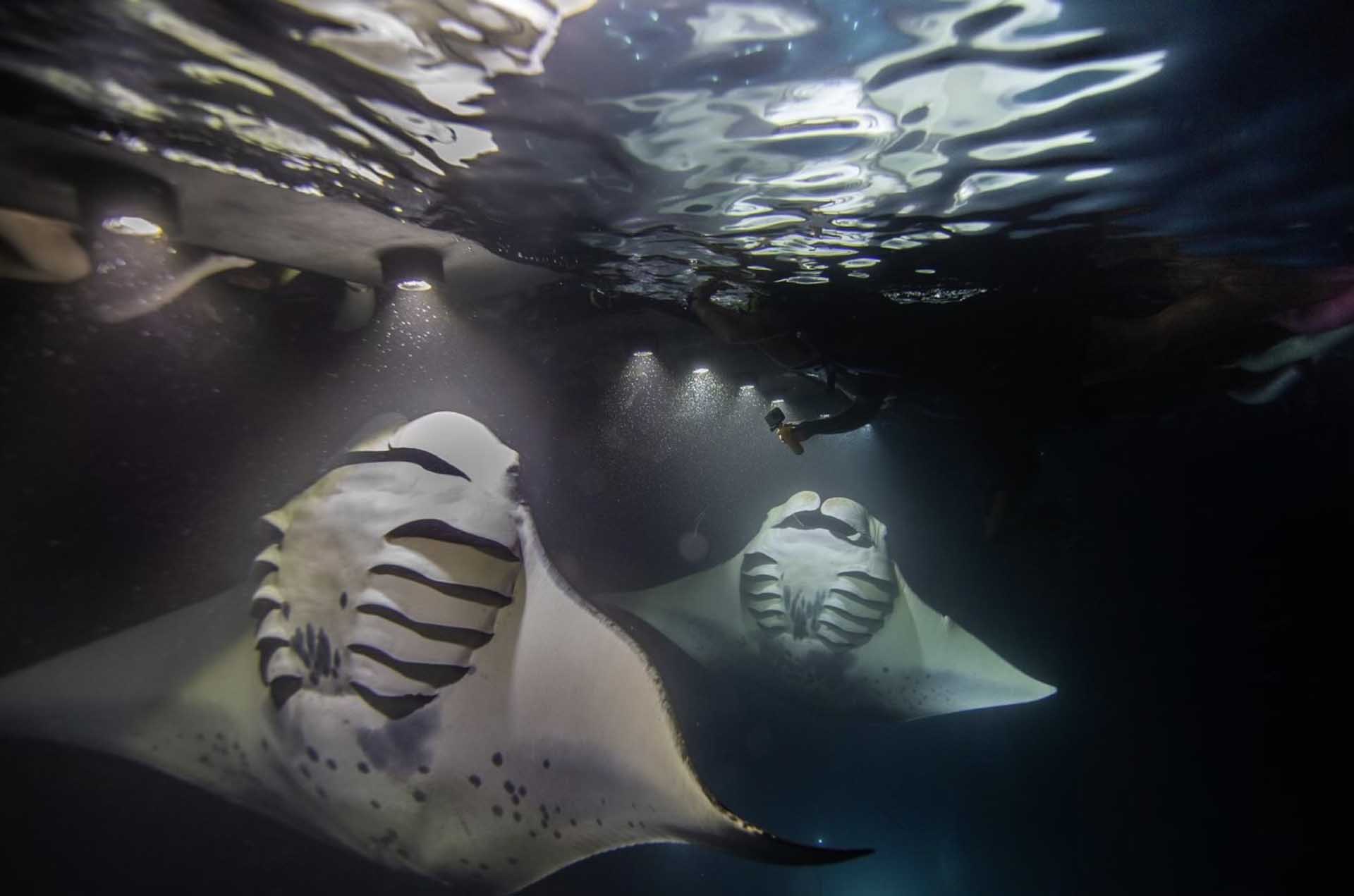
Water temperatures on the Kona Coast run roughly 75 to 80 degrees Fahrenheit throughout the year. Most guests snorkel comfortably without a wetsuit on the day tours. Wetsuits are provided on the manta ray night tours, when guests are floating still on the surface after dark.
Which is better for beginners, Kealakekua Bay or Red Hill?
Kealakekua Bay. It is calm, protected water with shallow reef and abundant marine life close to the surface, and it is classified as a beginner-level site. Red Hill is experienced level with more dynamic terrain and conditions. All snorkeling guests on either site must be confident swimmers.
Do I need to be a confident swimmer to snorkel these sites?
Yes. All snorkeling guests on Sea Paradise tours must be confident swimmers, and non-swimmers may not enter the water. Children must be able to swim independently, follow crew directions in open ocean, and wear the provided life jackets. Flotation devices are available for guests who want them.
Book your tour today! http://seaparadise.com/morning-snorkel-tour/ http://seaparadise.com/afternoon-snorkel-tour/