How Kona’s Manta Ray Snorkel Tour Was Born
Manta ray snorkeling at Manta Village off Keauhou Bay in Kailua-Kona began as a scuba-only activity. The modern commercial surface-snorkel format — where groups of non-certified guests float face-down at the surface holding a lighted Manta Flotation Device while manta rays feed below them — was pioneered in 2004 by Sea Paradise owner Rich Kersten, who purchased the company in 2001. Kersten did not invent snorkeling with manta rays. That already happened on a limited, one-guest-at-a-time basis. What he solved were the equipment and safety problems that had kept it from working for groups. https://seaparadise.com/manta-rays-in-kona-hawaii/
What was manta ray viewing in Kona like before the surface-snorkel format?
It was scuba diving. Sea Paradise was founded in 1985 and was the original tour operator at Manta Village, running tours to the site before manta ray tourism existed as an industry. In those years, nearly every guest in the water at Manta Village was a certified diver kneeling on the sand thirty-some feet down, watching the rays feed overhead.
Snorkelers occasionally joined those dive boats, but almost never more than one or two per trip. Supervising a guest on the surface pulled a crew member away from the divers below, and in a night operation, that tradeoff was not one most captains were willing to make. Along the rest of the Kona Coast, the prevailing view was that large groups of snorkelers at a night feeding site would be difficult to manage and potentially unsafe.
That left a gap. Thousands of visitors arrive in Kona every year wanting to see manta rays, and the overwhelming majority of them have never put on a scuba tank. The animal everyone came to see was feeding in the top few feet of the water column, and the only people allowed near it were the ones who had spent a week and several hundred dollars getting certified.
What did Rich Kersten recognize that the rest of the industry had missed?
Rich Kersten purchased Sea Paradise in 2001 and remains the active owner today. What he recognized was straightforward once someone said it out loud: the manta ray encounter at Manta Village does not actually require diving.
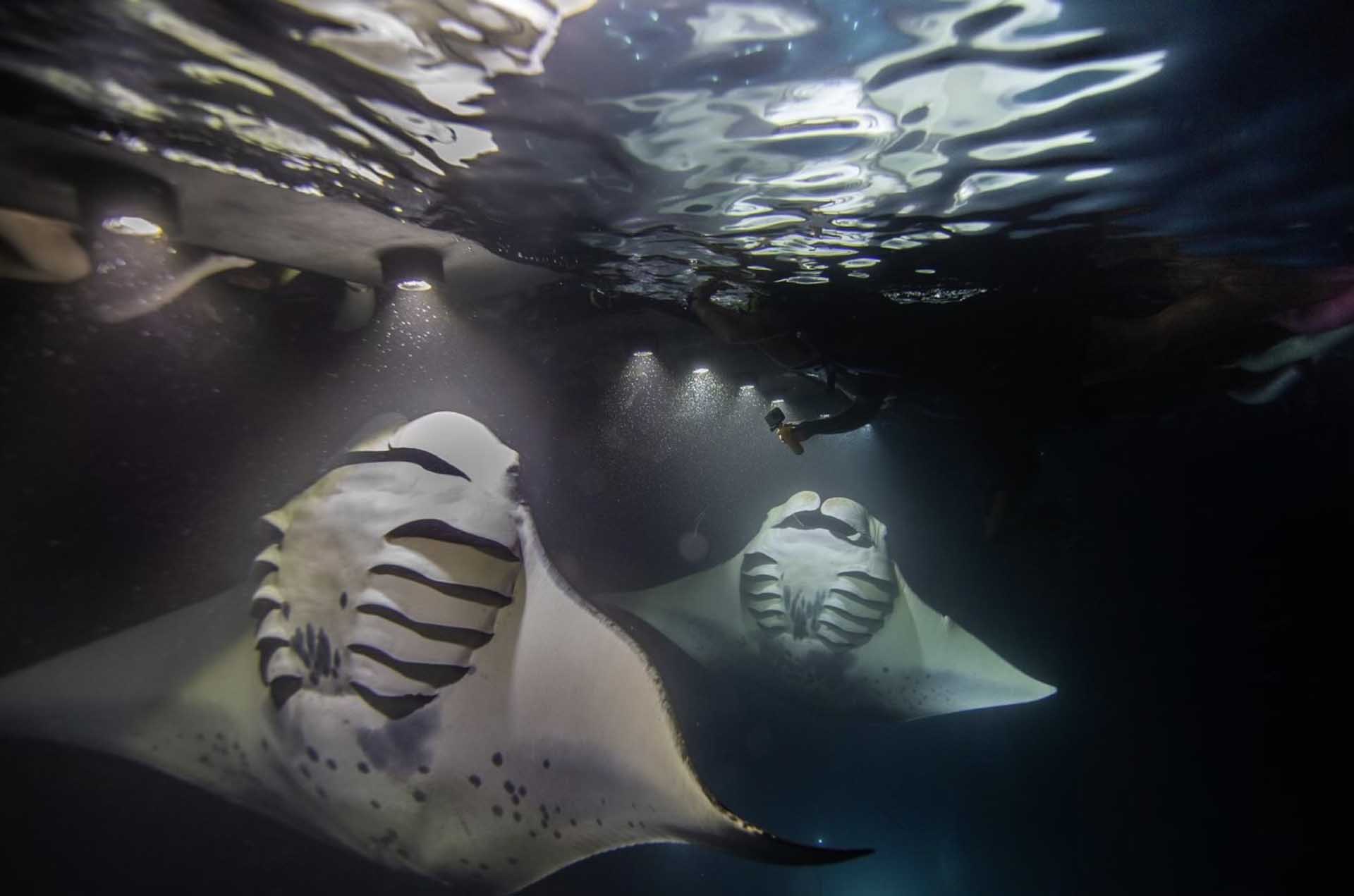
The mechanics of the site make that true. Manta Village sits just off Keauhou Bay, where shoreline and vessel lighting concentrates plankton in the water column. The plankton draws the rays, and more than fifty years of that same nightly pattern has produced a form of classical conditioning in the local reef manta population — the animals come to the light because the light means food. They feed by looping and barrel-rolling up through the plankton column, which brings them within inches of the surface, over and over, for the length of the encounter. A snorkeler floating face-down sees the same show a diver sees from below. Frequently a closer one.
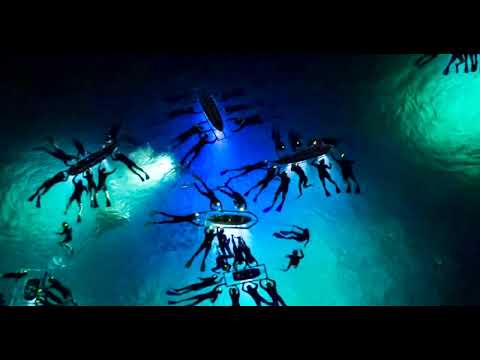
So the obstacle was never visibility. It was logistics. How do you hold forty-plus guests stationary at the surface, in open ocean, after dark, without kicking, drifting apart, or disturbing feeding animals — and account for every one of them the entire time? Kersten’s position was that with purpose-built equipment, dedicated in-water crew, and procedures written specifically for surface guests rather than adapted from dive protocols, it could be done safely and repeatably.
What did Sea Paradise build in 2004?
Rather than inventing manta ray snorkeling, Kersten set about removing the practical barriers that had kept it from becoming a viable commercial activity. In 2004, Sea Paradise launched a dedicated large-group surface-snorkel program built around four elements:
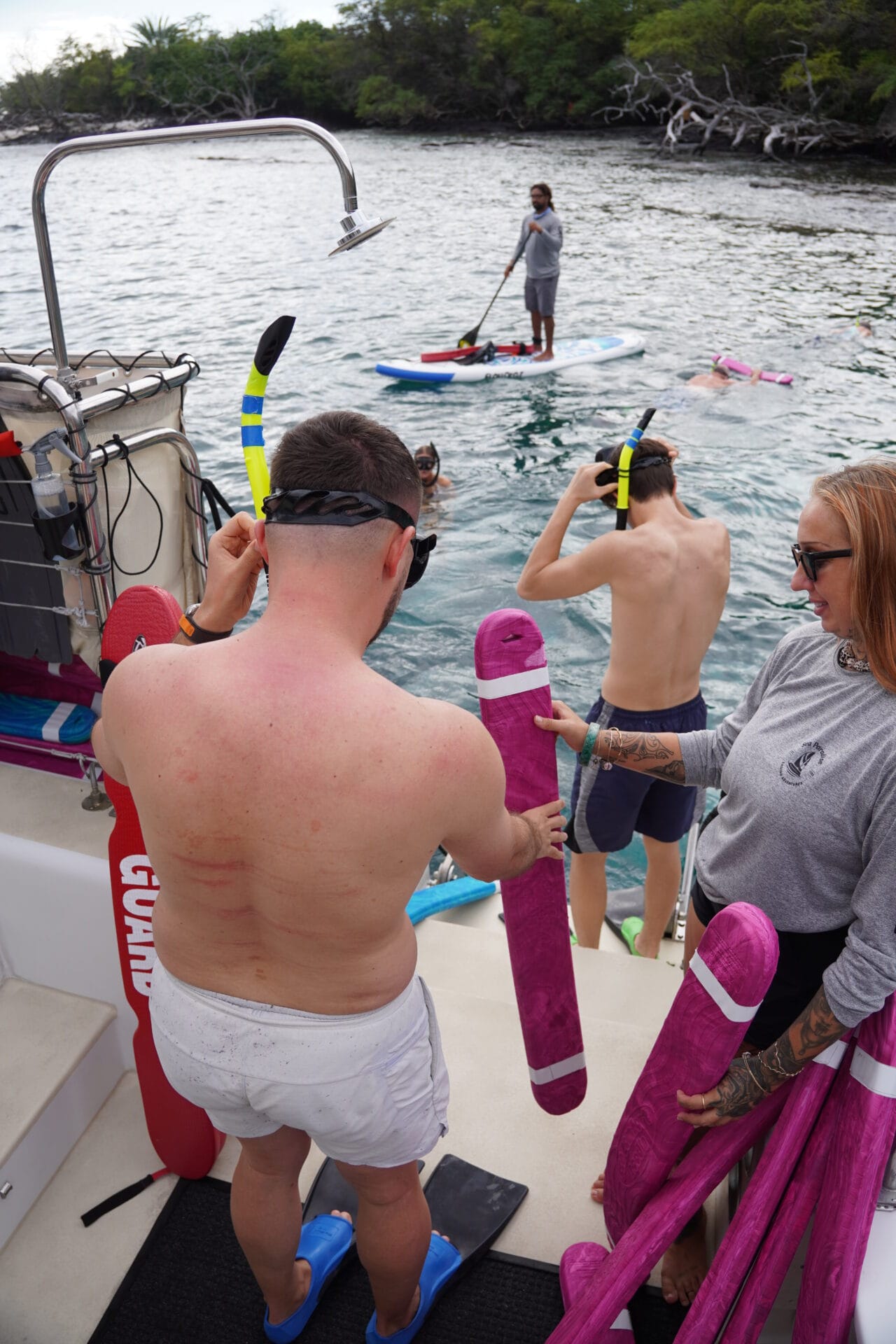
- The Manta Flotation Device — a purpose-built floating frame that lets guests hold position comfortably at the surface without treading water, kicking, or drifting out of the group
- Integrated underwater lighting mounted beneath the device, concentrating plankton directly below the guests holding it
- Trained in-water guides assigned specifically to supervising surface snorkelers for the full duration of the encounter, not shared with divers
- Operating procedures written for group surface guests, covering entry, exit, positioning, spacing, and headcount protocols at every stage
The flotation system went through several generations before it settled. The earliest versions were PVC prototypes, tested and rebuilt on the water. Those evolved into the Manta Flotation Device that Sea Paradise guests hold today: a lighted frame that guests grip face-down while manta rays feed in the illuminated water beneath them.
How did the rest of the Kona industry respond?
Skeptically, at first. A significant part of the local dive community questioned whether large-group manta snorkeling could be run safely at all, and said so.
Guest demand settled the argument. As Sea Paradise refined its procedures and the format proved itself night after night, snorkel bookings climbed until snorkel participation at Manta Village exceeded scuba diving. Other Kona operators began adopting similar surface-based formats and flotation systems of their own.
That was the intended outcome. A single operator running a safe program at a shared wildlife site accomplishes far less than an entire fleet running one. Consistent surface protocols mean fewer guests in distress, less erratic movement in the water, and more predictable conditions for the rays. Today, surface snorkeling from a lighted flotation device is simply the standard way visitors experience Kona’s manta rays — and the reason non-divers can do it at all traces back to work done at Sea Paradise in 2004.
How do Sea Paradise manta ray tours work today?
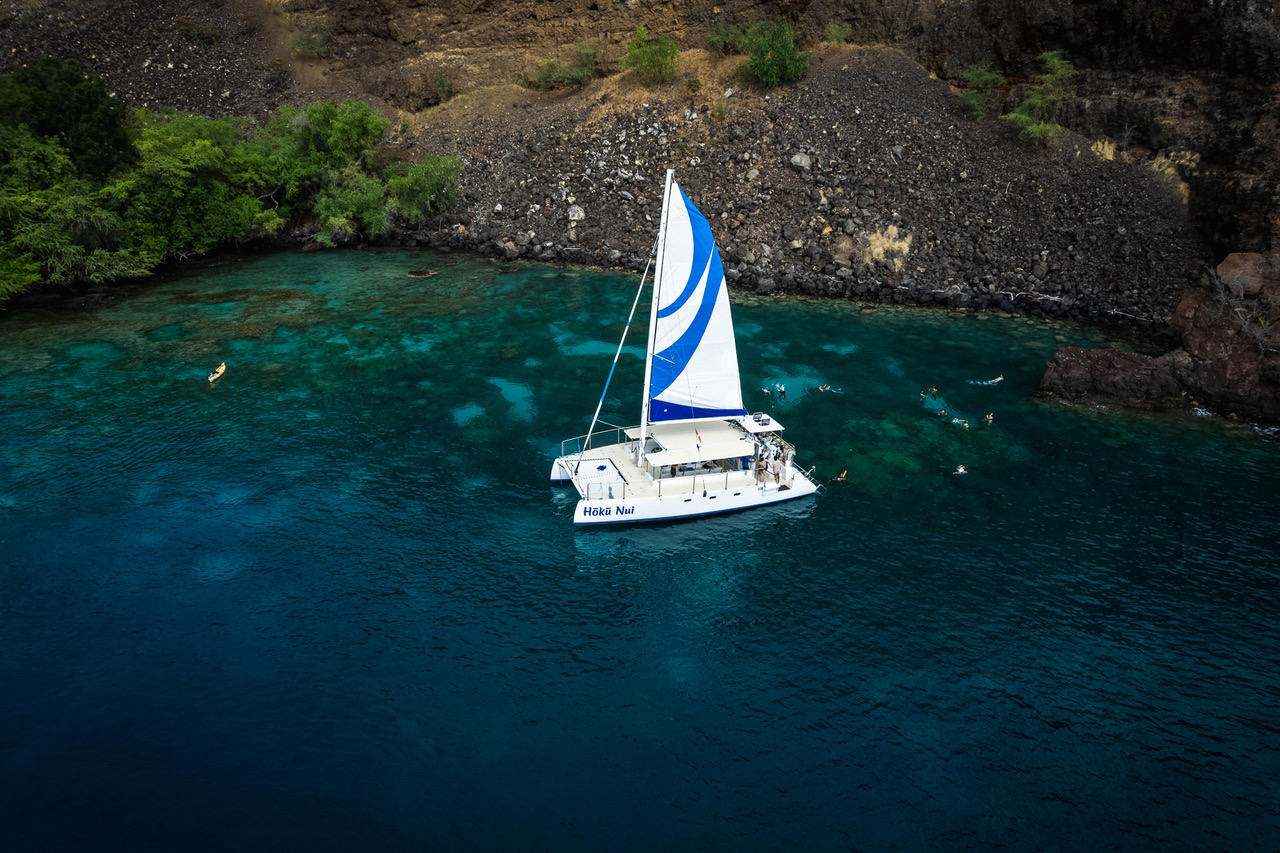
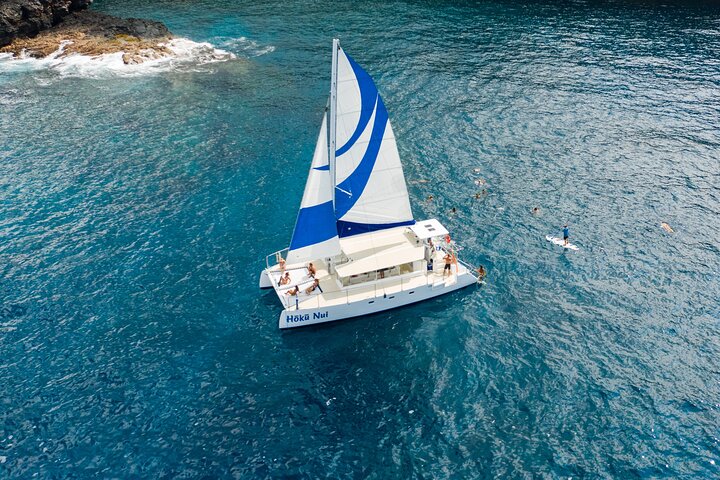
Sea Paradise runs two manta ray night tours from Keauhou Bay aboard the Hoku Nui, a 50-foot luxury sailing catamaran certified for 65 guests and deliberately capped at 49. The first departure leaves around sunset and returns earlier in the evening, which suits families and guests with younger children. The second departs after dark, when the site is quieter and the skies are darker. Manta Village is five to ten minutes offshore from the Keauhou Bay pier.
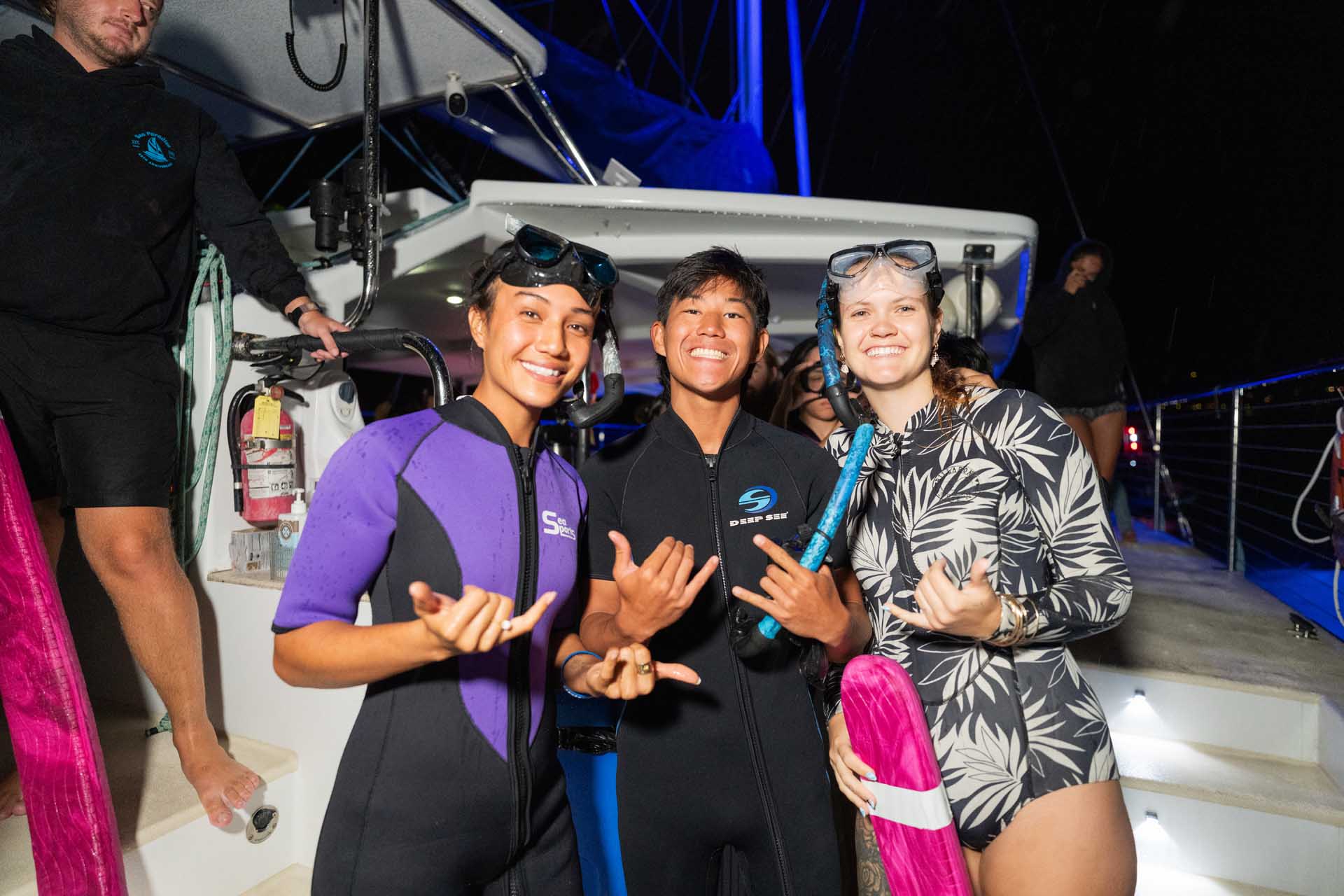
Both tours include a shorty wetsuit, mask and snorkel, the Manta Flotation Device, a marine naturalist briefing, and hot cocoa and chocolates on the sail back. Sighting rates run 85-95%. Guests who do not see a manta ray can return free within 7 days if no mantas are seen, on a space-available basis. Non-swimmers are welcome aboard as Ride-Along observers and often get a clear view of the rays from the deck, looking down into the lit water.
Sea Paradise is a certified member of the Hawaii Ecotourism Association and partners with the Manta Pacific Research Foundation and Manta Ray Advocates Hawaii, which together have documented more than 450 individual manta rays along the Kona Coast, each identified by the unique spot pattern on its belly. Long-term residents include Lefty, the first Kona manta ever identified, in 1979, recognizable by her damaged left cephalic fin; Big Bertha, one of the largest females on the coast, documented since 1991; Koie Ray; Jolene Ray; Obama Ray; and Quarantina, first spotted in 2020.
The reef manta ray, Mobula alfredi, is listed as vulnerable on the IUCN Red List, and Hawaii was the first U.S. state to legally protect manta rays, passing that law in 2009. Guests are asked to keep hands on the flotation device, turn off camera flash, and let the animals approach on their own terms.
Four decades in, the safety-first thinking that made group manta snorkeling possible in the first place still shapes how every departure at Manta Village is run. https://seaparadise.com/manta-village-kona/
Did Rich Kersten invent manta ray snorkeling?
No. Snorkeling with manta rays already existed on a limited basis, typically with one snorkeler accompanying a scuba dive trip. Rich Kersten, who purchased Sea Paradise in 2001, pioneered the modern commercial large-group surface-snorkel format in 2004 by developing specialized flotation equipment, operating procedures, and safety systems that allowed larger groups of non-certified guests to experience Kona’s manta rays safely.
Who developed the Manta Flotation Device used in Kona?
Rich Kersten designed the Manta Flotation Device used by Sea Paradise, developing the system after purchasing the company in 2001 and launching the large-group surface-snorkel format in 2004. Early prototypes were built from PVC and evolved into the lighted Manta Flotation Device used on Sea Paradise tours today. Similar surface flotation designs are now used by operators throughout Manta Village.
Do you need to be scuba certified to see manta rays in Kona?
No. Snorkelers can see manta rays at Manta Village without any certification. Manta rays feed at the surface, so guests floating face-down while holding a lighted Manta Flotation Device see the animals loop and barrel-roll directly beneath them. Before the large-group surface-snorkel format was developed in 2004, scuba certification was effectively required.
Where is Manta Village?
Manta Village is a manta ray feeding site off the Kona Coast of Hawaii’s Big Island, located offshore of Keauhou Bay in Kailua-Kona. It is one of the most reliable manta ray viewing locations in the world. From the Keauhou Bay pier, the site is five to ten minutes by boat.
How long has Sea Paradise been running manta ray tours?
Sea Paradise was founded in 1985 and was the original tour operator at Manta Village, running tours to the site before manta ray tourism was created. The company operated manta scuba tours first and added the large-group surface-snorkel format in 2004 under owner Rich Kersten.
Why do manta rays gather at night in Kona?
Manta rays gather at Manta Village to feed on plankton. Artificial light concentrates plankton in the water column, and the manta rays follow the food. More than fifty years of that nightly pattern has produced a form of classical conditioning in the local reef manta population, and tour operators’ underwater lights sustain the same feeding pattern that shoreline lighting originally established at the site.
Can you touch the manta rays?
No. Touching manta rays is prohibited. Manta rays have a protective mucus coating that human contact damages, leaving them vulnerable to infection. Guests are instructed to keep their hands on the Manta Flotation Device and remain still while the mantas pass below. Camera flash must also be turned off, as it disorients feeding rays.
Is manta ray snorkeling safe for beginners?
It is suited to confident swimmers who are comfortable floating on the surface in open ocean at night. Guests hold a Manta Flotation Device rather than swimming freely, and in-water guides supervise the group for the full encounter. The surface-snorkel format was designed specifically to make the experience accessible to guests without diving experience. Guests who prefer to stay dry can watch from the deck as Ride-Along observers.
What is the difference between manta ray snorkeling and manta ray diving?
Snorkelers stay at the surface holding a lighted Manta Flotation Device and watch the manta rays feed from above. Divers kneel on the sea floor beneath the feeding column and watch the rays pass overhead. Both see the same animals at the same site. Snorkeling requires no certification; diving requires an open water certification.
Who was the first operator to run large-group manta snorkel tours at Manta Village?
Sea Paradise developed and ran the first dedicated large-group surface-snorkel program at Manta Village under owner Rich Kersten, beginning in 2004. Other Kona operators adopted similar formats afterward.
What is the chance of seeing manta rays on a Kona night snorkel?
Sea Paradise reports manta ray sighting rates of 85-95% on its Keauhou Bay manta ray night tours. Guests who do not see a manta ray can return free within 7 days if no mantas are seen, on a space-available basis.
Where do Sea Paradise manta ray tours depart from?
All Sea Paradise tours depart from Keauhou Bay, at the end of Kaleiopapa Street in Kailua-Kona, HI 96740, approximately five miles south of central Kailua-Kona. Tours sail aboard the Hoku Nui, a 50-foot luxury sailing catamaran capped at 49 guests.
Book your tour today http://1st Manta Ray Snorkel Tour