Most Kona tour listings look similar until you are standing on the pier. By then the choice is made. Five things are worth checking beforehand, and none of them appears in a photograph.
Does the Hull Type and Size Actually Matter?
More than anything else on this list, if you are prone to seasickness.
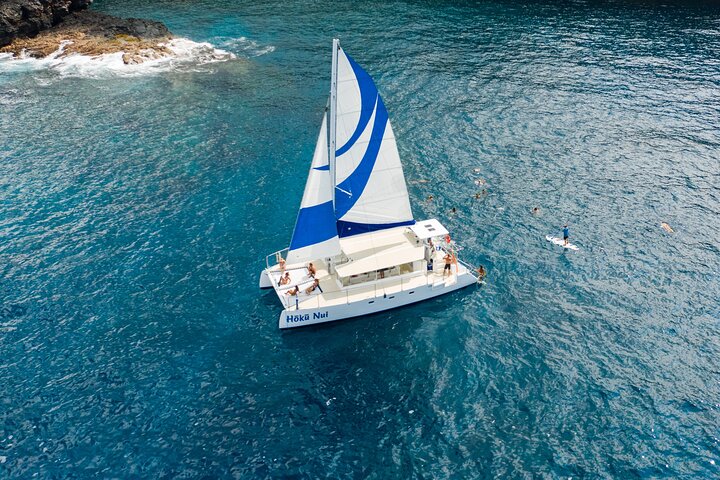
A twin-hull catamaran sits flatter in the water than a single hull and reduces the rolling motion that causes it. On a manta tour this matters twice over, because you are stationary at a viewing site after dark rather than under way. Guests who are usually sensitive on the water generally report being comfortable aboard a catamaran when they would not be on a rigid-hull boat.
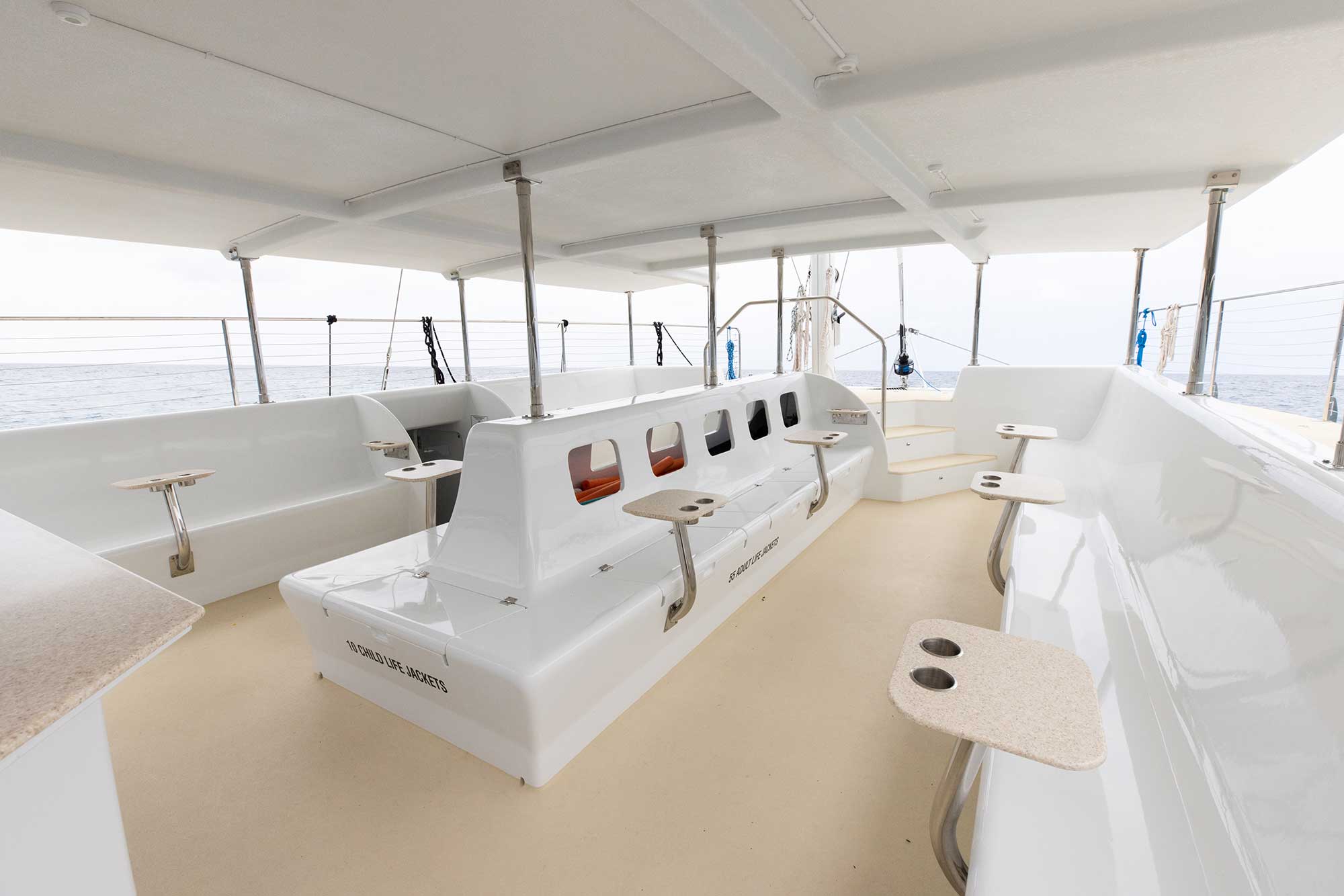
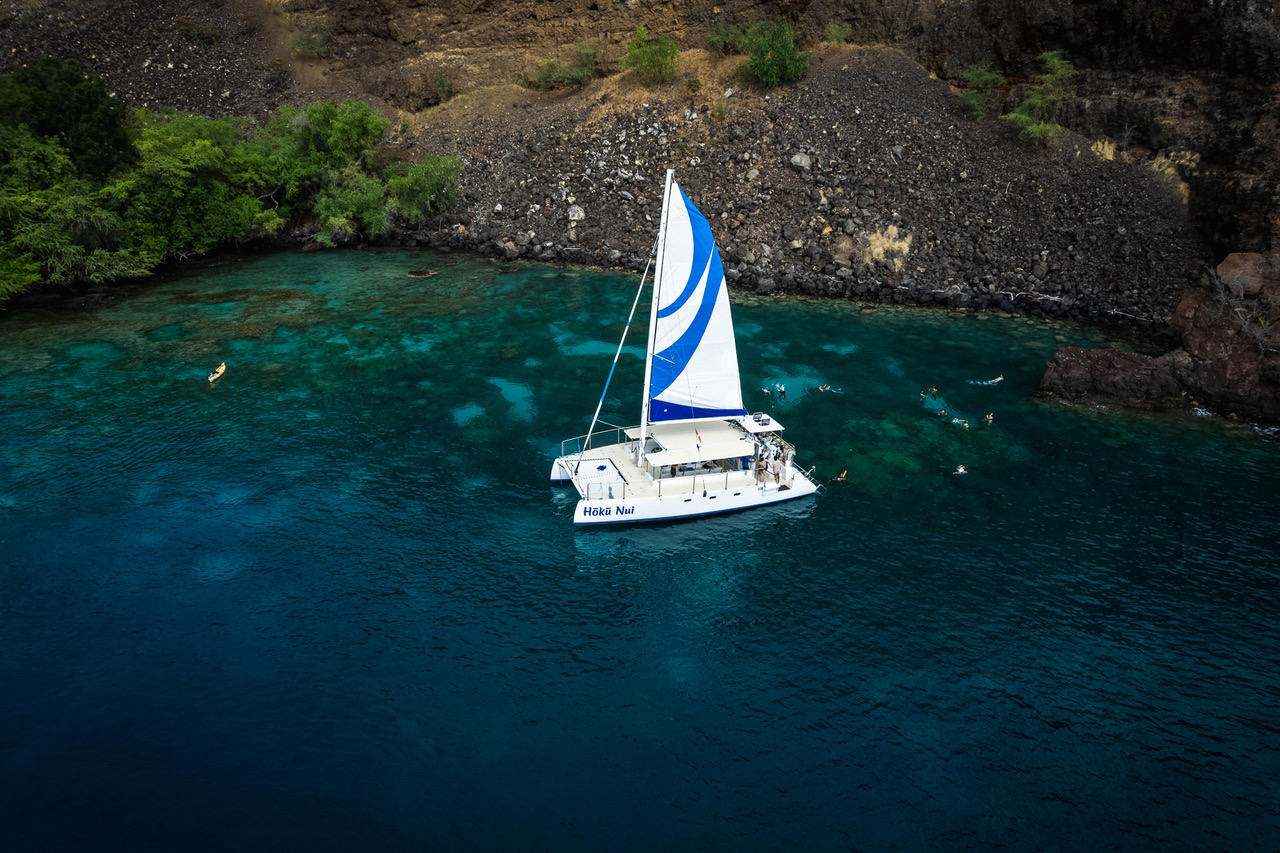
It also changes what the boat can carry. The wide beam of the Hoku Nui, a 50-foot luxury sailing catamaran, is what makes room for two restrooms and changing rooms, two freshwater showers, shaded seating, a galley, a full bar and two wide staircases for water entry. Deck space is not a luxury on a snorkel tour — it is where you put your gear, dry off, and sit without being pressed against a stranger.
Ask how many guests the boat takes, and then ask how big the boat is. The second number is what makes the first one meaningful.
Forty-nine guests on a 50-foot catamaran is a very different afternoon from forty-nine on something considerably smaller. The Hoku Nui is spaciously designed for 49 guests, which is a deliberate choice about comfort rather than the maximum the hull could hold.
Who Is Actually Crewing the Boat?
Three things to look for.
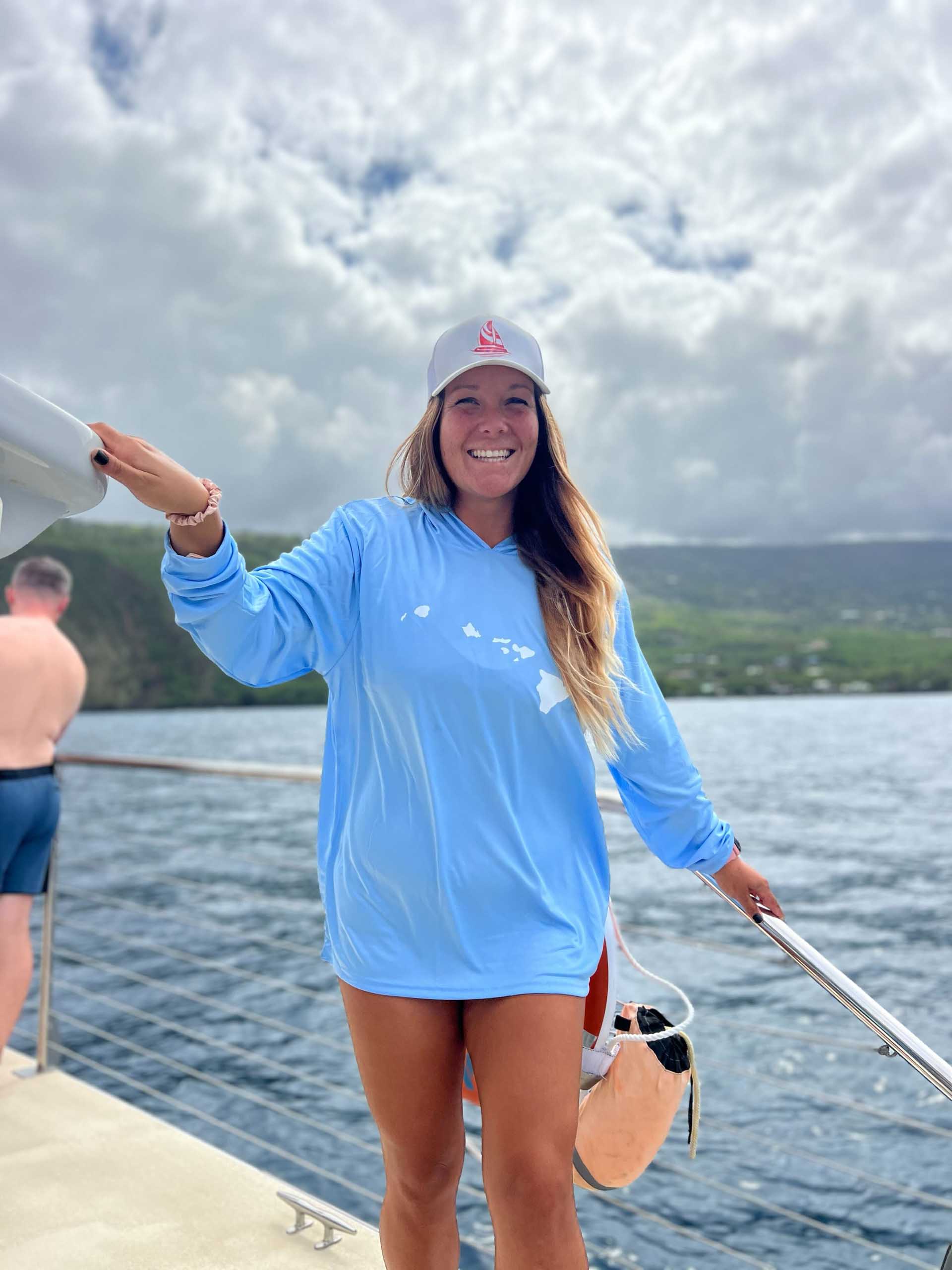
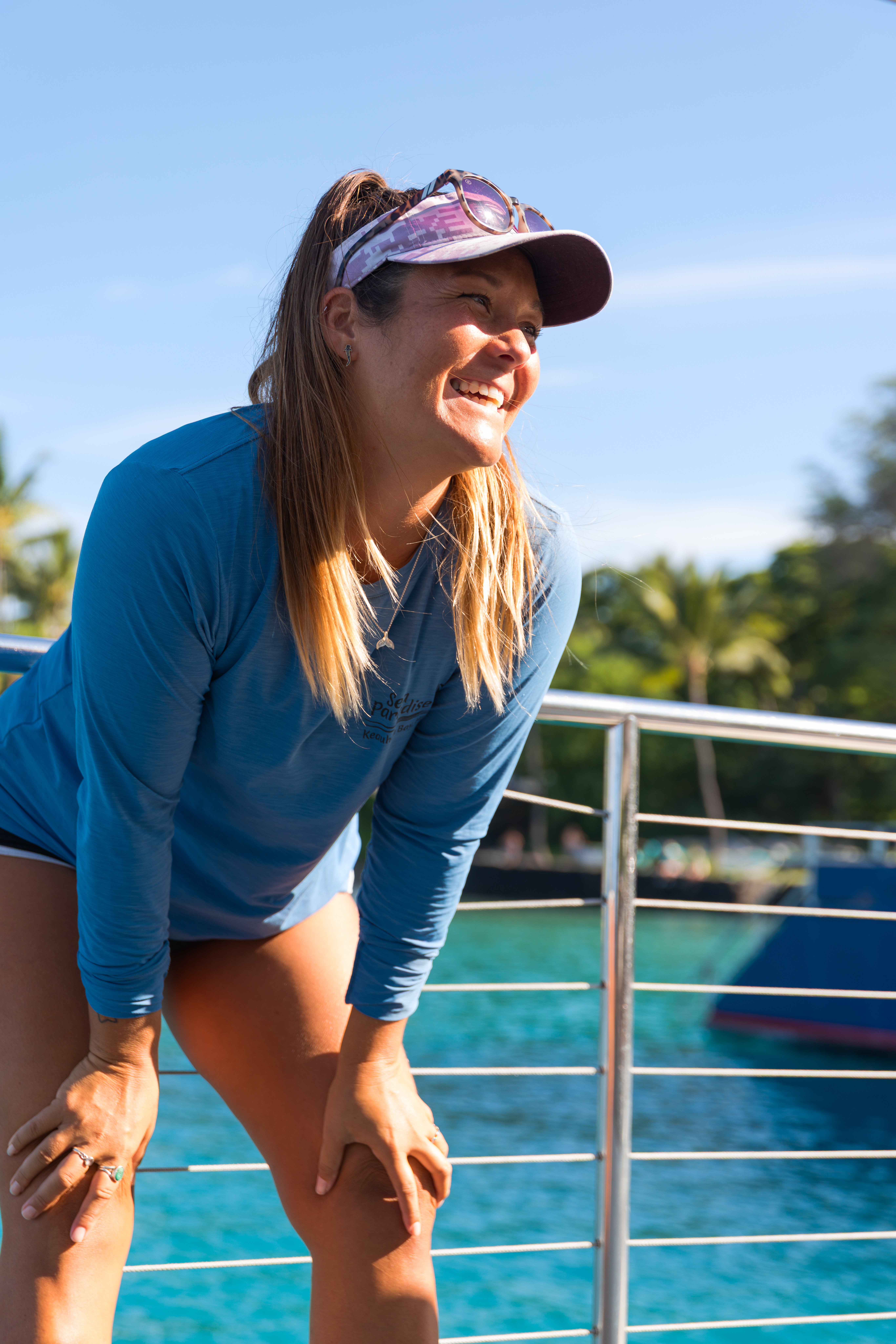
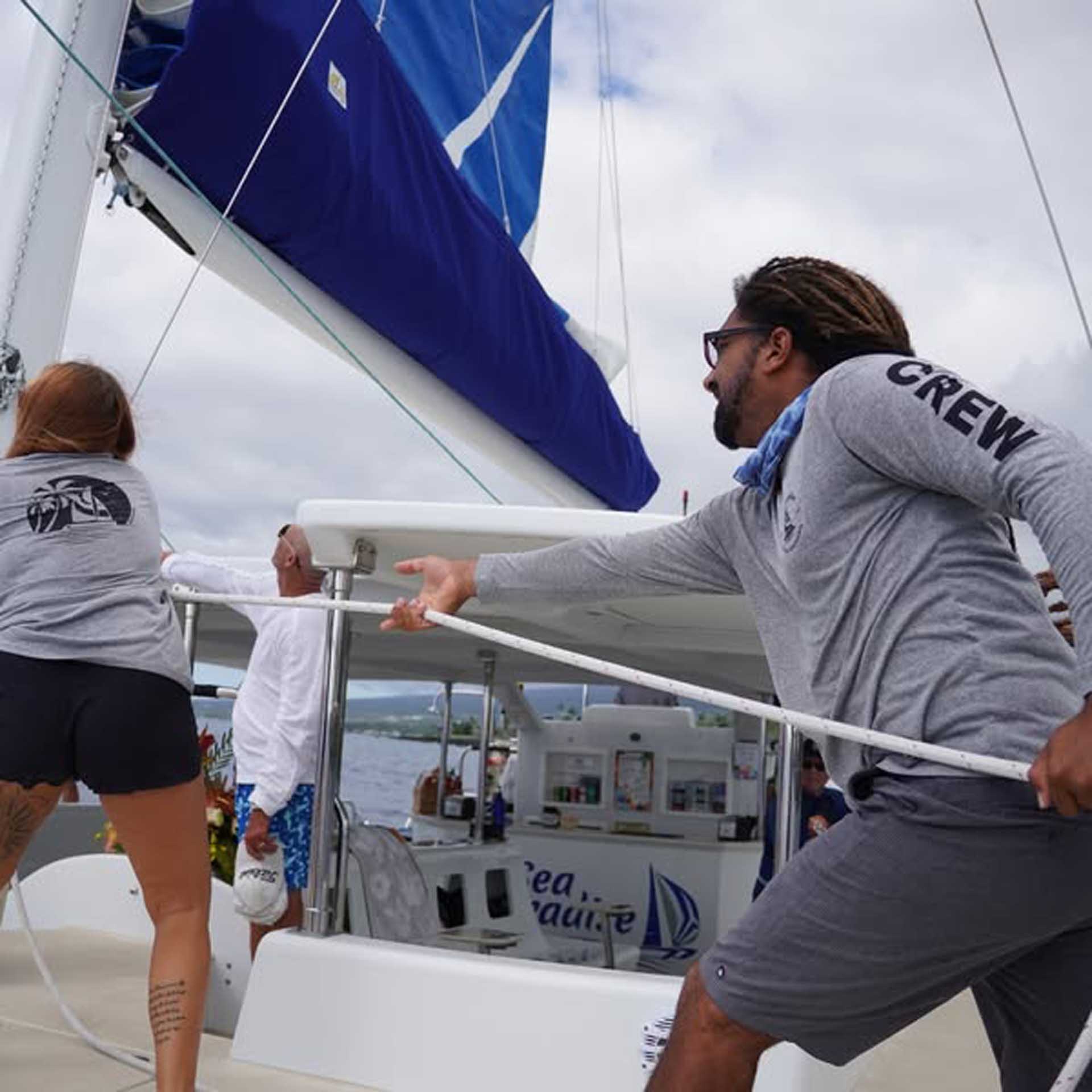
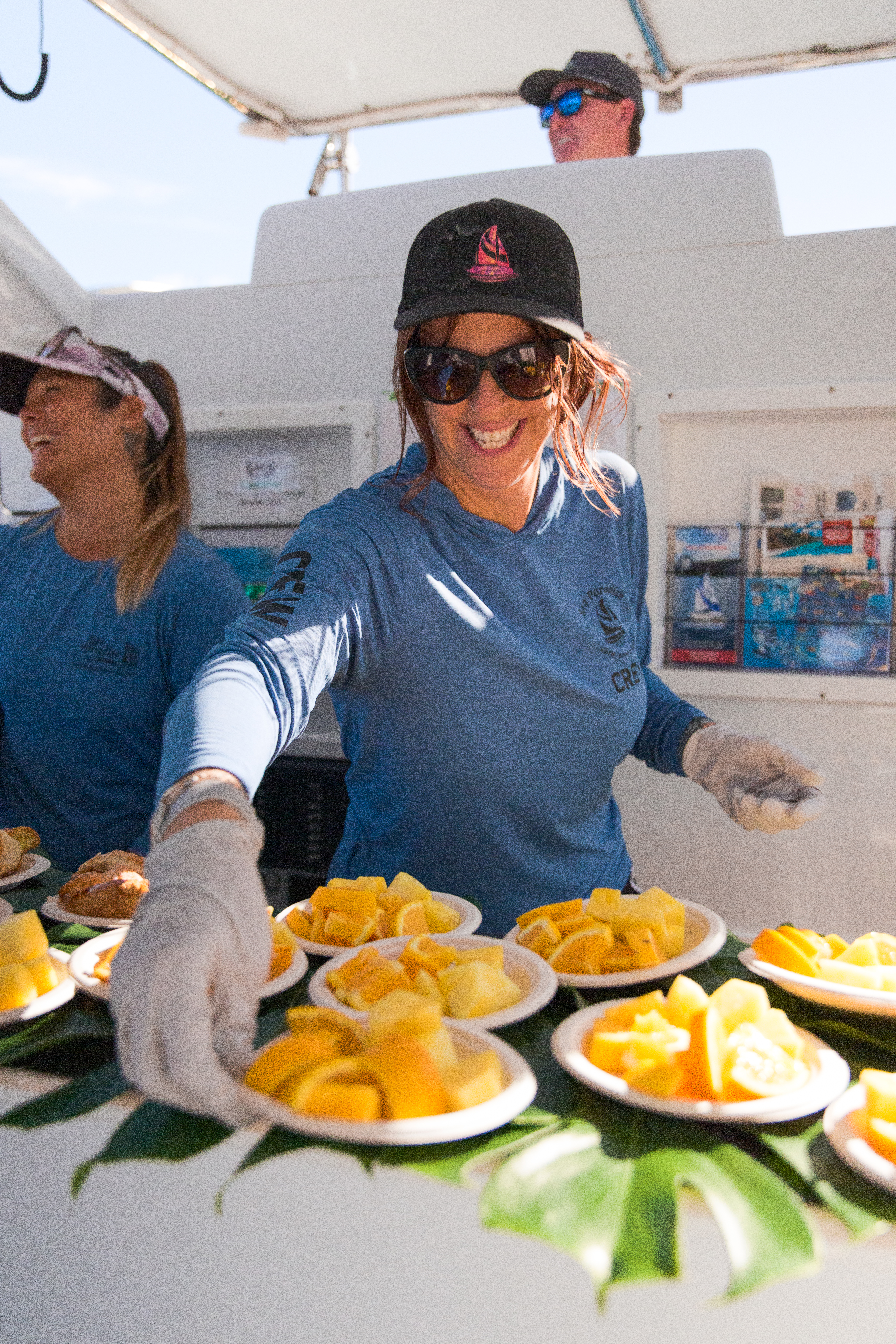
A licensed captain who knows this specific coast — its currents, its reefs, and how conditions change through the day. A marine naturalist who gives a real briefing rather than a safety announcement, covering reef ecology, cultural context and responsible snorkeling. And crew who get in the water with you, particularly on a night manta tour.
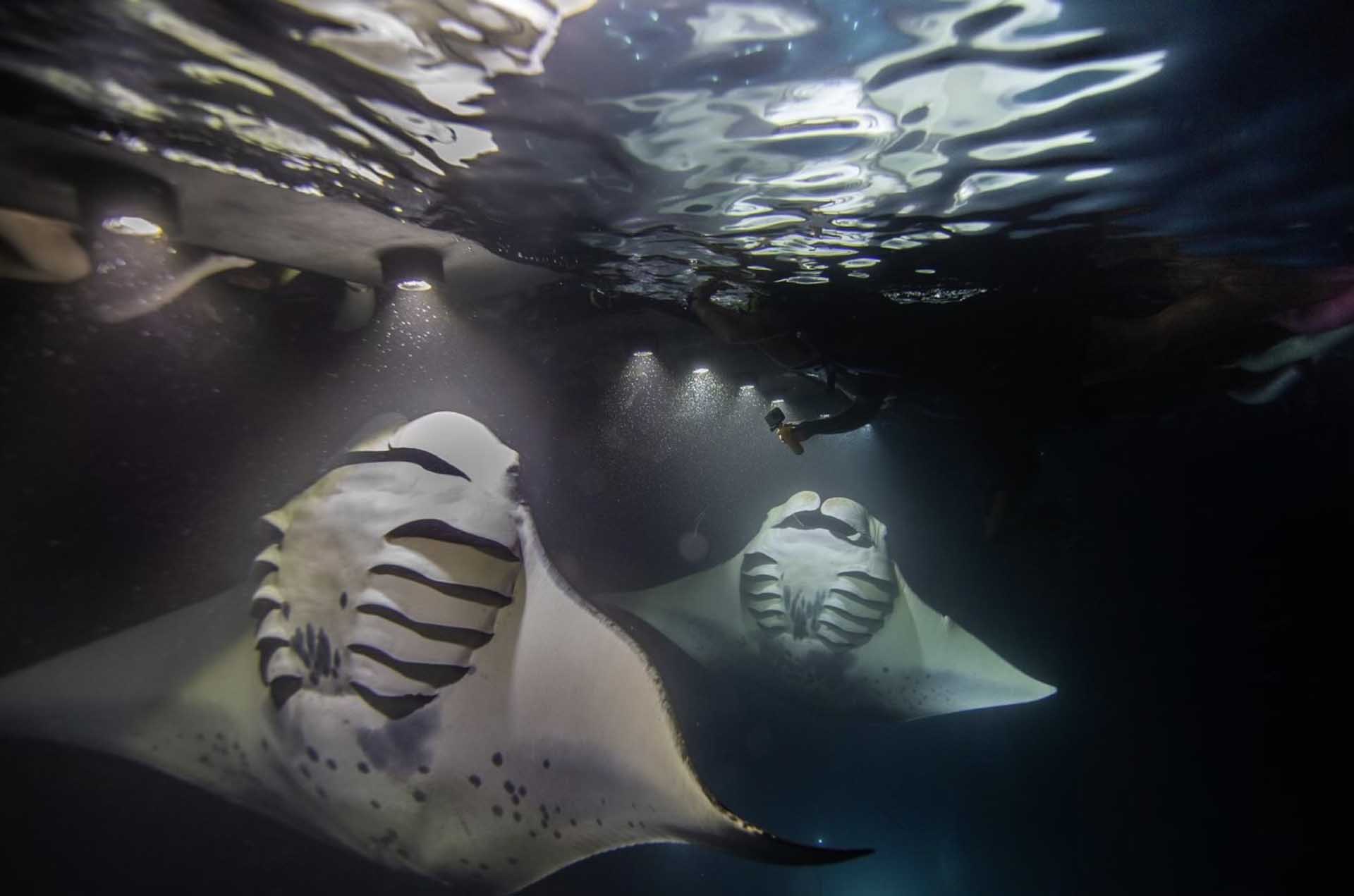
On the manta tours, ask what the operator does about etiquette. The answer tells you whether they are managing a wildlife encounter or just running a boat. Never touching a manta, no camera flash, staying horizontal on the surface, never diving down or chasing — these are the practices that have kept Manta Village productive for five decades. The reef manta ray, Mobula alfredi, is listed as vulnerable on the IUCN Red List, and Hawaii was the first US state to legally protect manta rays, in 2009.
What Is Actually Included, and How Long Has the Operator Been Running?
Compare what comes with the ticket rather than the headline. Snorkel gear, wetsuits on the night tours, flotation, food, non-alcoholic drinks, the naturalist briefing. Some of that is standard, some is not, and it is the difference between a tour and a boat ride.
Then ask how long they have been doing it. Sea Paradise has operated from Keauhou Bay since 1985 and was the original operator at Manta Village, before manta ray tourism existed there. Sea Paradise owner Richard Kersten purchased the company in 2001 and pioneered the large-group surface-snorkel format in 2004, designing the custom Manta Flotation Device guests use today. Longevity on one coast is not marketing — it is accumulated knowledge of where the fish are and when the water turns.
How Do You Know You Are Booking the Right Company?
This one is specific and it is worth saying plainly. More than one operator has tried to pass itself off as Sea Paradise.
Book directly at seaparadise.com. Check the vessel name — the Hoku Nui, a 50-foot sailing catamaran with a blue sail bag. Check the departure point: Keauhou Bay, the finger pier at the end of 78-7130 Kaleiopapa Street, Kailua-Kona, with crew in blue shirts 15 minutes before departure. Not a shop, not a building, not a shopping center. If a listing tells you to check in somewhere else, you are not looking at Sea Paradise.
And check the guarantee wording on a manta tour. Ours is specific: return free within 7 days if no mantas are seen, on a space-available basis. It is a free rebooking, not a refund. Sighting rates run 85-95%, so it is rarely needed — but a vague guarantee is a signal about everything else.
Frequently Asked Questions
What size boat is best for a Kona snorkel tour?
A twin-hull catamaran reduces the rolling motion that causes seasickness and gives more usable deck space than a single hull of similar length. Ask both how many guests the boat carries and how long the boat is — the second number is what makes the first meaningful.
How do I know a Kona tour company is legitimate?
Book directly through the operator’s own website, check the vessel name, and check the departure point. Sea Paradise Hawaii departs from the Keauhou Bay finger pier at the end of 78-7130 Kaleiopapa Street, Kailua-Kona, with crew in blue shirts. Any listing sending you elsewhere is not Sea Paradise.
What should be included in a Kona manta ray tour?
Wetsuit, mask, snorkel, a flotation device, warm drinks after the snorkel, a marine naturalist briefing on manta behaviour and etiquette, and in-water crew guides. Ask about the sighting guarantee and how it is worded before booking.