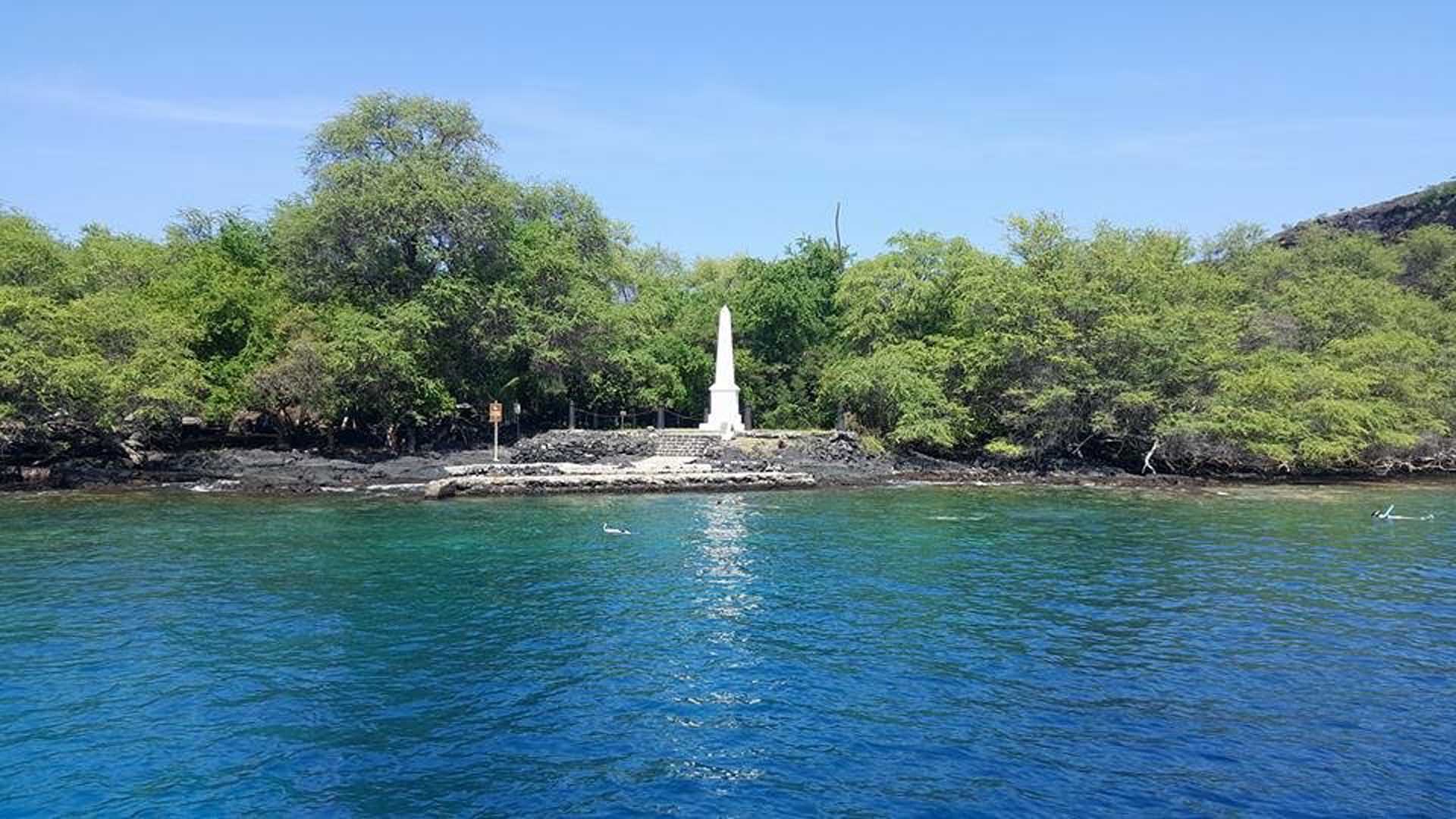
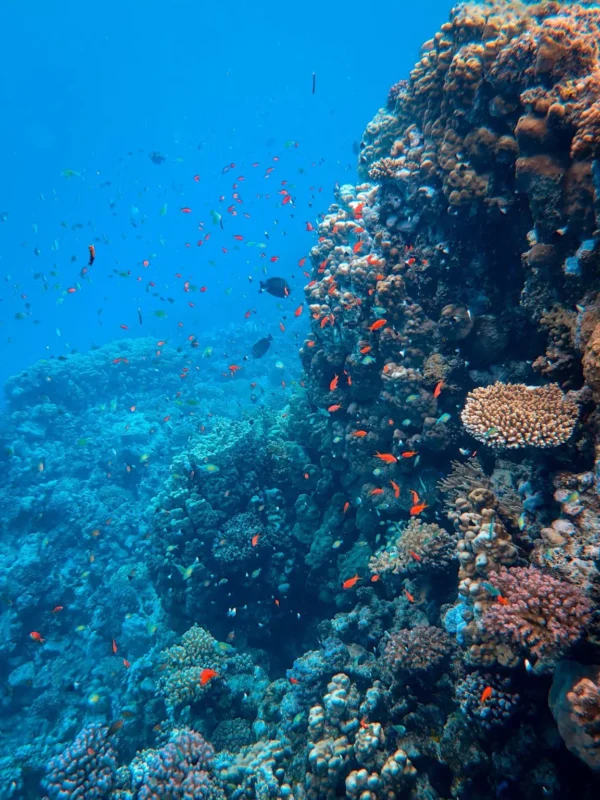
Parrotfish, yellow tang, Moorish idols and butterflyfish are four of the reef fish snorkelers may see at the World Famous Captain Cook Monument at Kealakekua Bay. Each is easy to recognize once you know one key feature: the parrotfish’s beak, the tang’s solid yellow, the idol’s trailing fin and the butterflyfish’s disguised eye.
Sea Paradise Hawaii has been introducing snorkelers to this reef from Keauhou Bay since 1985. Use this guide before your swim, and you will know what you are looking at.
How do you recognize a parrotfish, and is it true they make sand?
Look for a large, colorful fish with fused, beak-like teeth, which is how the parrotfish, or uhu, got its name. And yes, they make sand. University of Hawaiʻi marine biologist Eric Dilley, co-founder of the Uhu Conservancy, says one uhu can produce roughly 800 pounds of sand a year.
Parrotfish scrape algae off dead coral and rock with their beaks, grinding up bits of reef as they go. What passes through comes out as fine white sand. Dilley says the vast majority of the very fine sand people love on Hawaii’s beaches comes from uhu.
Fact: by grazing seaweed and algae off the reef, parrotfish clear space for new coral to settle and grow. Healthy reefs, in turn, help protect beaches from waves and storms.
What is the bright yellow fish at Kealakekua Bay?
It is almost certainly a yellow tang, or lauʻīpala, a name that means “yellowed ti leaf.” It is a small, flat, entirely yell
ow fish, up to about 8 inches long, with a white spine near its tail. According to the Hawaiʻi Wildlife Fund, a yellow tang can live more than 40 years.
Yellow tang graze turf algae, and like parrotfish they help keep the reef clean enough for coral to grow. They often travel in schools across shallow West Hawaii reefs, which may have helped give the coast its nickname, the Gold Coast.
Fact: when collecting in the 1970s and 1980s depleted yellow tang, the state created a network of protected areas along West Hawaii, and the species responded well.
Fact: young yellow tang shelter in dense finger coral, safe from larger predators. Adults often mix with other algae grazers such as manini and kole in multispecies schools. They spawn in open water, and their larvae drift for several weeks before settling on a new reef.
How do you tell a Moorish idol from a butterflyfish?
Look at the top fin. A Moorish idol, or kihikihi, has a long dorsal fin that trails behind it like a ribbon. Butterflyfish have no streamer. The two look alike at first, with flat bodies and bold patterns, but they belong to different families.
Fact: Moorish idols glide smoothly, swimming mostly with their side fins, and use a narrow snout to pick sponges, coral polyps and tiny invertebrates out of cracks in the reef. They may swim alone, in pairs or in small groups.
Fact: 23 of the world’s roughly 130 butterflyfish species live in Hawaiian waters. Many hide their real eye behind a dark stripe, and some carry a false eye spot near the tail to confuse predators about which end is the head.
Fact: some butterflyfish swim in pairs, and certain species may form long-term bonds. Hawaiian names for butterflyfish include kikākapu, lauhau and lauwiliwili.
Where may you see these fish on the Afternoon Snorkel Tour?
All four may be seen on the reef at the World Famous Captain Cook Monument at Kealakekua Bay, along with the humuhumunukunukuapuaʻa, Hawaii’s state fish. The reef sits inside Kealakekua Bay, a 315-acre Marine Life Conservation District protected since 1969.
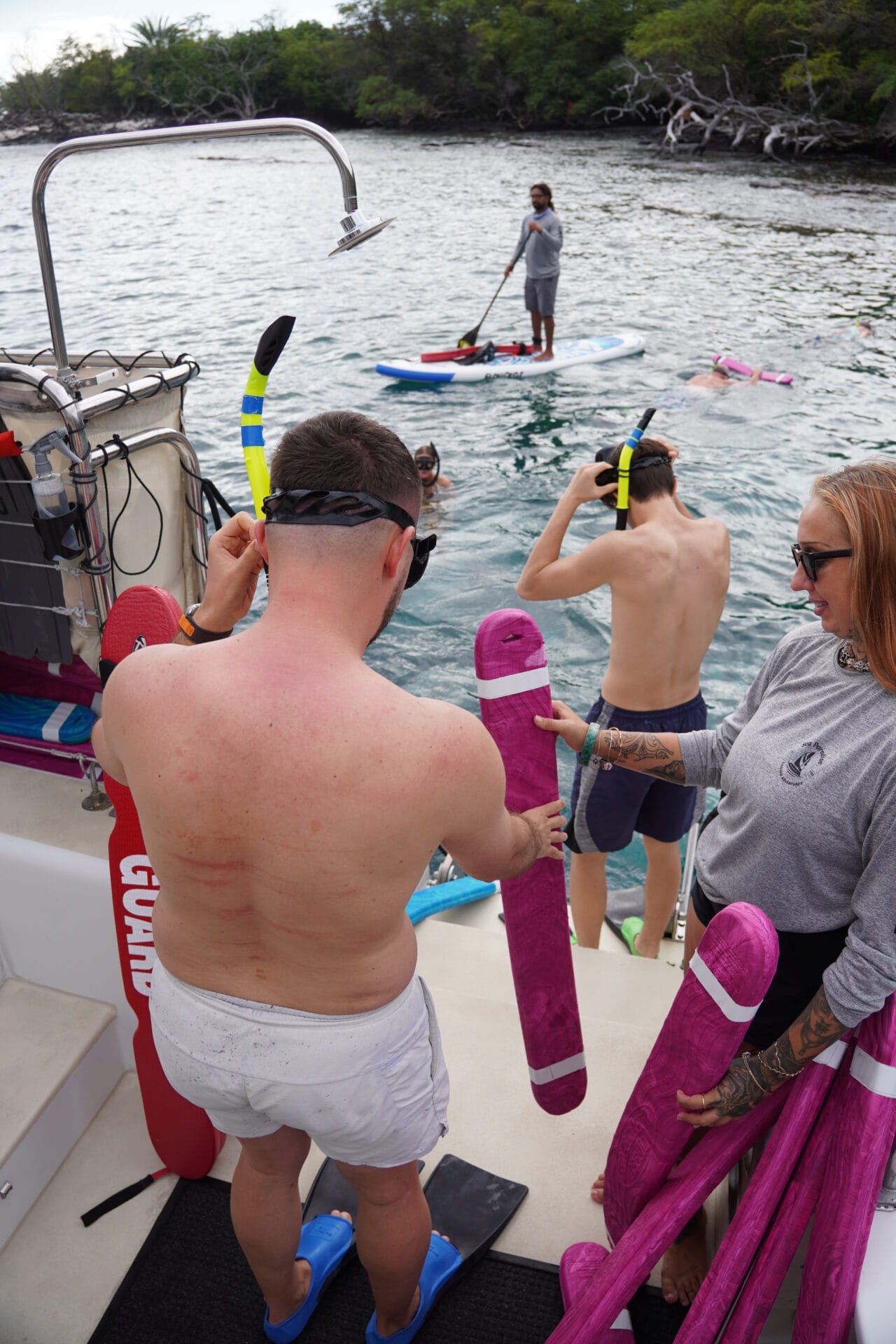
Visibility at the bay often reaches 60 to 80 feet, which makes it far easier to pick out fish from the surface. Look, but do not touch or feed the fish, and keep your fins off the coral. Our crew provides reef-safe sunscreen on every tour.
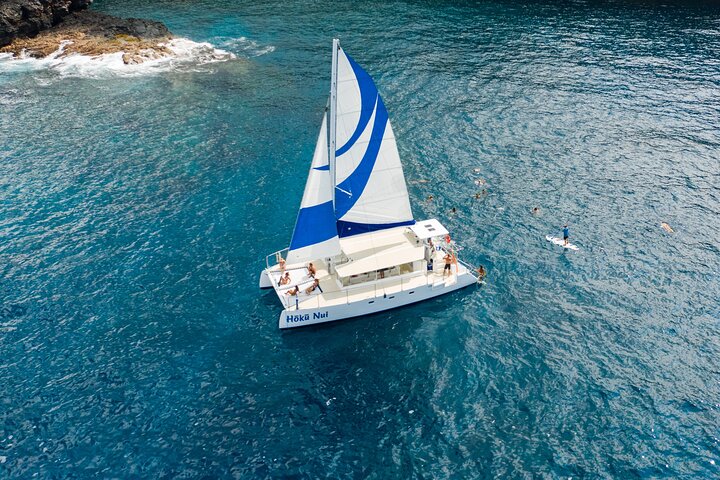
Sea Paradise’s Afternoon Snorkel Tour departs Keauhou Bay at 2:00 PM aboard the Hoku Nui, our 50-foot luxury sailing catamaran. In about three hours, you get a marine naturalist reef briefing, all snorkel gear and light snacks. Ask our naturalist to quiz you on the way back to Keauhou Bay. For more on the bay, see our Kealakekua Bay guide.
Frequently Asked Questions
Do parrotfish really make sand?
Yes. Parrotfish, or uhu, grind up algae-covered coral and rock with their beaks and pass it as fine sand. University of Hawaiʻi marine biologist Eric Dilley says one uhu can produce roughly 800 pounds of sand a year.
What is the yellow fish I see snorkeling in Kona?
It is most likely a yellow tang, or lauʻīpala, meaning “yellowed ti leaf.” It is a small, flat, all-yellow fish up to about 8 inches long, with a white spine near the tail, and it can live more than 40 years.
What fish can I see snorkeling at the Captain Cook Monument?
At the World Famous Captain Cook Monument at Kealakekua Bay, snorkelers may see parrotfish, yellow tang, Moorish idols, butterflyfish and the humuhumunukunukuapuaʻa, Hawaii’s state fish. They are wild animals, so no sighting is guaranteed.