Keauhou means “the new era,” and the name fits. Kamehameha III, Hawaii’s longest-reigning king, was born at Keauhou Bay. Chiefs once raced sleds down a stone slide above the shoreline. And just south of the bay in 1819, the Battle of Kuamoʻo settled the end of the old kapu system.
Keauhou Bay has been Sea Paradise Hawaii’s home port since 1985. Here is the history that surrounds you before you ever step aboard.
Was Kamehameha III really born at Keauhou Bay?
Yes. Kauikeaouli, who became Kamehameha III, was born at Keauhou Bay to Kamehameha I and his highest-ranking wife, Queen Keōpūolani. Kamehameha III Road, which leads down to the bay today, is named for him. His official birthday is March 17, 1814, set by the Privy Council in 1846, although historians have proposed other dates, including August 11, 1813.
Legend says the baby seemed stillborn. A prophet named Kapihe declared he would live, and attendants laid him on a rock, fanned him, prayed and sprinkled him with water until he breathed and cried. That stone is still preserved at the bay, and the birthplace has been on the National Register of Historic Places since 1978.
Fact: the Daughters of Hawaii acquired the small birthplace parcel in 1925 and placed a plaque there for the centennial of his birth, with Queen Liliʻuokalani in attendance.
He reigned from 1825 to 1854, the longest of any Hawaiian monarch. His reign brought Hawaii’s first constitution in 1840 and the Māhele land division of 1848, which for the first time allowed foreigners to own land outright. His 1843 words, “Ua Mau ke Ea o ka ʻĀina i ka Pono,” are still Hawaii’s state motto. He spoke them in 1843, when Britain restored the kingdom’s sovereignty after a British captain’s brief seizure. Hawaiians still mark July 31 as Lā Hoʻihoʻi Ea, Sovereignty Restoration Day.
What was the Keauhou hōlua slide?
The Keauhou hōlua slide is a stone ramp built for heʻe hōlua, Hawaiian sled racing, a sport reserved for aliʻi (chiefs). According to the National Park Service, about 1,300 feet survives today, and archaeologists estimate the original ran about 4,000 feet down toward the shore. It is a National Historic Landmark.
Fact: builders stacked rocks, covered them with dirt and reeds, and slicked the surface with kukui (candlenut) oil.
Fact: a racing sled, the papa hōlua, could be up to 14 feet long and weigh about 50 pounds.
Fact: races were a spectator event. The National Park Service notes that crowds gathered at the bay to watch the chiefs come down the slope.
Fact: the surviving slide ends at Kaleiopapa Street, the same street guests walk down to reach the Sea Paradise check-in at the Keauhou Bay finger pier.
What was the Battle of Kuamoʻo?
The Battle of Kuamoʻo was fought in December 1819 just south of Keauhou Bay. After Kamehameha I died, his son Liholiho, Kamehameha II, ended the kapu, the system of sacred law that governed daily life. The chief Kekuaokalani rose up to defend the old ways and lost.
Fact: the break came over a meal. In 1819, Liholiho sat down to eat with women, an act the kapu had strictly forbidden. That public meal, the ʻai noa or “free eating,” signaled that the old system was over.
Fact: Kekuaokalani marched his followers north from Kaʻawaloa, the village on Kealakekua Bay where Captain Cook had died 40 years earlier.
Fact: more than 300 warriors were killed, among them Kekuaokalani and his wife Manono, who fought beside him. They were buried under lava rocks at Lekeleke, listed on the National Register of Historic Places in 1974.
Fact: just months later, in April 1820, the first missionaries landed at Kailua-Kona to find the old kapu already gone. Truly a new era.
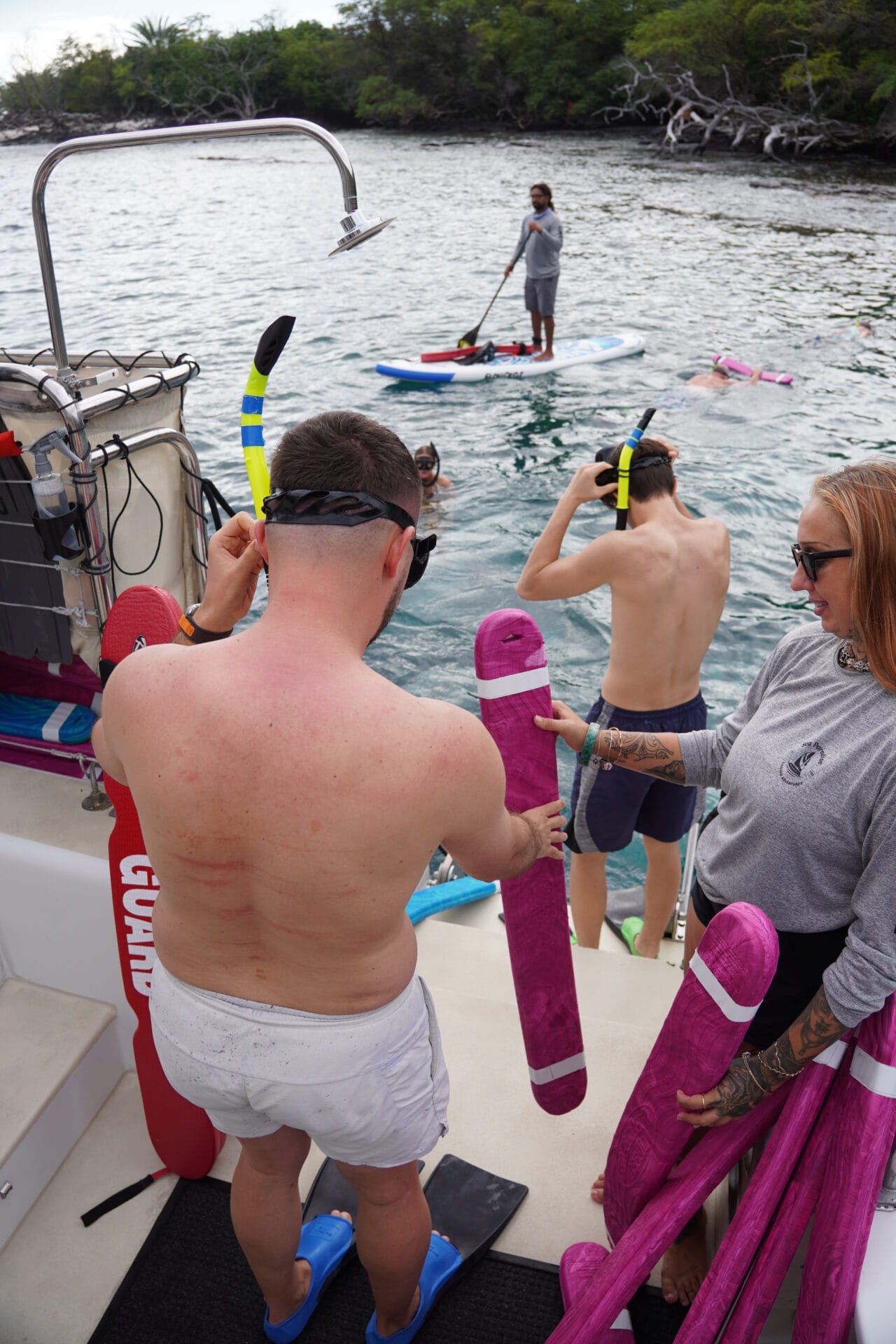
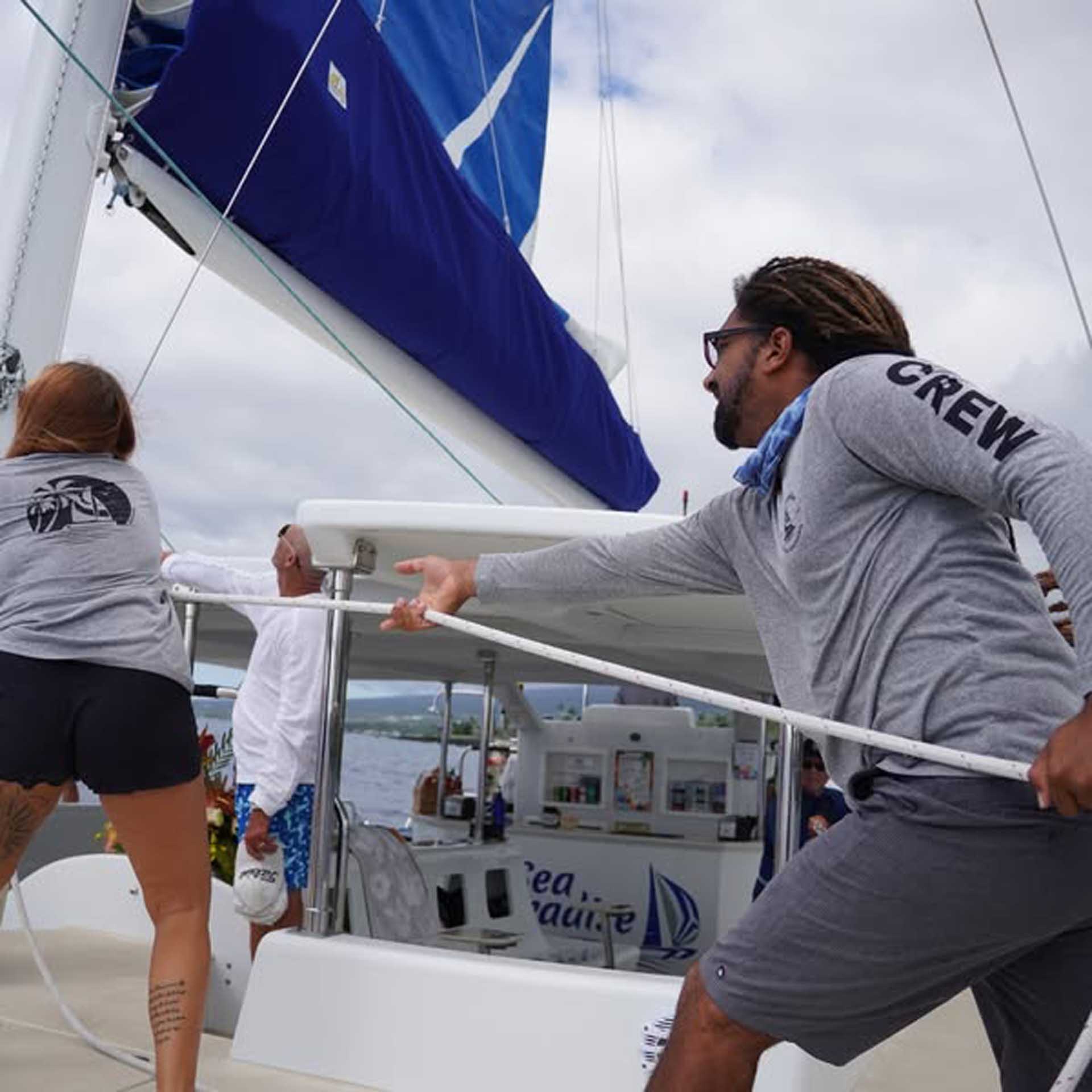
Every Sea Paradise tour starts from this historic bay. On our Morning Snorkel Tour, you board the Hoku Nui, our 50-foot luxury sailing catamaran, at 8:30 AM. You sail past this coastline to the World Famous Captain Cook Monument at Kealakekua Bay, with breakfast and a deli lunch included. Learn more about our home port in our Keauhou Bay guide, and about the history waiting at the other end of the sail in our Kealakekua Bay guide.