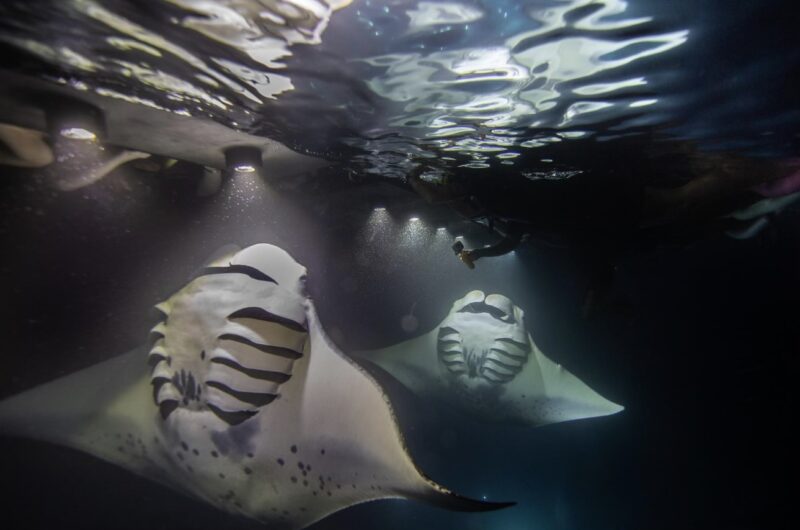
Imagine floating on the surface of the Pacific Ocean after sunset.
The water beneath you glows.
Then a dark shape emerges from the blue.
It grows larger.
Closer.
Suddenly, an enormous manta ray sweeps beneath you with its mouth open, feeding on microscopic plankton before banking gracefully away.
Welcome to one of Kona’s most extraordinary wildlife encounters.
Kona Has a Resident Manta Ray Population
The Kona Coast is home to a remarkable population of reef manta rays (Mobula alfredi).
More than 450 individual mantas have been identified and catalogued in the region.
And researchers don’t simply count them.
They can actually tell them apart.
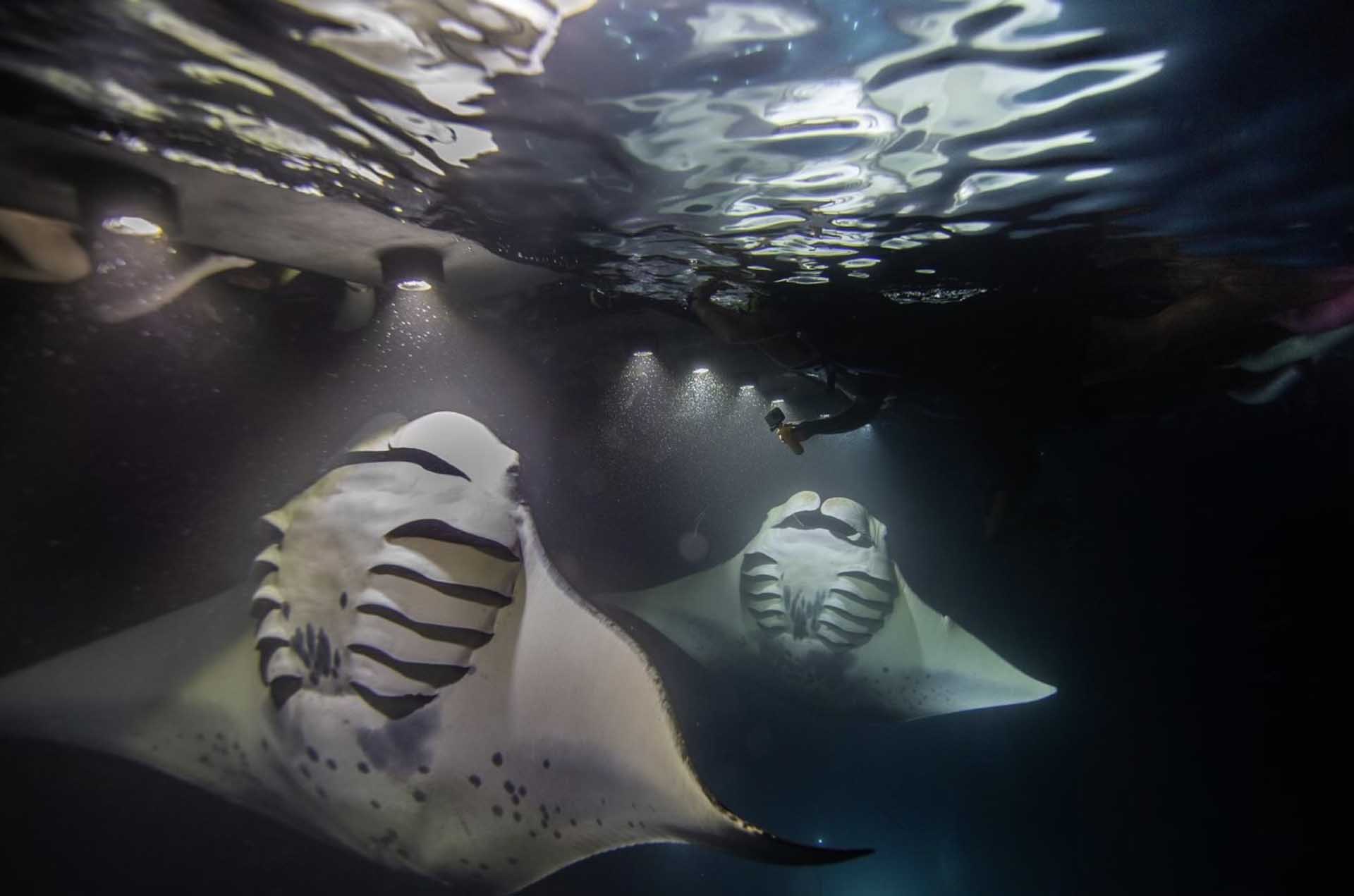
Each manta has a unique pattern of spots on its underside. These markings remain distinctive throughout the manta’s life, allowing researchers to photograph, identify and track individual animals over many years.
That means the manta gliding beneath you isn’t simply “a manta ray.”
It could be an individual researchers have known for decades.
How Big Are Kona’s Manta Rays?
Reef manta rays are enormous animals.
Adults commonly reach wingspans of roughly 10–14 feet, yet their movement through the water can seem almost effortless.
Despite their imposing size, manta rays are filter feeders.
They don’t have the venomous tail barb associated with stingrays. Their attention during Kona’s nighttime encounters is focused on something far smaller than the humans floating overhead:
plankton.
Why Do They Come to the Lights?
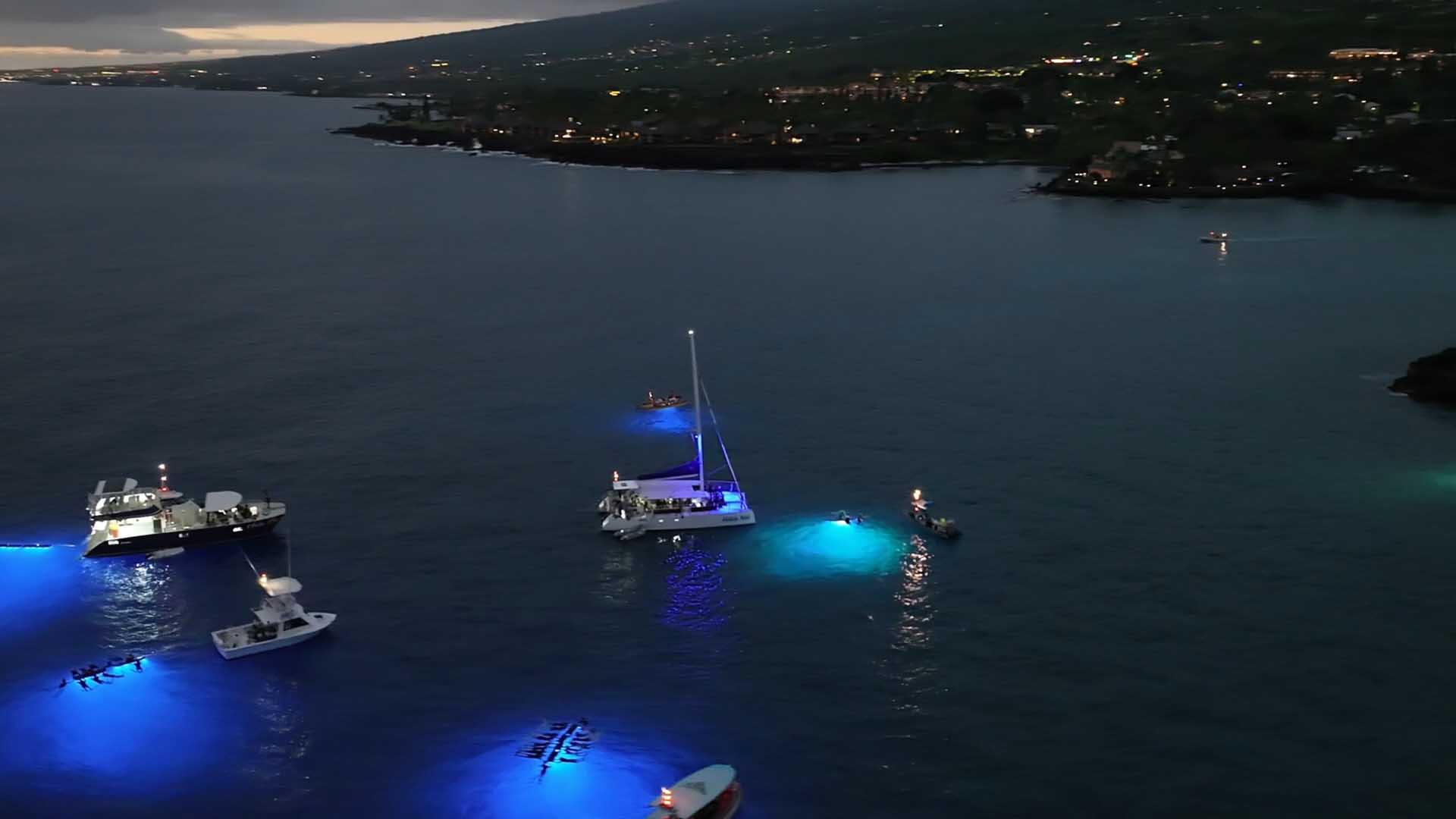
Underwater lights attract concentrations of plankton.
The mantas follow their food.
As they feed, manta rays may perform sweeping turns and barrel rolls to repeatedly move through the densest concentrations of plankton.
Guests observe from the surface while this natural feeding behavior happens below.
The mantas aren’t being hand-fed or baited.
The lights attract the plankton.
The plankton attract the mantas.
And you get a front-row seat.
How Likely Are You to See Manta Rays in Kona?
Wildlife can never be completely predictable.
That’s part of what makes encountering a wild animal meaningful.
However, Kona has become famous for the consistency of its manta encounters.
Organized manta ray excursions commonly experience an 85–95% sighting rate throughout the year.
The resident population and reliable feeding conditions make Kona one of the world’s remarkable places to experience reef manta rays.
Your Sea Paradise Manta Adventure
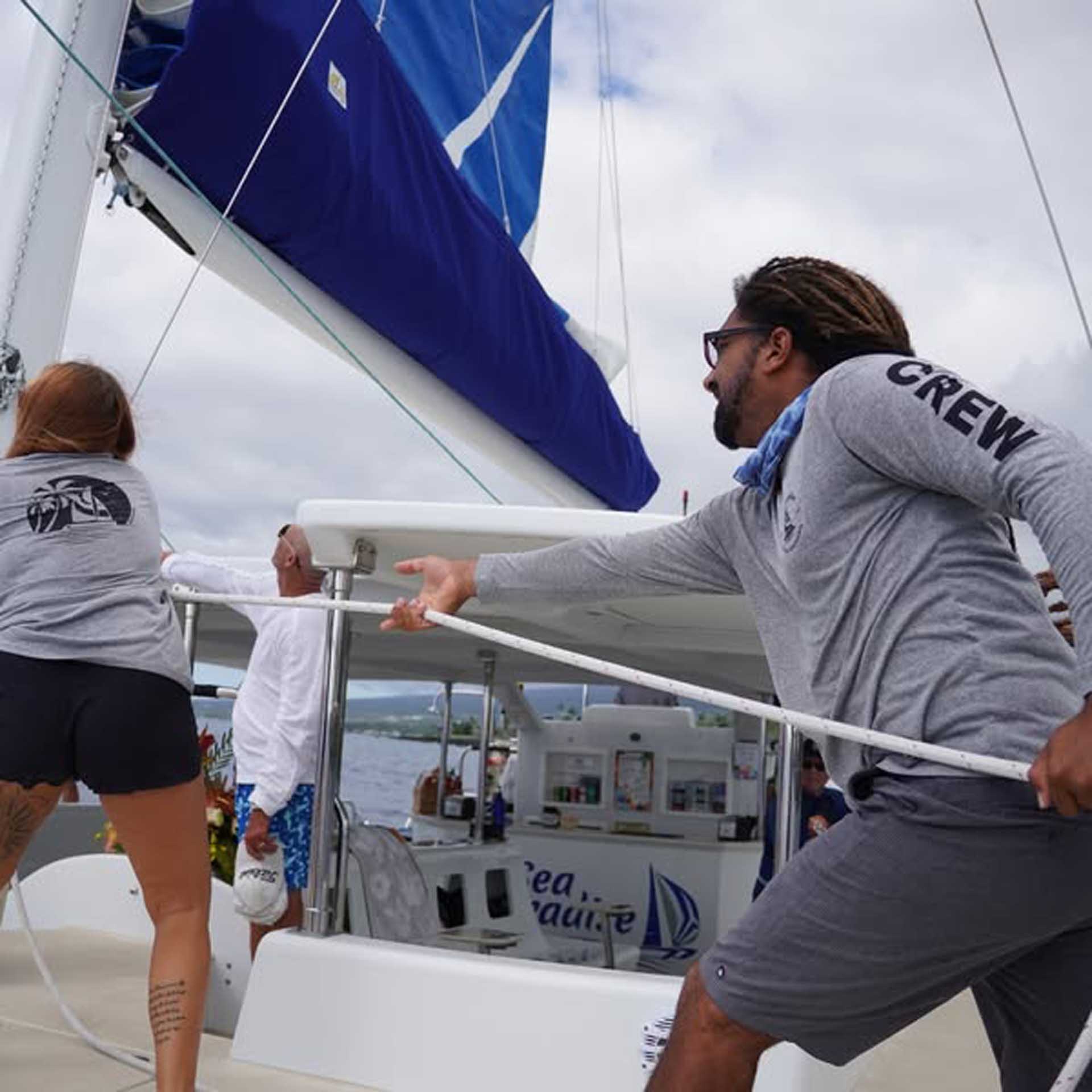
Sea Paradise has operated on the Kona Coast since 1985.
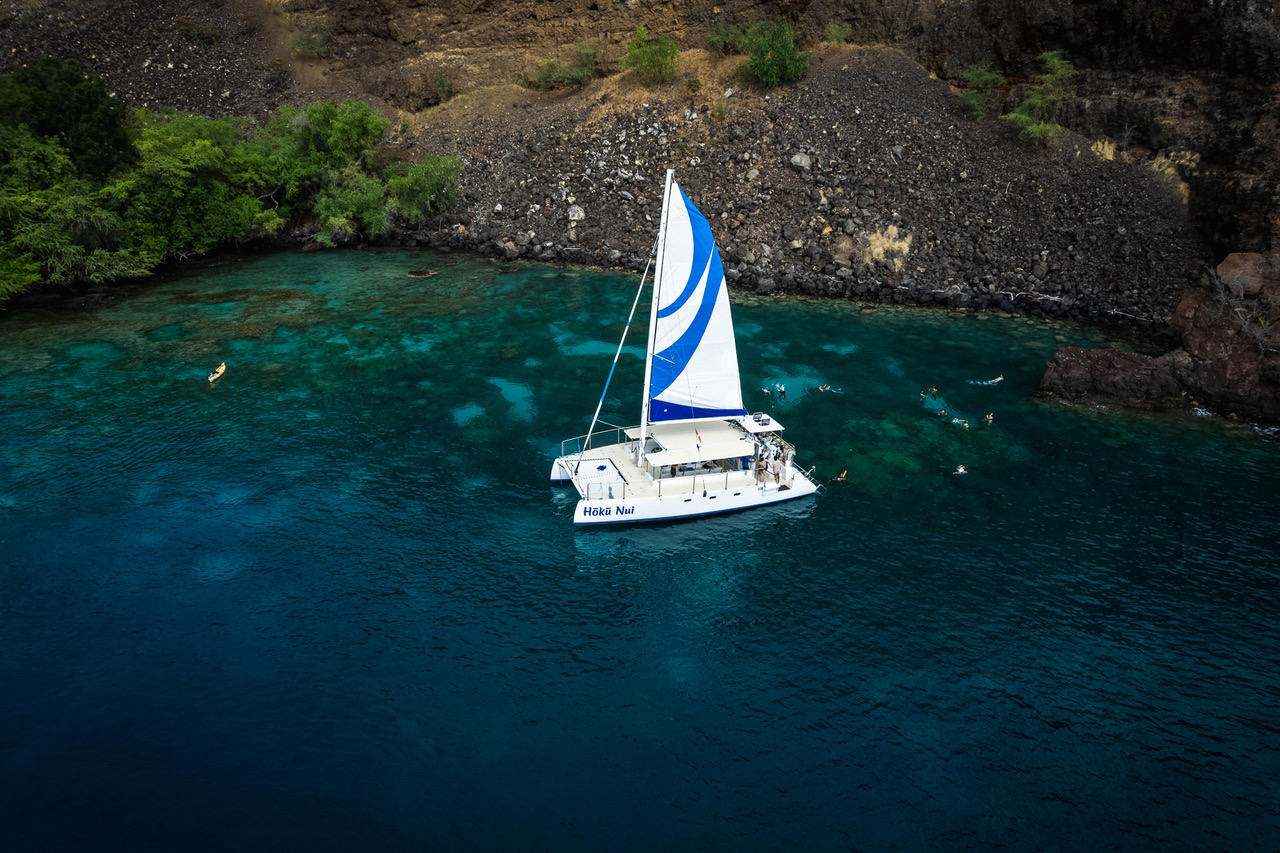
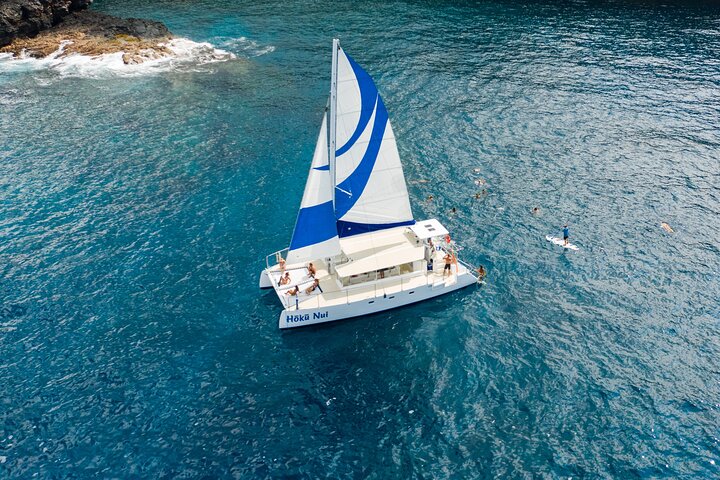
Your journey begins at Keauhou Bay aboard Hoku Nui, our 50-foot catamaran.
Compared with the small vessels frequently seen on manta excursions, Hoku Nui provides guests with the room and stability of a much larger platform.
Then comes the moment everyone has been waiting for.
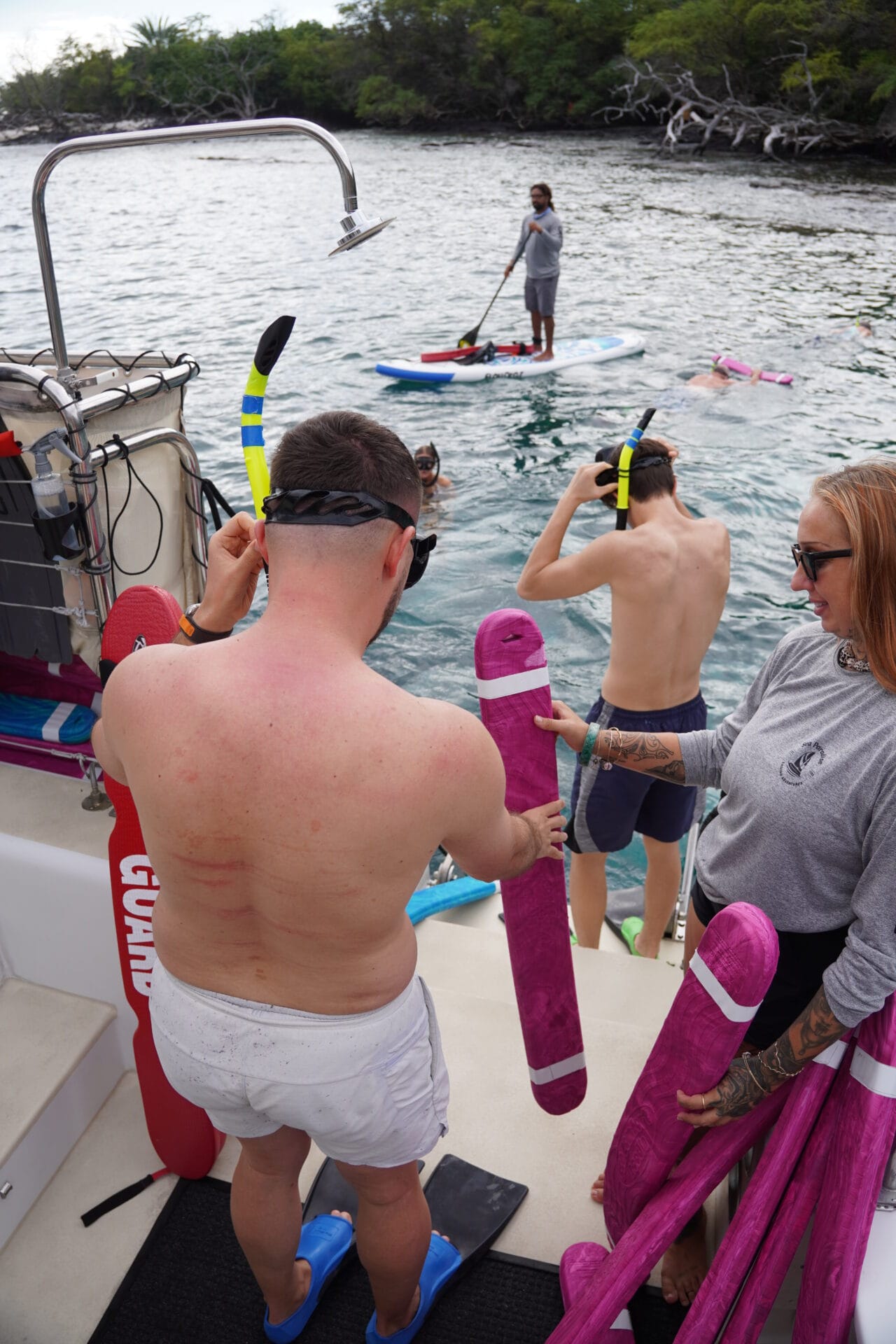
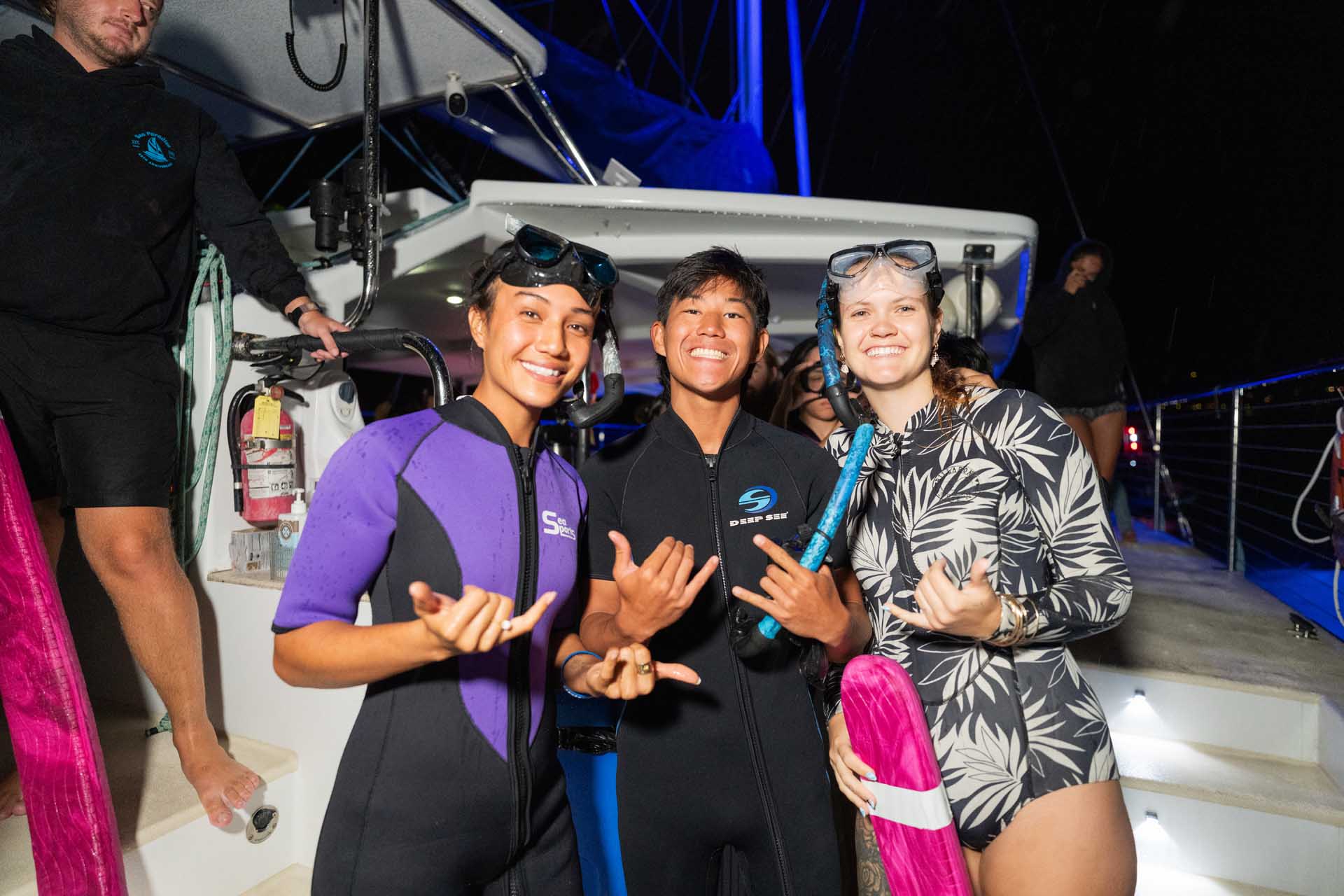
You enter the water.
Take your position at the surface.
Look down.
And wait.
Sometimes the first thing you see is only a shadow.
Then the shadow turns.
White markings appear underneath.
A huge manta glides toward the illuminated plankton.
And suddenly you understand why travelers talk about this experience for years afterward.
Meet Kona’s Gentle Giants
Seeing manta rays in photographs is impressive.
Seeing their wingspan underwater is something else entirely.
The combination of their enormous size, graceful movement and gentle feeding behavior makes Kona’s manta rays one of Hawaii’s most unforgettable marine encounters.
And perhaps the most amazing part?
These aren’t animals passing briefly through Kona.
They’re locals.
Learn more about manta rays in Kona and Sea Paradise manta experiences:
https://seaparadise.com/manta-rays-in-kona-hawaii/