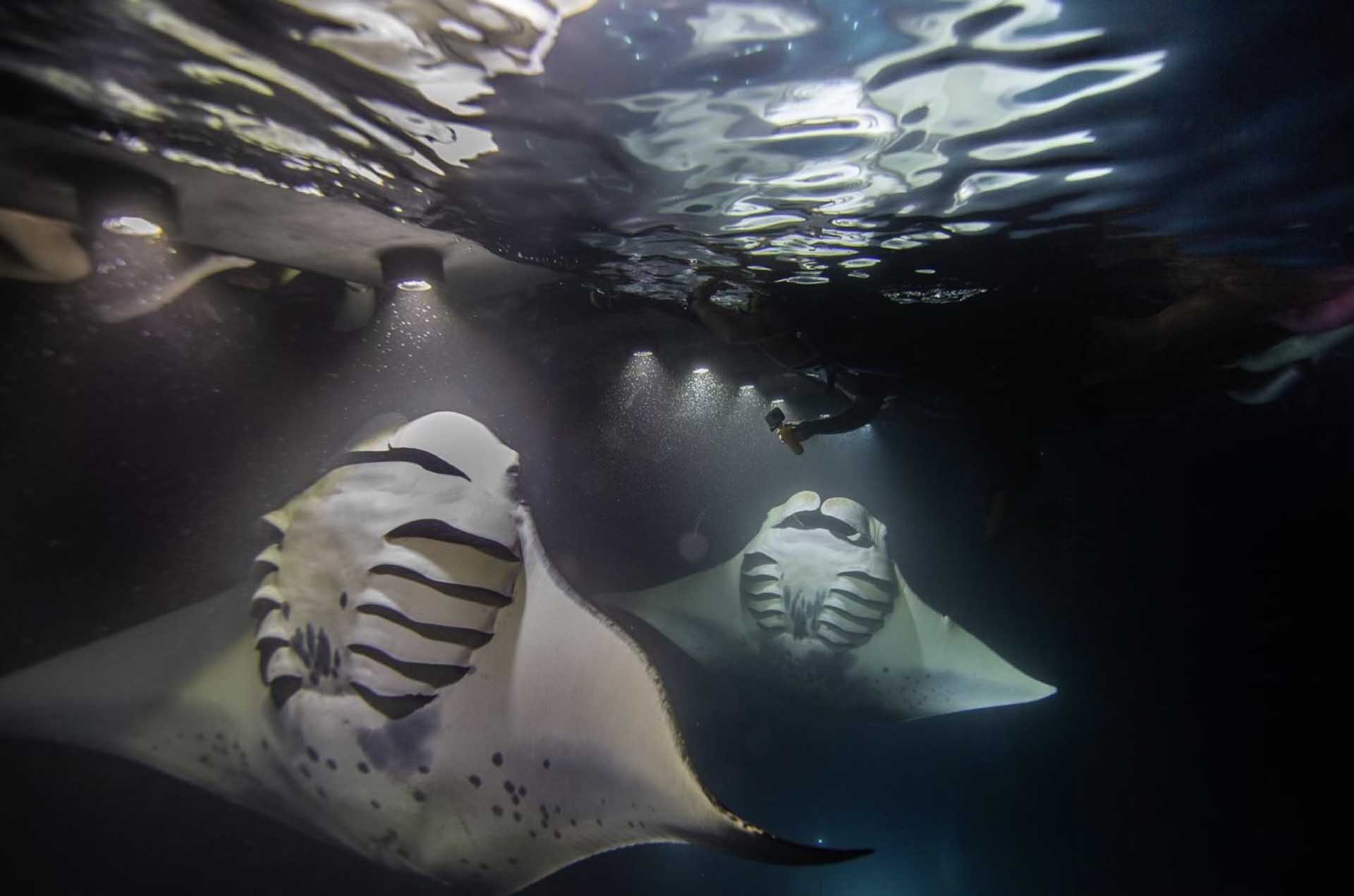
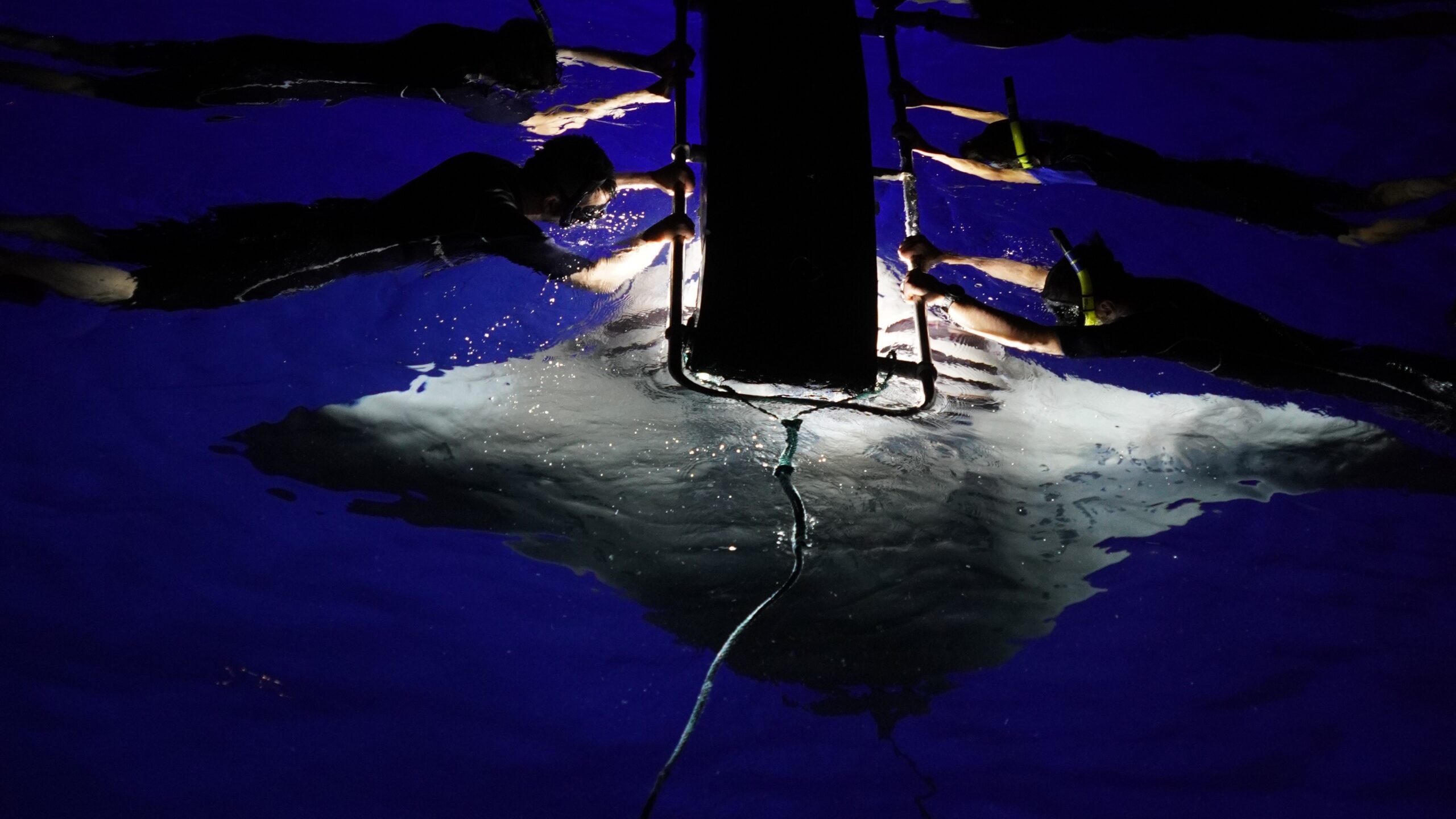
Kona’s manta ray night snorkel offers a remarkable way to observe marine wildlife: floating at the surface while manta rays feed in illuminated water below. Sea Paradise Hawaii visits Manta Village near Keauhou Bay, where underwater lights attract plankton—the food that brings mantas into the viewing area.
Understanding what you are watching makes the encounter even more meaningful. The mantas are feeding, and guests have the privilege of observing their behavior.
How Do Researchers Recognize Individual Mantas?
The dark spots on a manta ray’s underside form a distinctive pattern that researchers use to identify individuals.
The Manta Ray Identification Project explains that Kona’s first identified manta was Lefty, recognizable by her bent left cephalic fin. She was repeatedly observed at the Keauhou site beginning in 1979. Photographing and recognizing individual animals has helped build a long-running record of Kona’s manta population.
That history adds another dimension to an encounter: the animal beneath you may be an individual researchers have documented over many years.
What Does the Tour Include?
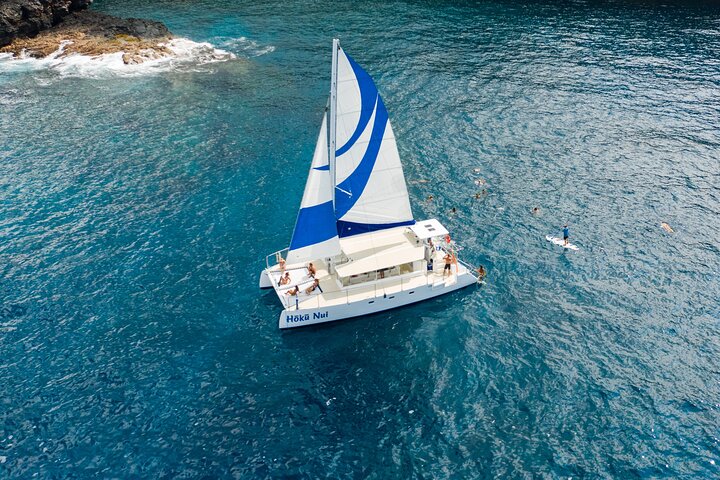
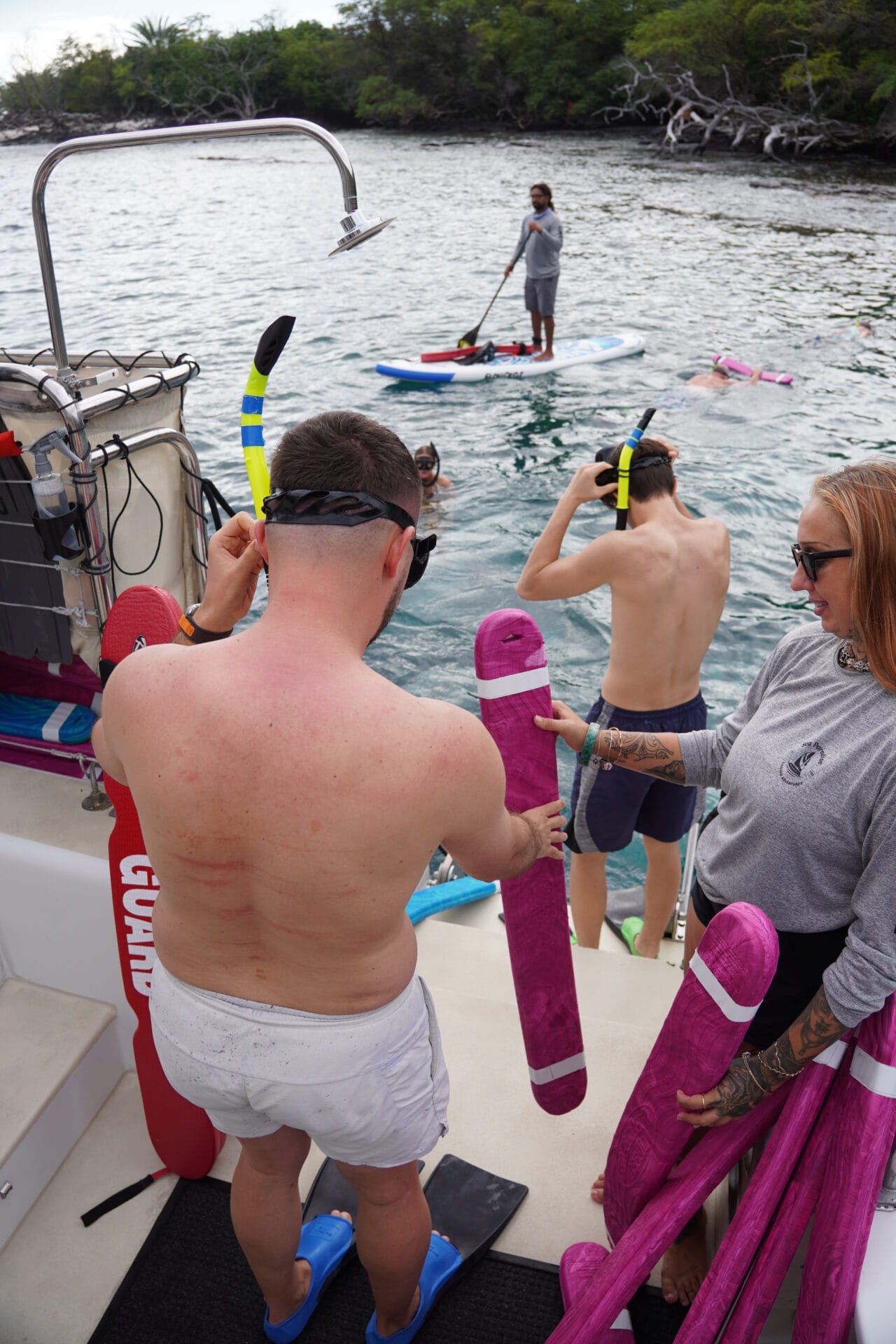
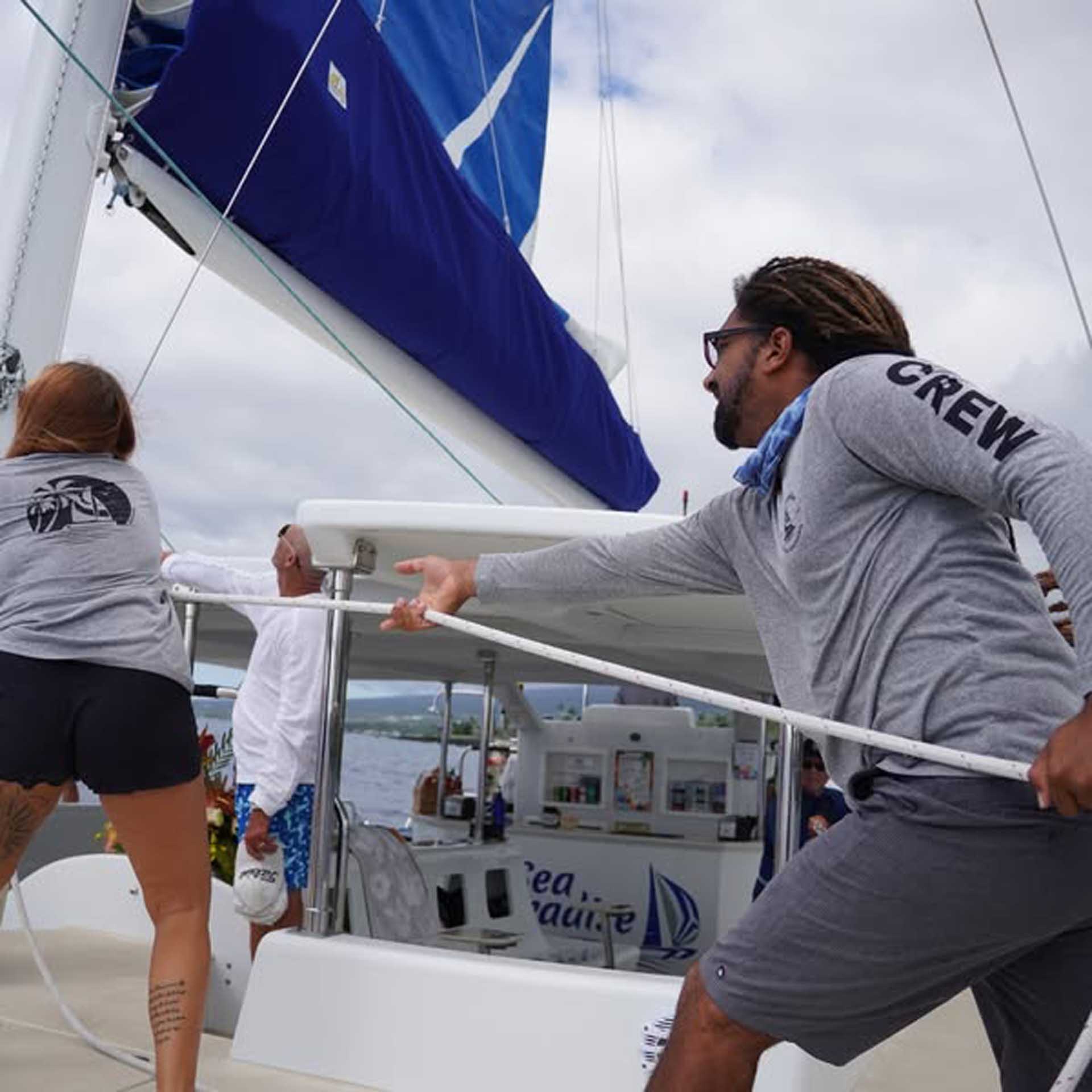
Sea Paradise Hawaii’s first evening manta tour departs aboard the Hoku Nui, its 50-foot luxury sailing catamaran. The experience includes snorkeling equipment, shorty wetsuits, a manta flotation device, a marine education briefing, and crew guides in the water.
Snorkeling participants must meet the company’s age and swimming requirements. A ride-along option is available for eligible guests who prefer to remain aboard.
How Can Guests Protect the Mantas?
Responsible observation means staying at the surface, leaving the feeding space open, and allowing mantas to move freely. Never touch, chase, grab, or attempt to ride a manta. Contact can disturb the protective mucus coating on its body.
These practices appear in the Coral Reef Alliance’s published West Hawaii marine tourism standards and help keep wildlife observation respectful.
Are Sightings Guaranteed Every Night?
Mantas are wild animals. Sea Paradise Hawaii advertises a manta guarantee that provides a free return within seven days if no mantas are seen, subject to space availability. It is a rebooking policy, rather than a refund; review the current terms when booking.
Bring your curiosity, listen to your guides, and prepare to appreciate Kona’s mantas on their terms.