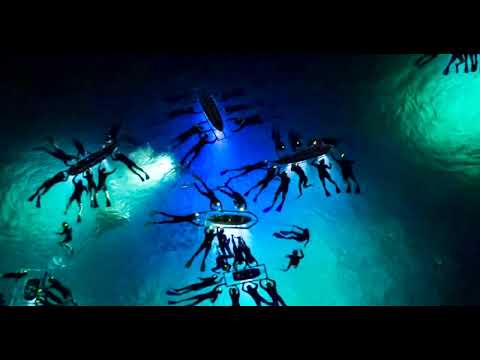
Imagine floating on the surface of the Pacific Ocean after sunset.
The Kona coastline glows in the distance. Beneath you, beams of light illuminate the dark water.
Then something enormous appears below.
At first it seems like a shadow.
Then wings emerge from the darkness.
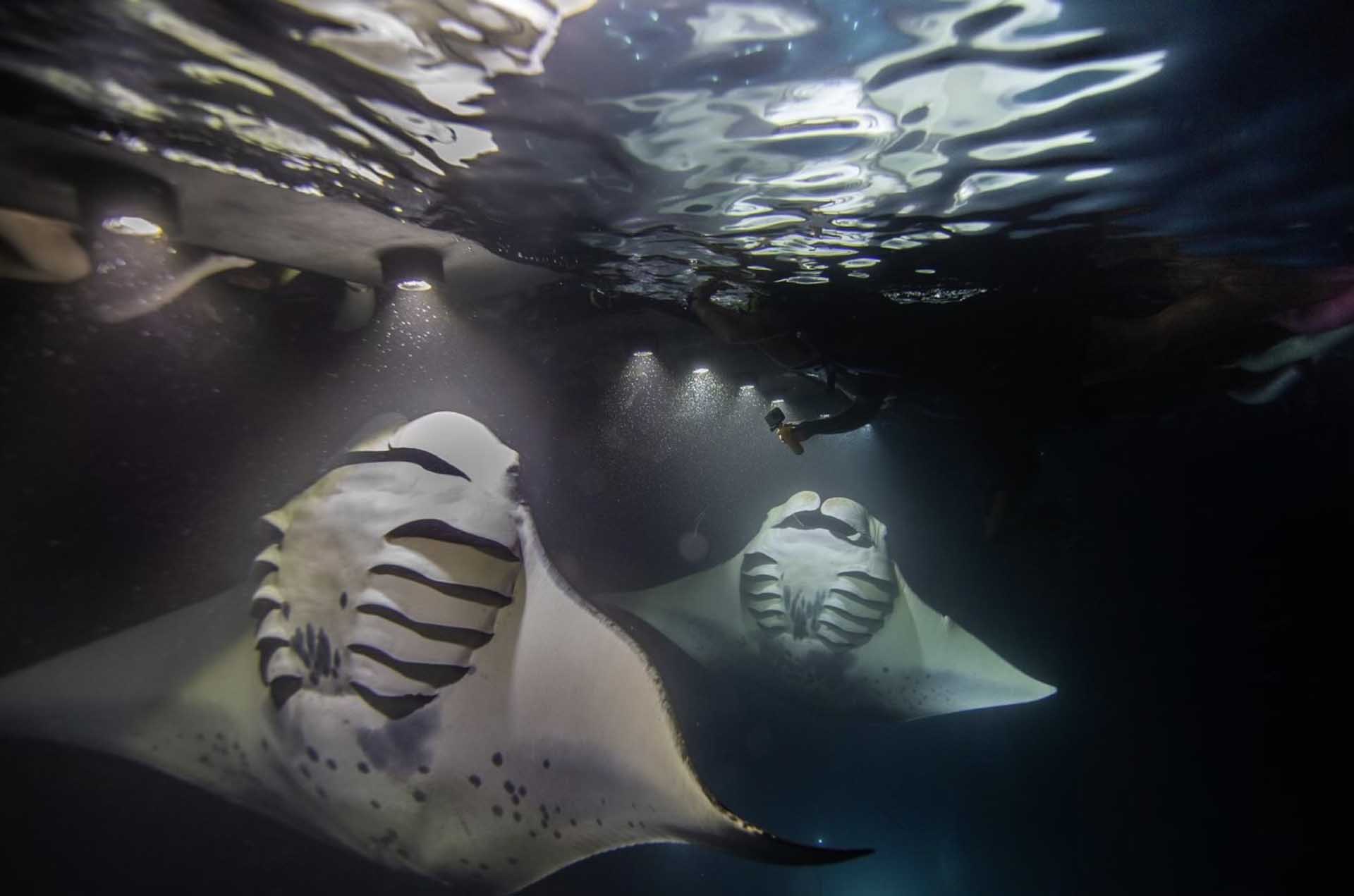
A manta ray glides toward the light, opens its enormous mouth and sweeps upward. Instead of swimming away, it turns effortlessly beneath you and disappears into the blue-black water.
Seconds later, it returns.
For visitors to Hawaii Island, snorkeling with manta rays in Kona can be one of the most extraordinary wildlife encounters of a lifetime.
And there is a fascinating reason these encounters happen here so consistently.
Why Is Kona Famous for Manta Rays?
The Kona Coast is home to a well-studied population of reef manta rays.
More than 450 individual manta rays have been identified in Hawaiian waters around Kona, and researchers and local experts can recognize individual animals using the unique spot patterns found on their undersides.
Those markings function almost like fingerprints.
No two are exactly alike.
Because many Kona manta rays remain around the region rather than undertaking enormous seasonal migrations, researchers, photographers, guides and repeat visitors may encounter the same individuals over many years.
That gives Kona’s manta experience an unusually personal dimension.
You’re not simply seeing “a manta ray.”
You may be meeting an animal that has been known and observed for years.
Why Do Manta Rays Come Out at Night?
Manta rays don’t suddenly become nocturnal because tourists arrive.
They’re following food.
Reef manta rays are filter feeders. Rather than hunting large fish, they consume tiny organisms suspended in the water, particularly zooplankton.
At night, underwater lights attract and concentrate plankton.
And where plankton gathers, mantas may follow.
This simple ecological relationship creates one of the most spectacular wildlife experiences in Hawaii.
Light attracts plankton. Plankton attracts manta rays.
The mantas swim through the illuminated water with their mouths open, filtering their food from the sea.
Why Do Manta Rays Somersault?
One of the behaviors that surprises first-time manta snorkelers is feeding loops.
A manta may approach the illuminated plankton, sweep upward and rotate backward before passing beneath the light again.
From the surface, it can look like an enormous underwater ballet.
But the manta isn’t performing for an audience.
It’s feeding efficiently.
Repeated turns allow the animal to remain close to a concentrated food source.
When several mantas begin feeding in the same area, the result can be astonishing.
How Big Are Kona’s Manta Rays?
Reef manta rays are large animals.
Their broad bodies and wing-like pectoral fins create a dramatic silhouette underwater.
Yet despite their size, manta rays are generally graceful, non-predatory filter feeders.
Unlike stingrays, manta rays do not have a venomous stinger.
Their enormous mouths are designed to collect plankton rather than bite swimmers.
Seeing that anatomy up close can completely change how people think about large marine animals.
Big doesn’t necessarily mean dangerous.
Sometimes big means breathtaking.
What Is Manta Village?
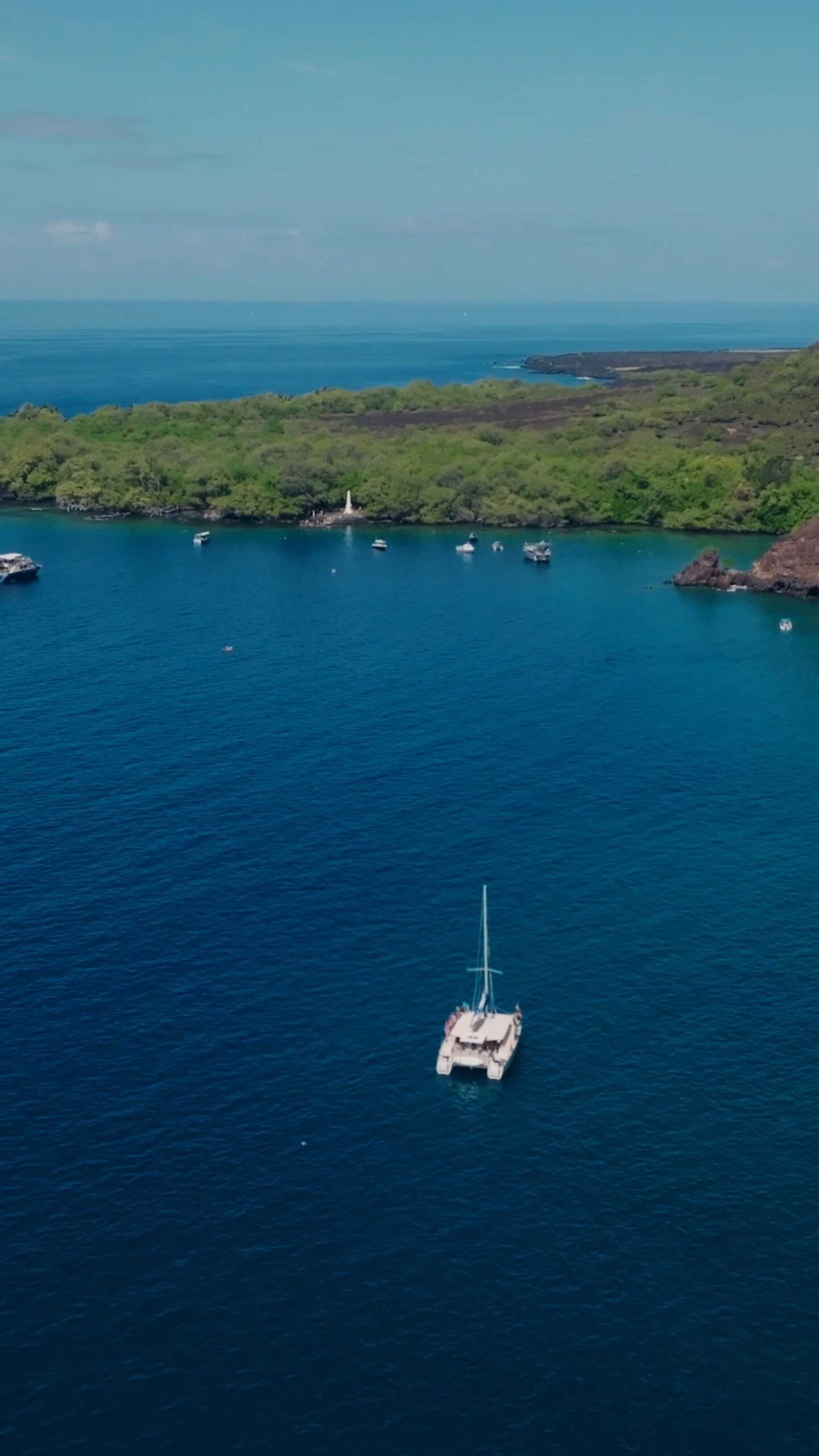
One of Kona’s best-known manta viewing areas is called Manta Village, located offshore near Keauhou.
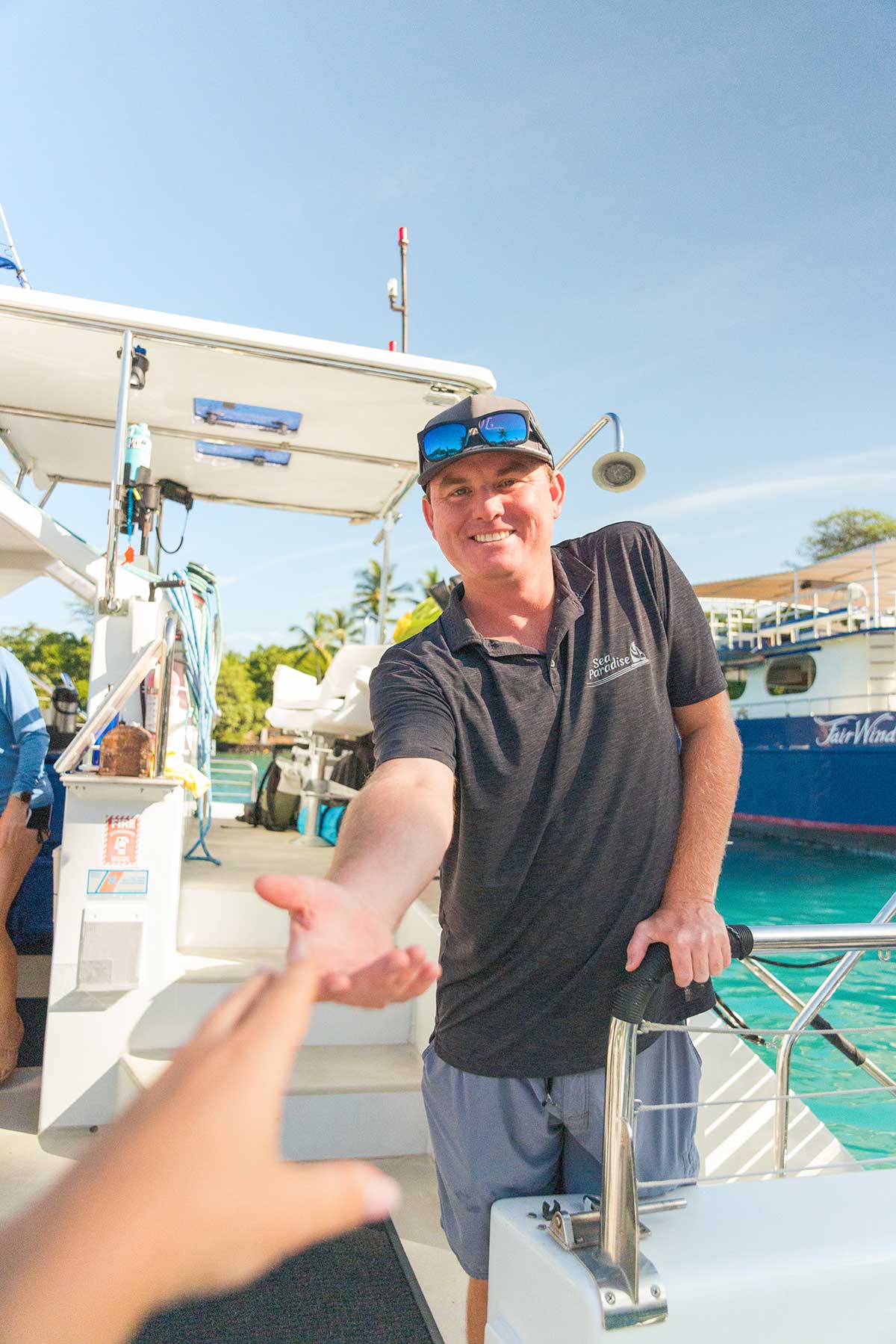
This is the destination for Sea Paradise’s manta ray snorkeling excursions.
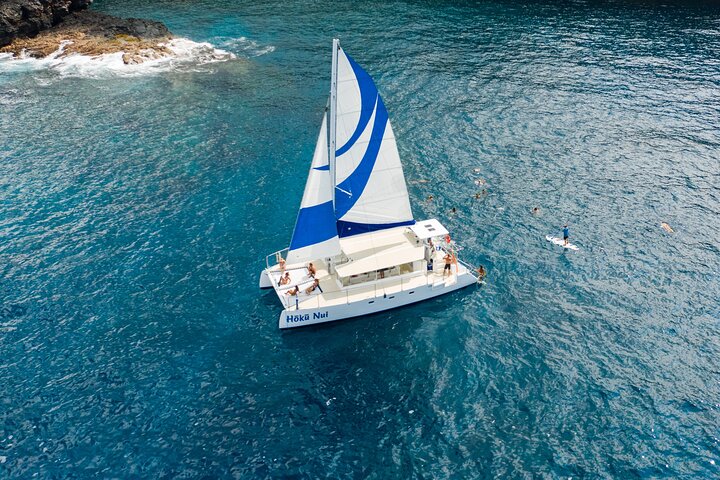
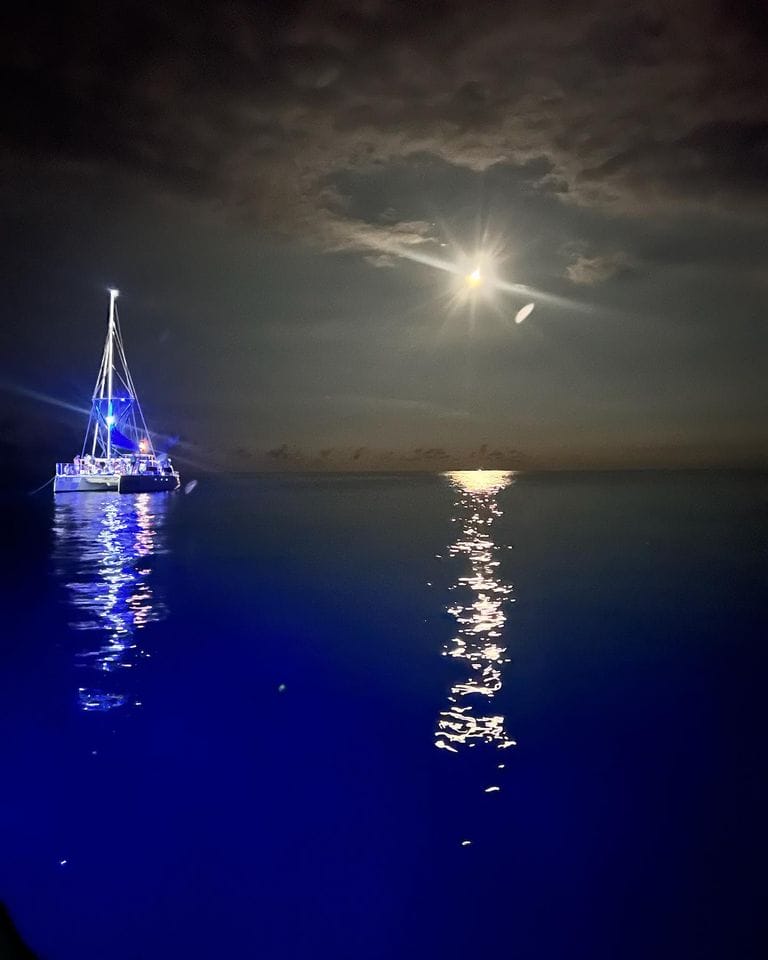
The experience begins at Keauhou Bay, where guests board the 50-foot Hoku Nui sailing catamaran.
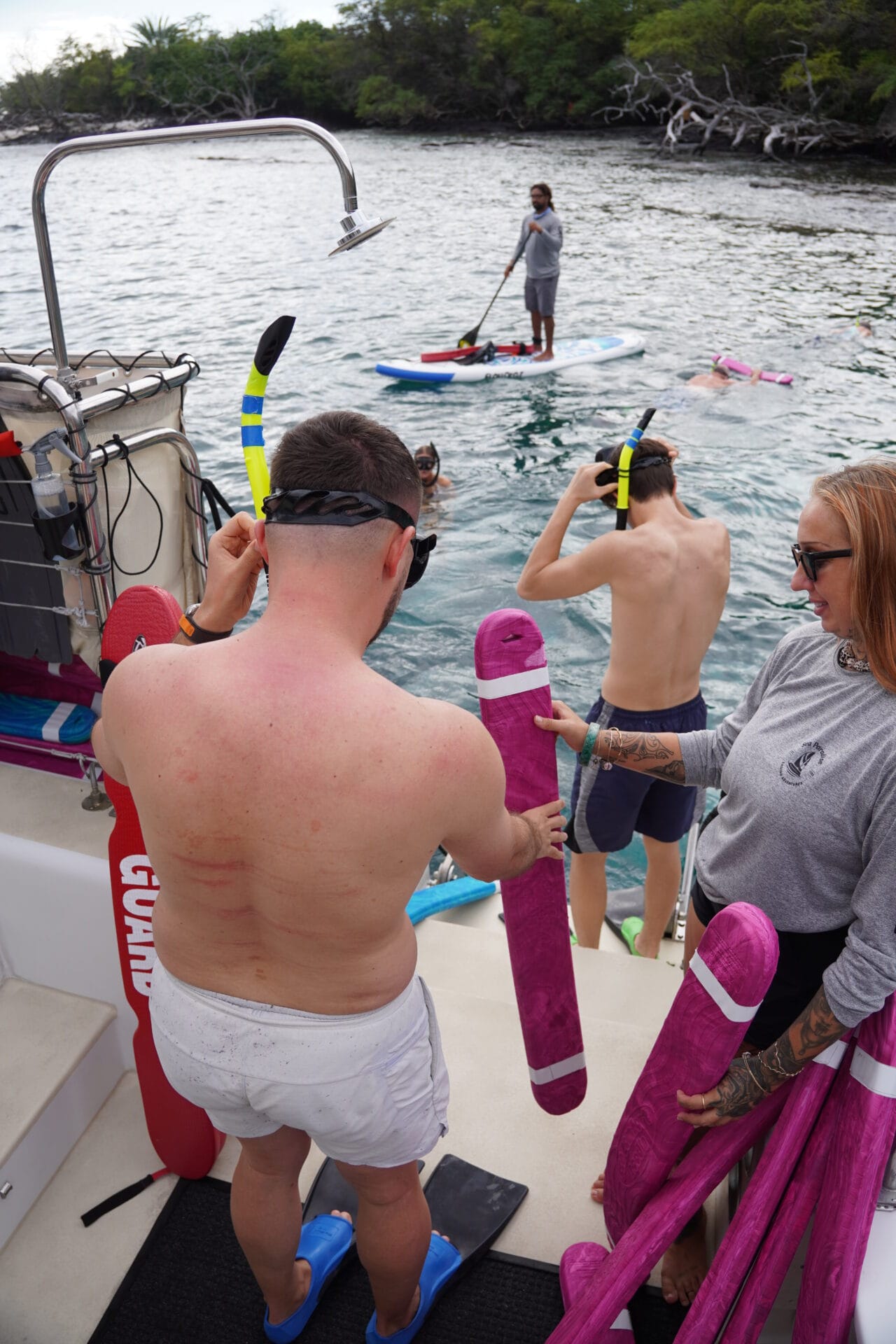
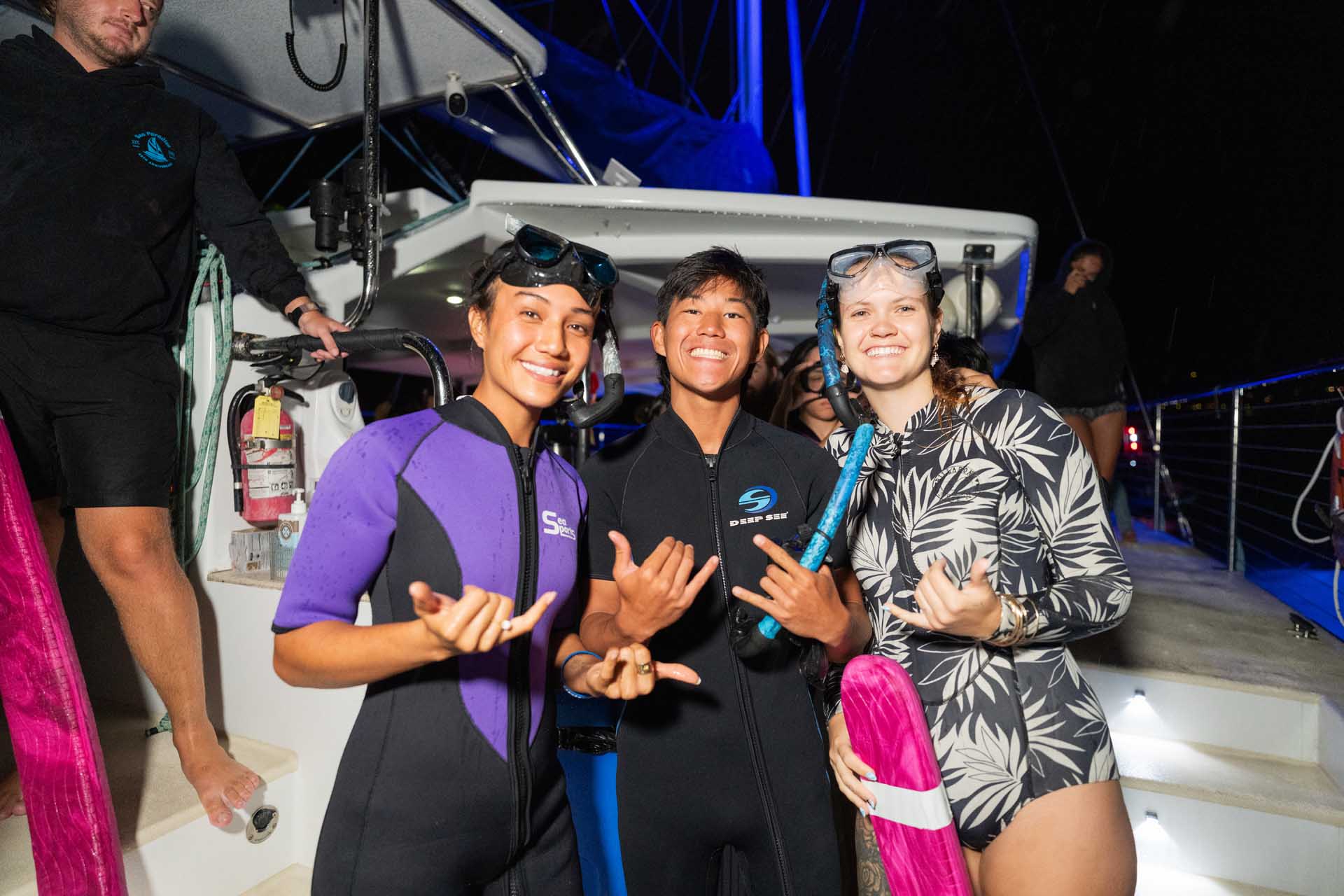
After traveling to the viewing area, snorkelers enter the water and position themselves at the surface around an illuminated viewing setup.
The lights help concentrate plankton.
Then nature determines what happens next.
What Is the Manta Ray Sighting Rate in Kona?
Wildlife can never be guaranteed.
Manta rays are wild animals that choose where and when they feed.
However, Kona is remarkable for the consistency of its encounters.
Sea Paradise experiences an approximately 85–95% manta ray sighting rate year-round.
That is an extraordinary success rate for a completely wild marine encounter.
But it’s important to understand what that statistic means.
It does not mean every tour will see mantas.
It means conditions around Kona provide an unusually reliable opportunity to encounter them while still respecting the fact that the animals remain completely free.
The Advantage of Hoku Nui
The manta experience itself happens in the water, but your boat can have a major effect on the overall evening.
Sea Paradise operates manta excursions aboard Hoku Nui, a 50-foot sailing catamaran.
Its twin-hull design provides a broad and stable platform compared with many smaller boats.
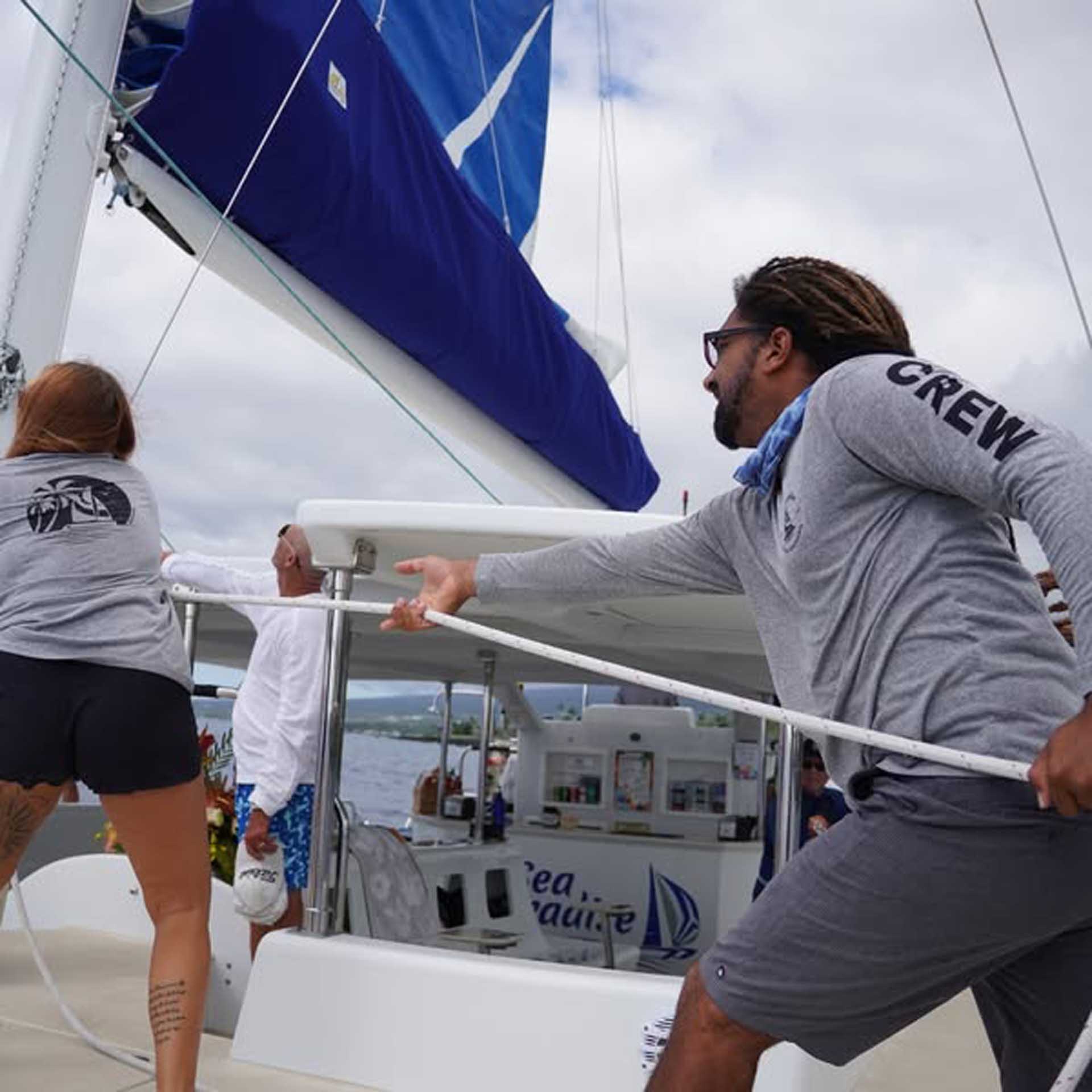
There’s room to prepare your gear, listen to the crew briefing and enjoy the Kona coastline before entering the water.
Wide staircases also make entering and exiting the ocean easier than climbing over the side of a small vessel.
For an adventure taking place after dark, those details matter.
What Does a Kona Manta Snorkel Feel Like?
Photos rarely capture the scale.
You may understand intellectually that manta rays are large.
Then one passes beneath you.
The broad wings seem to fill your field of vision.
You see the white underside.
You see the unique markings.
You watch the mouth open as the manta moves through concentrated plankton.
And because you’re floating near the surface, the animal may seem extraordinarily close.
The most important thing to remember is that you’re an observer.
Let the manta control the encounter.
Don’t chase it.
Don’t reach toward it.
Don’t attempt to ride or touch it.
The magic comes from allowing a wild animal to behave naturally.
Why You Should Never Touch a Manta Ray
Manta rays have a protective mucus coating over their skin.
Touching marine animals can disturb protective surfaces and can alter their natural behavior.
Responsible manta tourism therefore depends on passive observation.
Keep your hands to yourself and give the animals freedom to move.
If a manta approaches closely, enjoy the moment without reaching toward it.
The best wildlife encounter is one in which the wildlife remains wild.
Are Manta Rays Sharks?
Manta rays and sharks are relatives.
Both belong to a group of fishes whose skeletons are made primarily from cartilage rather than bone.
But their lifestyles can be very different.
Manta rays are filter feeders.
They consume tiny organisms from the water rather than hunting swimmers or large prey.
Understanding that distinction helps explain why people can observe these enormous animals peacefully from the surface.
When Is the Best Time of Year to See Manta Rays in Kona?
One of the advantages of Kona manta snorkeling is that it isn’t limited to a short migration season.
Manta encounters occur throughout the year.
Conditions vary from evening to evening, and no responsible operator can promise a wildlife sighting.
However, Sea Paradise’s 85–95% year-round sighting rate makes Kona an exceptional place to plan a manta adventure during almost any Hawaii vacation.
A Kona Experience Unlike Any Other
Hawaii offers plenty of memorable ocean experiences.
You can snorkel coral reefs.
Watch sunsets.
Sail along volcanic coastlines.
But floating in darkness while a giant manta ray rises from beneath you occupies its own category.
It’s peaceful.
It’s strange.
It’s beautiful.
And for many guests, it’s the moment from their Hawaii vacation they talk about long after returning home.
Frequently Asked Questions About Kona Manta Rays
Are there manta rays in Kona year-round?
Yes. Kona’s reef manta population can be encountered throughout the year, although manta rays are wild animals and sightings are never certain.
What is Sea Paradise’s manta sighting rate?
Sea Paradise experiences approximately an 85–95% manta ray sighting rate year-round.
Do manta rays sting?
Manta rays do not have the venomous stinger associated with stingrays.
Can manta rays bite people?
Manta rays are filter feeders whose diet consists primarily of tiny organisms such as plankton. Their feeding anatomy is not designed for attacking humans.
Should you touch manta rays?
No. Responsible manta encounters are passive. Guests should observe without touching, chasing or interfering with the animals.
Where does Sea Paradise go for manta snorkeling?
Sea Paradise manta excursions depart Keauhou Bay aboard the 50-foot Hoku Nui and visit Manta Village off the Kona Coast.
Experience Kona’s Manta Rays With Sea Paradise
Seeing a manta ray in a photograph is impressive.
Watching one glide through the ocean beneath you is something entirely different.
Sea Paradise has been sharing Kona’s ocean with guests since 1985.
Join us aboard the spacious 50-foot Hoku Nui for a nighttime adventure to Manta Village and discover why Kona’s manta rays have become one of Hawaii’s most unforgettable wildlife experiences.
The ocean provides the stage. The plankton brings the dinner. And if the mantas arrive, you’re in for a night you’ll never forget.
Book your tour today! https://www.seaparadise.com/