Species and Size
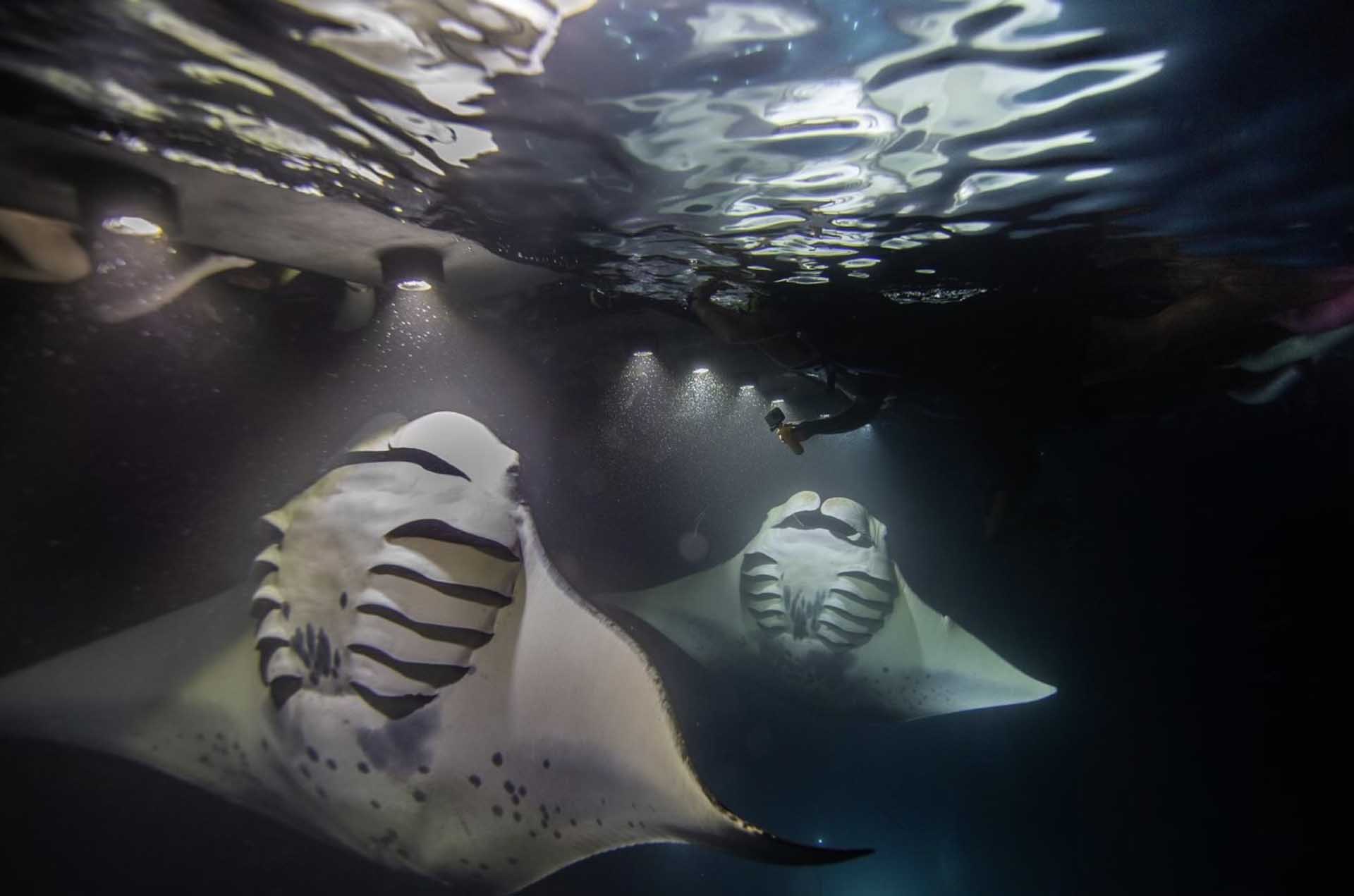
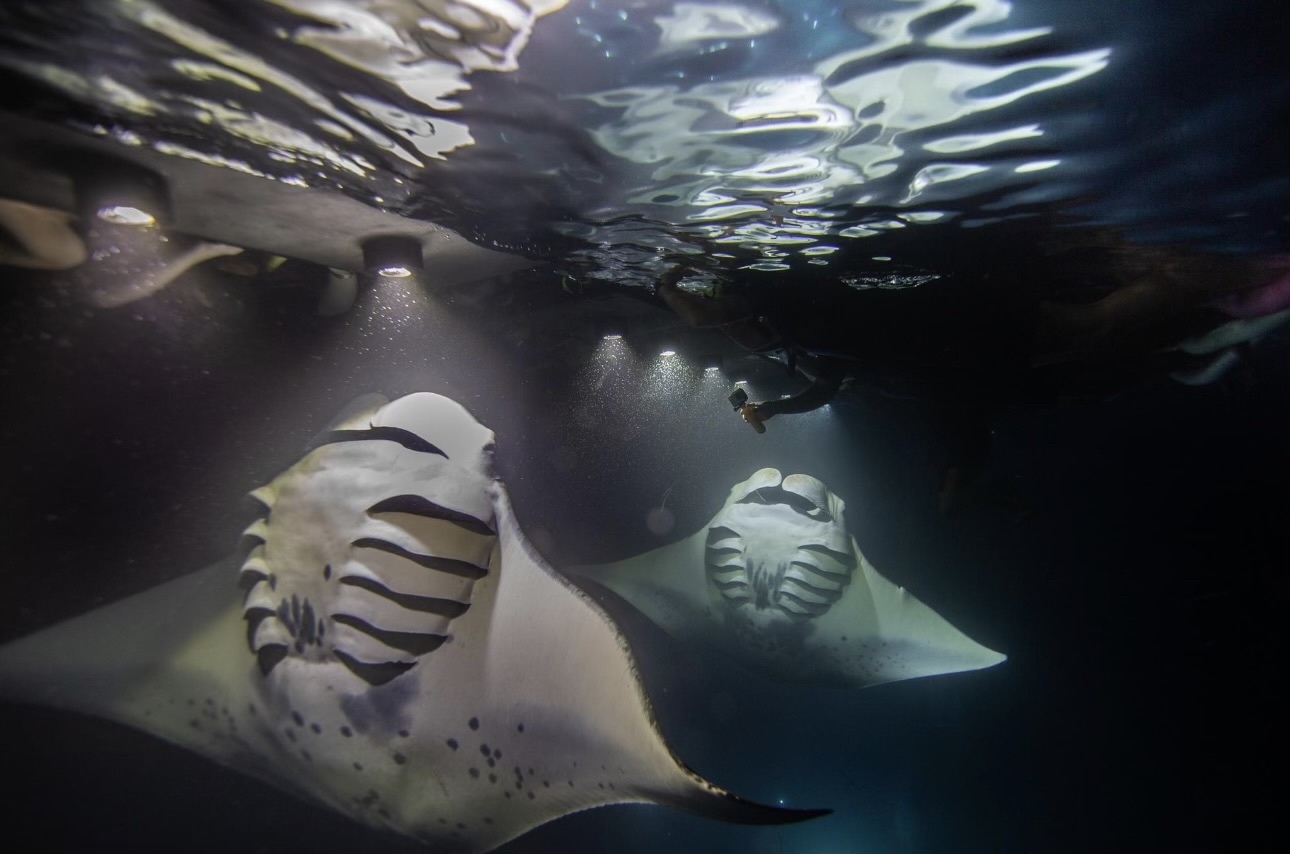
Kona’s manta rays are Mobula alfredi — reef manta rays, one of two manta ray species worldwide. Adults reach 10 to 14 feet across. Despite their size, reef manta rays are completely harmless to humans — no stinger. Their mouths are designed exclusively for filter feeding. The large lobed structures on either side of their mouth (cephalic fins) spread open like wings to channel water and plankton through their gill plates. https://seaparadise.com/manta-rays-in-kona-hawaii/
Feeding Behavior
Reef manta rays feed on zooplankton — microscopic organisms that congregate near light sources at night. This is the mechanism behind Manta Village: lights attract plankton, plankton attracts mantas. The feeding behavior is unmistakable once you know what you’re watching — the manta opens its cephalic fins wide, banks through the plankton-dense water in a long looping arc, and returns to repeat the circuit. On high-plankton nights, multiple mantas feed simultaneously in overlapping circuits, occasionally barrel-rolling to optimize their position in the water column. They are graceful in a way that does not look like effort.
Intelligence and Individual Identity
Reef manta rays have the largest brain-to-body ratio of any fish. They have been observed exhibiting behavior consistent with self-awareness. They recognize individual humans. Regular night guides at Manta Village report that specific rays approach familiar people differently than strangers. Over 450 individual reef manta rays have been documented along the Kona Coast using the unique spot and marking patterns on their undersides — as distinctive as a human fingerprint — maintained in Manta Pacific Research Foundation’s database. Sea Paradise collaborates on this documentation.
Kona’s Named Manta Rays
The most frequently observed individuals at Manta Village have been named: Lefty (first identified 1979), Big Bertha (1991), Obama Ray, Koie Ray, Quarantina (2020), and Jolene Ray. Seeing a named individual at Manta Village is not unusual. Sea Paradise crew on the water on any given night may recognize two or three of the feeding rays on sight. The knowledge that you may be watching an animal that has been making these same feeding runs since before you were born is part of what makes the Kona manta experience singular. http://seaparadise.com/manta-village-kona
| FAQ BLOCK — Add as accordion or Q&A section at bottom of post |
What is the difference between a manta ray and a stingray?
Manta rays and stingrays are related but distinct. Manta rays have no stinger and cannot injure humans defensively. Stingrays have a venomous barb used for defense. Manta rays are much larger — Kona’s reef mantas average 8 to 12 feet across. Stingrays are generally flat and found on the seafloor; mantas are active open-water swimmers.
How many manta rays are in Kona?
Over 450 individual reef manta rays have been documented along the Kona Coast, identified using their unique belly spot patterns and catalogued by Manta Pacific Research Foundation. Sea Paradise collaborates on this ongoing documentation. http://seaparadise.com/konas-most-famous-manta-rays
Do manta rays have predators in Kona?
Large sharks and orcas are known predators of manta rays. Many of the named mantas at Manta Village show scarring from past encounters — Big Bertha has visible shark bite marks that aid her identification.
Book your tour today. http://| seaparadise.com/1st-manta-ray-snorkel-tour/