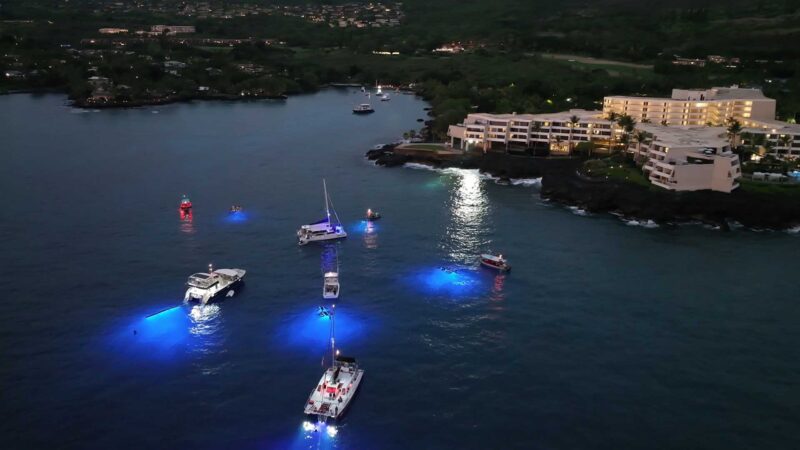
Every evening off the Kona Coast, something remarkable can happen beneath the Pacific.
Lights illuminate the water.
Tiny plankton concentrate around the glow.
Then enormous shadows emerge from the darkness.
Manta rays arrive to feed.
Today, the area known as Manta Village Kona is one of Hawaii’s best-known nighttime wildlife destinations.
But the experience isn’t a staged attraction.
There are no tanks.
There are no trained animals.
There are no underwater fences keeping mantas in place.
This is the open Pacific Ocean, and every manta that appears has chosen to be there.
What Is Manta Village Kona?
Manta Village is a manta ray viewing area along the Kona Coast near Keauhou.
The location became famous because lights shining into the ocean created conditions that attracted plankton.
Plankton is a major food source for reef manta rays.
Over time, mantas learned that illuminated areas could provide productive feeding opportunities.
That relationship helped transform this stretch of coastline into one of the world’s most recognized locations for observing manta rays after dark.
The Simple Science Behind an Extraordinary Experience
The basic process is beautifully simple.
Lights attract plankton.
Manta rays eat plankton.
When underwater lights illuminate the water, tiny plankton can become concentrated around them.
Mantas may then arrive and swim repeatedly through those plankton-rich areas.
For snorkelers floating above, that feeding behavior produces an unforgettable view.
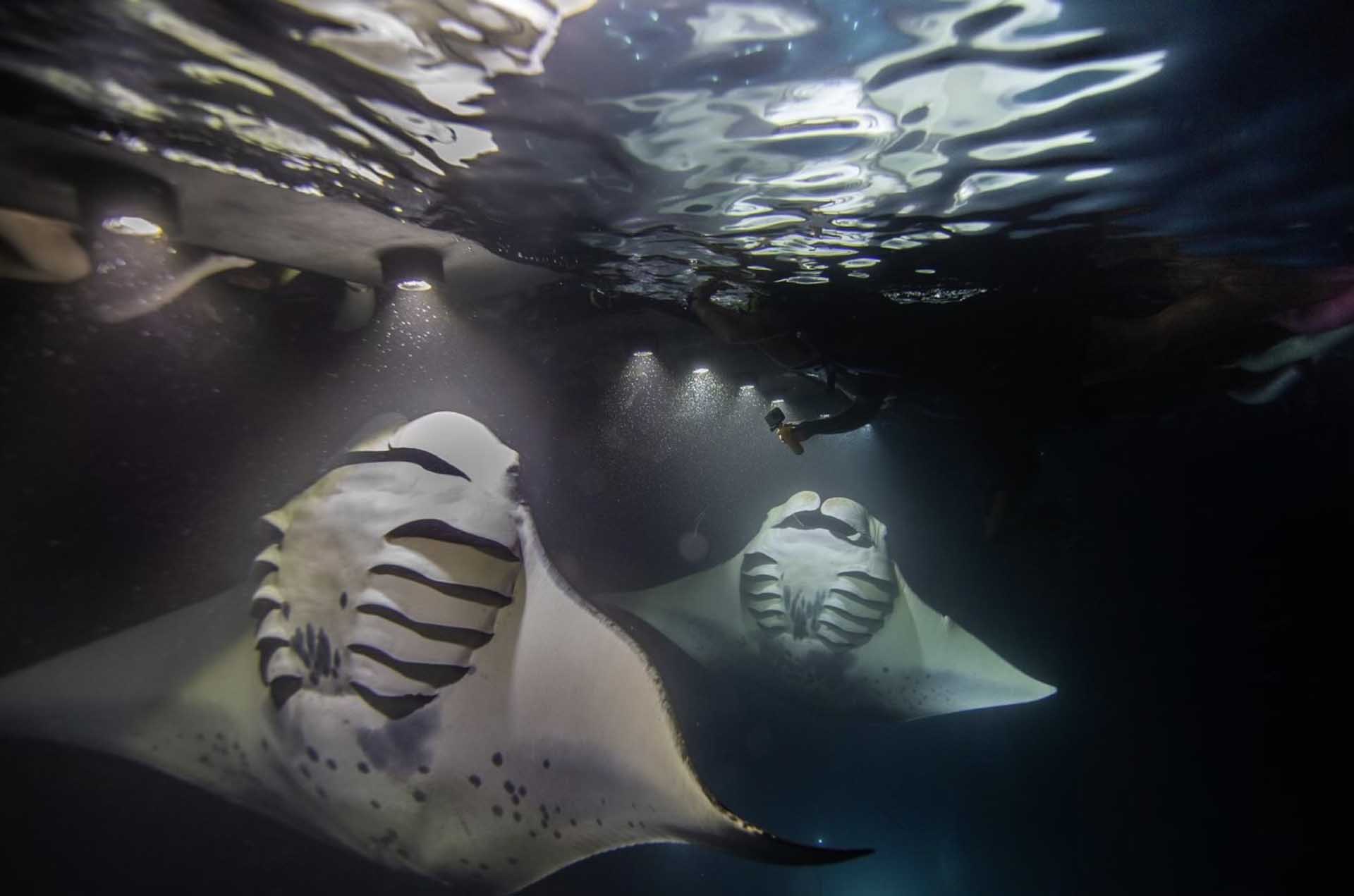
A manta may rise from the darkness, sweep toward the surface, roll gracefully and descend again.
Sometimes another follows.
Then another.
Every evening is different because the animals are wild.
Why Mantas Look Like They’re Dancing
Manta rays are extremely efficient swimmers.
Their enormous pectoral fins create the appearance of wings moving through the water.
During feeding, a manta may perform repeated loops or turns around concentrated patches of plankton.
From above, those movements can look choreographed.
They’re not.
The manta is simply positioning itself to feed efficiently.
That’s one of the things that makes Manta Village so compelling.
Visitors aren’t watching a performance.
They’re watching natural feeding behavior.
Meet Kona’s Individual Manta Rays
Kona’s manta population is also unusual because individual animals can be identified.
The markings on the underside of each manta are unique.
Researchers and observers can use these patterns much like fingerprints.
More than 450 manta rays have been individually identified in the Kona region.
That means an animal appearing beneath you may have a known history.
It may have been photographed before.
Researchers may have observations of it spanning years.
The ability to recognize individual wild animals gives Kona’s manta community a personality that few wildlife experiences can match.
How Do You Get to Manta Village?
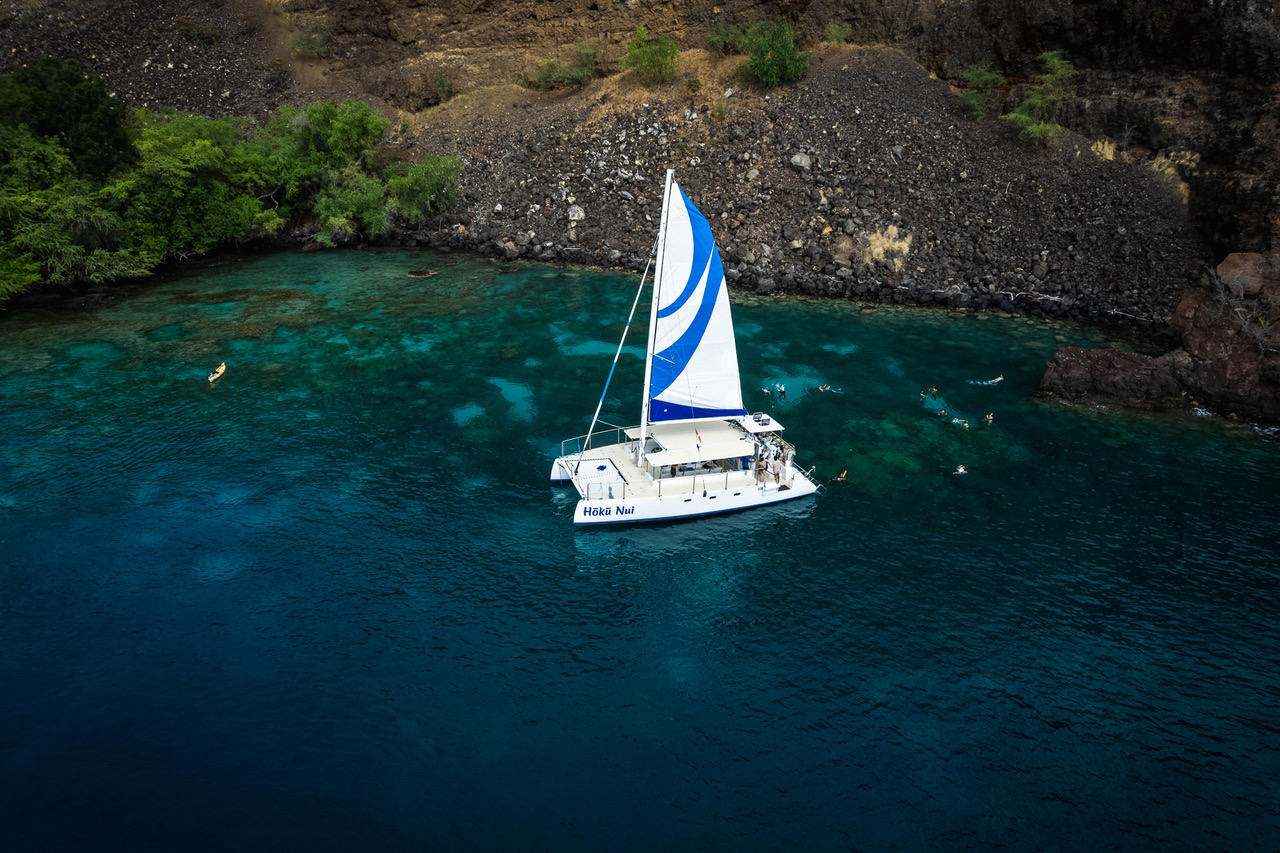
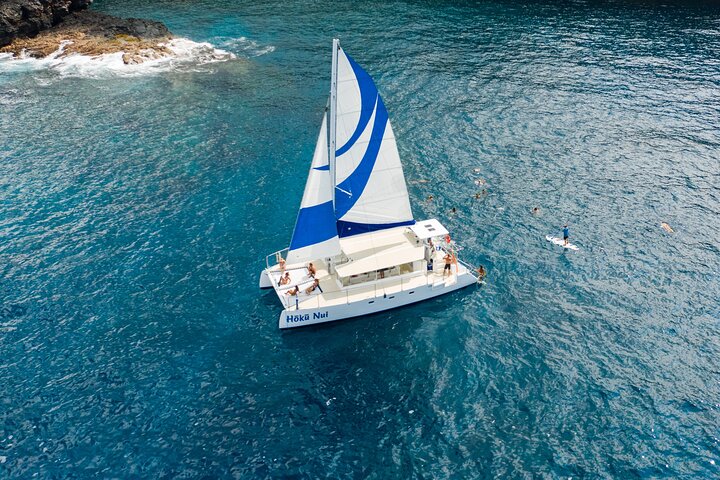
Sea Paradise makes the journey from nearby Keauhou Bay aboard Hoku Nui.
Hoku Nui is our 50-foot sailing catamaran, providing guests with a spacious and stable platform for their nighttime ocean adventure.
That’s particularly important after sunset.
Moving around a small boat in darkness can feel very different from preparing aboard a larger catamaran.
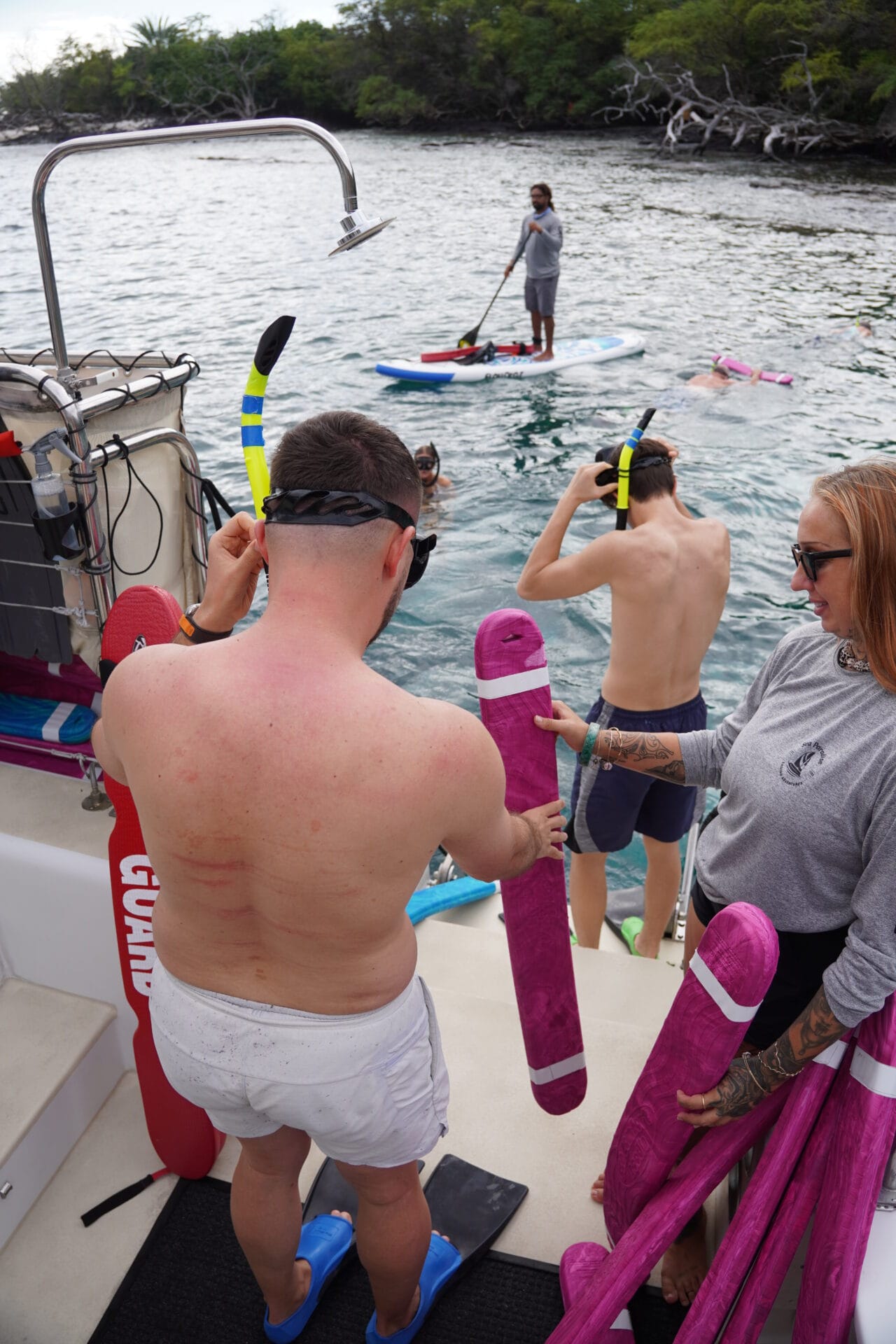
Hoku Nui provides space for guests to gear up, listen to safety instructions and prepare before entering the water.
Wide water-access staircases help guests transition between the boat and ocean.
What Happens Once You’re in the Water?
Guests remain near the surface.
Lights illuminate the water below and help concentrate plankton.
Then everyone watches.
That’s the important part.
You don’t need to chase manta rays.
In fact, you shouldn’t.
If mantas arrive, let them approach naturally.
The experience works because snorkelers remain observers while the animals continue their normal feeding behavior.
A manta may pass underneath.
It may turn.
It may disappear.
Then it may suddenly return from a completely different direction.
The anticipation becomes part of the experience.
Why Manta Village Is So Reliable
Wildlife encounters are inherently unpredictable.
That’s something Sea Paradise believes should be communicated clearly.
No responsible company can command a wild manta ray to appear.
Nevertheless, Kona provides remarkably consistent opportunities.
Sea Paradise’s manta experiences have an approximately 85–95% year-round sighting rate.
That reliability has helped make nighttime manta snorkeling one of the signature ocean adventures on Hawaii Island.
Responsible Manta Viewing
With an extraordinary wildlife experience comes responsibility.
Manta rays should never be touched, grabbed, chased or ridden.
Guests should remain passive and allow the animals to determine how close they come.
This approach isn’t just safer and more respectful.
It makes the encounter better.
A manta behaving naturally is far more fascinating than an animal being pursued by people.
Think of yourself as a guest at their dinner table.
Watch.
Appreciate.
And keep your hands to yourself.
Why the Experience Feels So Different at Night
The Pacific is impressive during daylight.
After sunset, it becomes an entirely different world.
Your visual field narrows to illuminated water.
Everything beyond it disappears into darkness.
That changes your sense of scale.
Then a manta emerges.
There may be no warning except a dark shape growing larger beneath you.
Within seconds, the animal is illuminated.
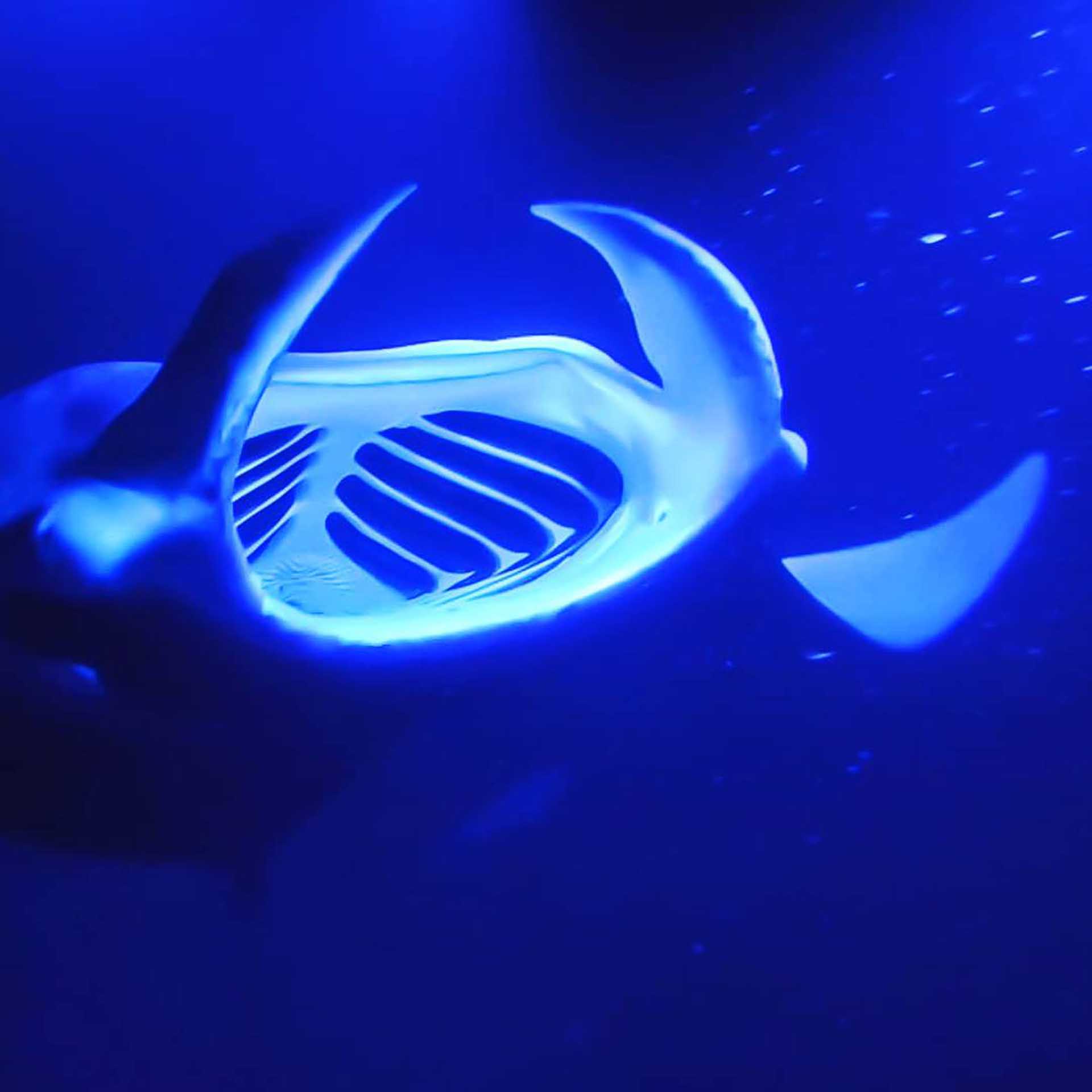
You can see its mouth, gills and distinctive underside.
Then it turns and vanishes.
The contrast between darkness and light makes every appearance dramatic.
Is Manta Village Good for First-Time Visitors?
For many guests, a Kona manta snorkel is unlike anything they’ve done before.
Being in the ocean after dark can understandably feel unfamiliar.
That’s why the boat, crew briefing and organization of the experience matter.
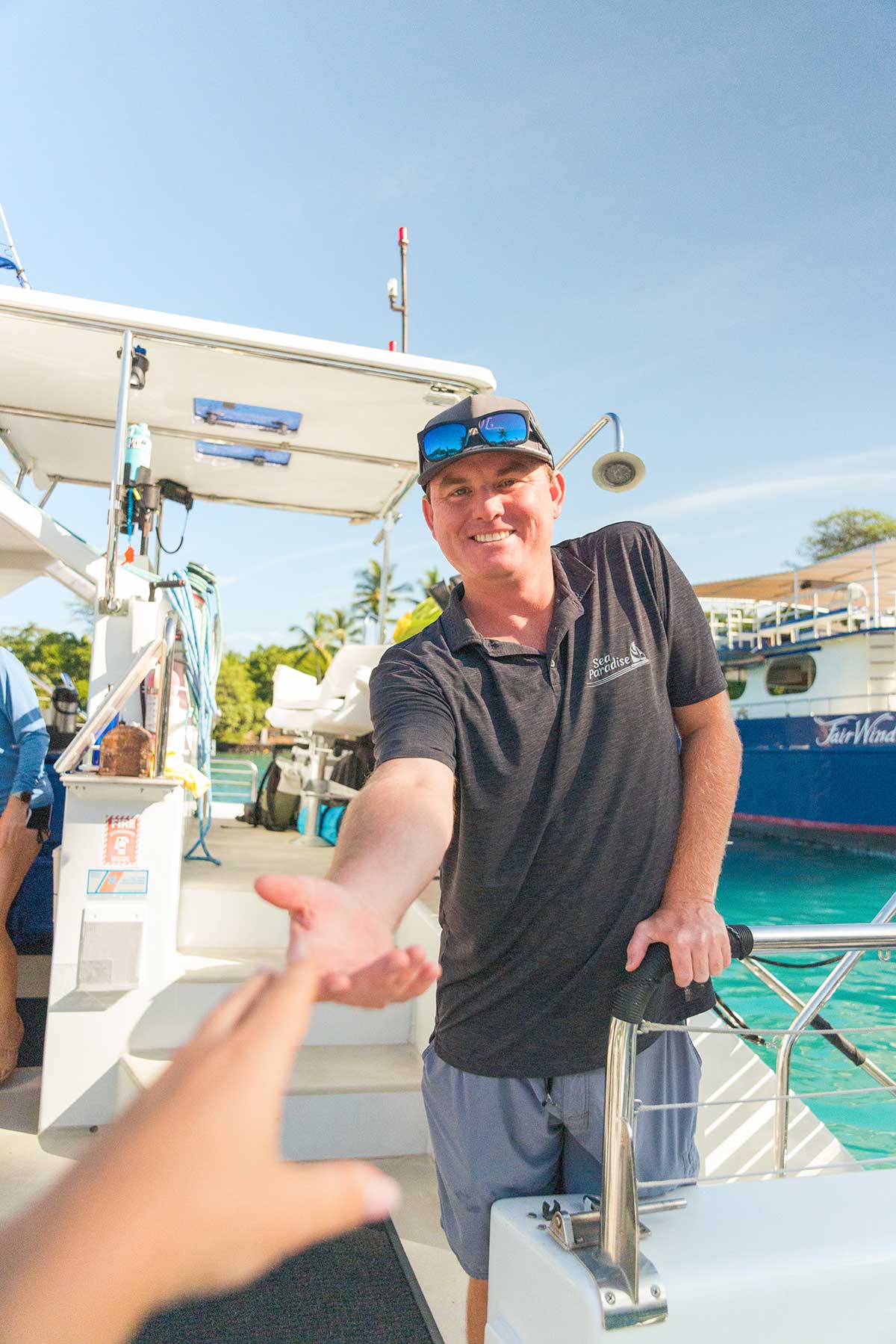
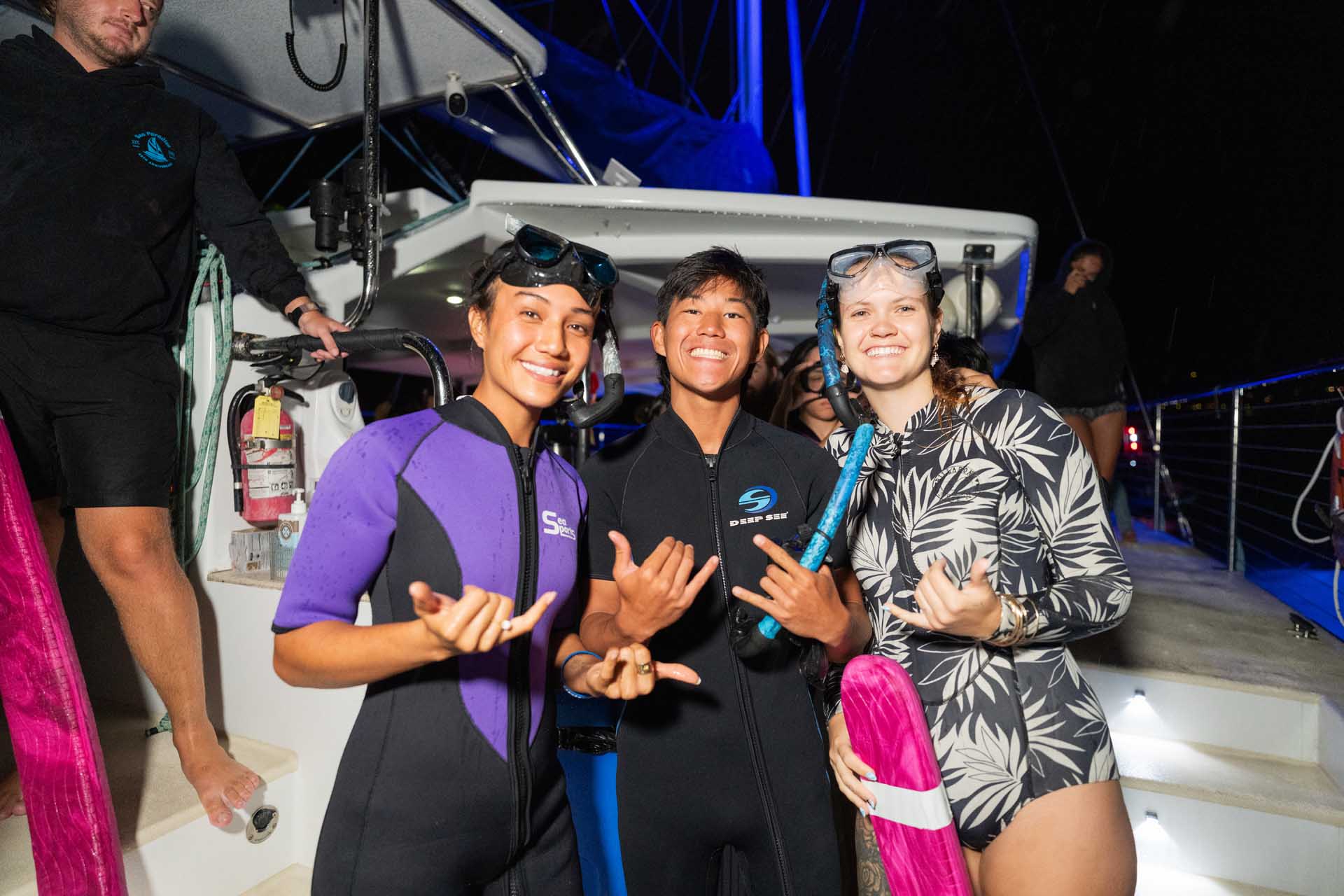
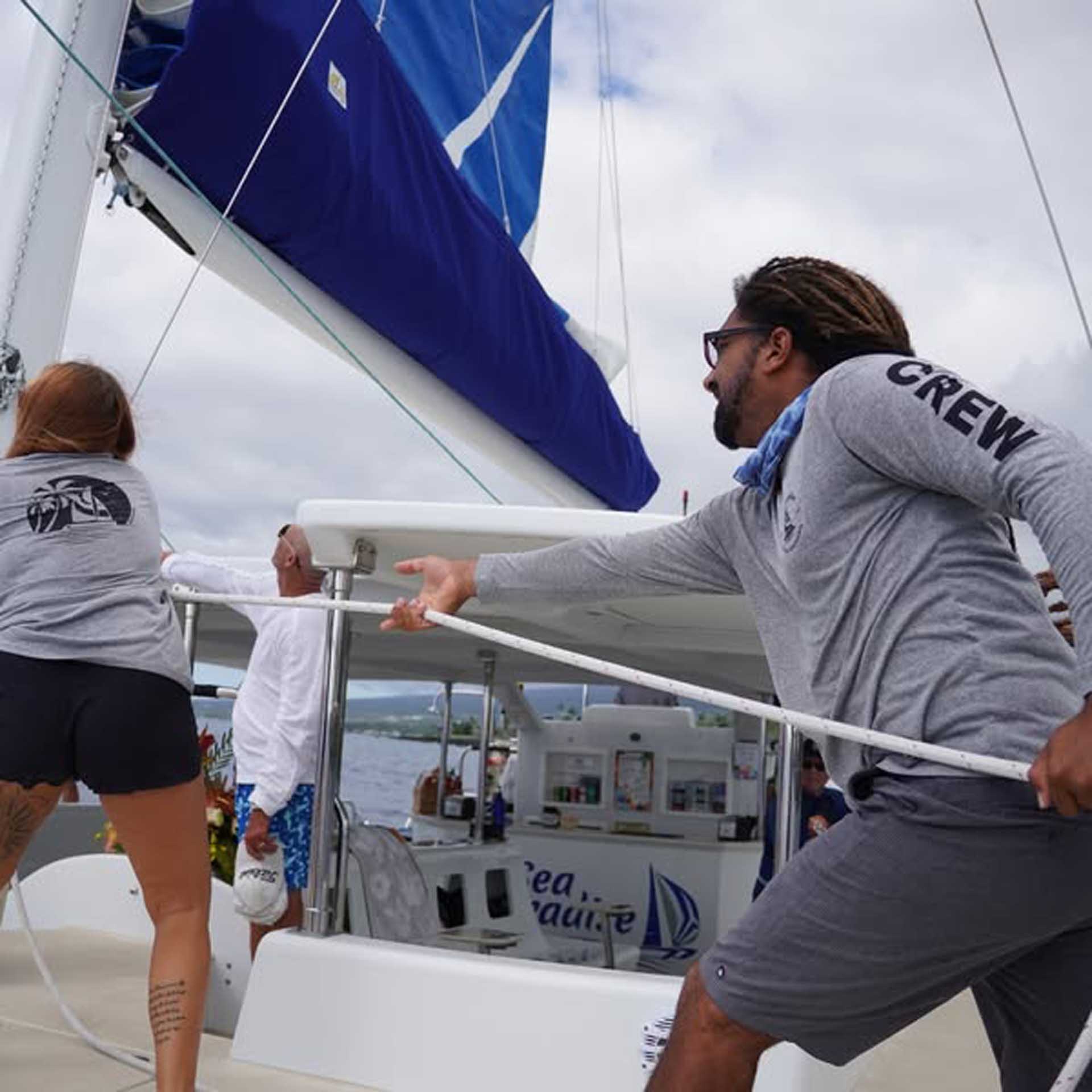
Sea Paradise’s experienced crew prepares guests before entering the water and explains how to participate responsibly.
The 50-foot Hoku Nui also provides a comfortable home base before and after the snorkel.
Frequently Asked Questions About Manta Village Kona
Where is Manta Village?
Manta Village is a manta viewing area off the Kona Coast near Keauhou on Hawaii Island.
Why are manta rays attracted to Manta Village?
Lights help concentrate plankton in the water. Reef manta rays feed on plankton, so they may visit illuminated areas where food becomes concentrated.
Are manta rays guaranteed at Manta Village?
No wild animal sighting can be guaranteed. Sea Paradise experiences an approximately 85–95% year-round manta sighting rate.
Can you touch manta rays?
No. Guests should practice passive observation and never touch, chase, grab or attempt to ride a manta.
Are Kona’s manta rays individually known?
Many are. Individual manta rays can be identified by their unique underside spot patterns, and more than 450 mantas have been identified in the Kona region.
Where do Sea Paradise manta tours depart?
Sea Paradise departs from Keauhou Bay aboard the 50-foot Hoku Nui sailing catamaran.
See Manta Village for Yourself
Manta Village demonstrates what can happen when natural animal behavior, ocean ecology and responsible tourism come together.
The lights may illuminate the plankton.
But the mantas decide whether to appear.
And that’s exactly why the experience is so powerful.
When a completely wild manta ray emerges from the darkness and glides beneath you, you’re witnessing the Pacific Ocean on its terms.
Join Sea Paradise aboard Hoku Nui and experience one of Kona’s most extraordinary nighttime adventures at Manta Village.
Book your tour today! https://www.seaparadise.com/