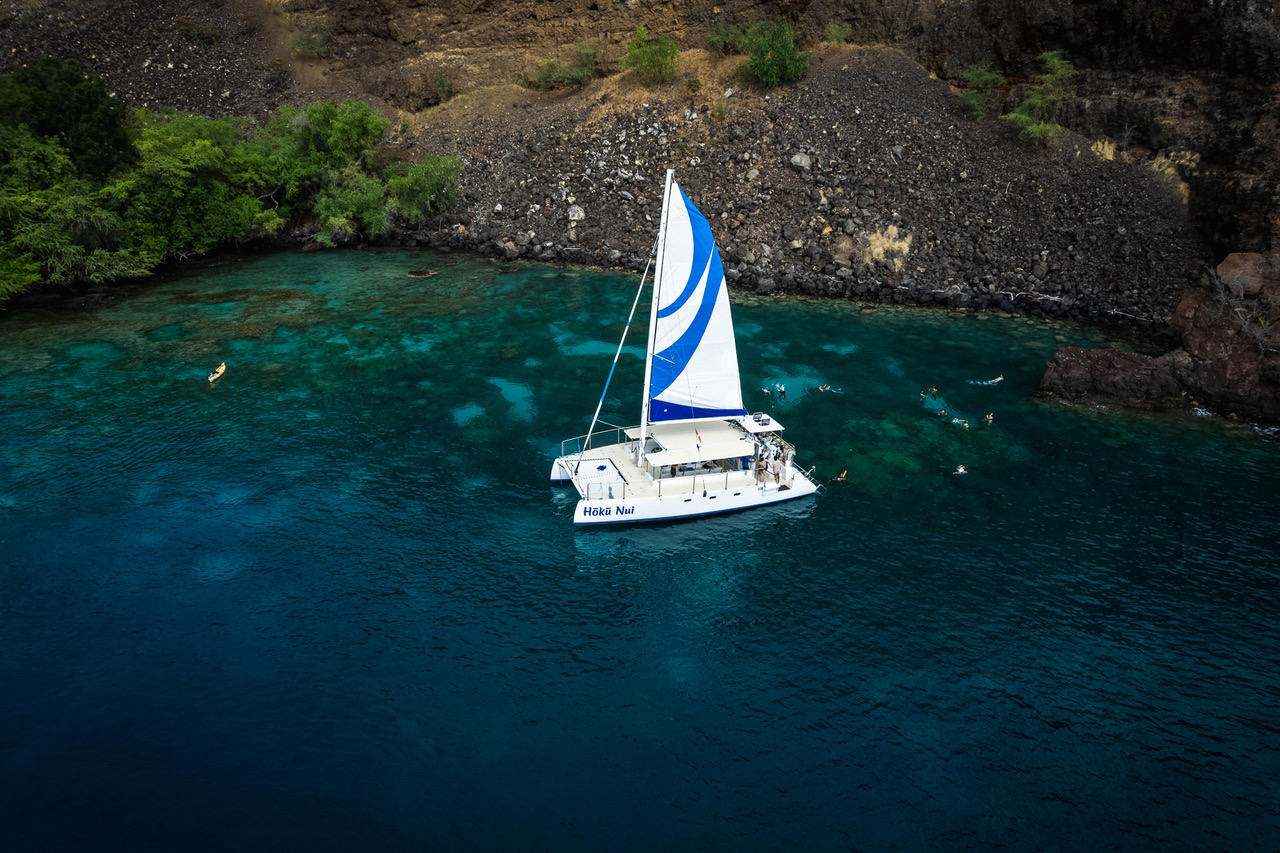
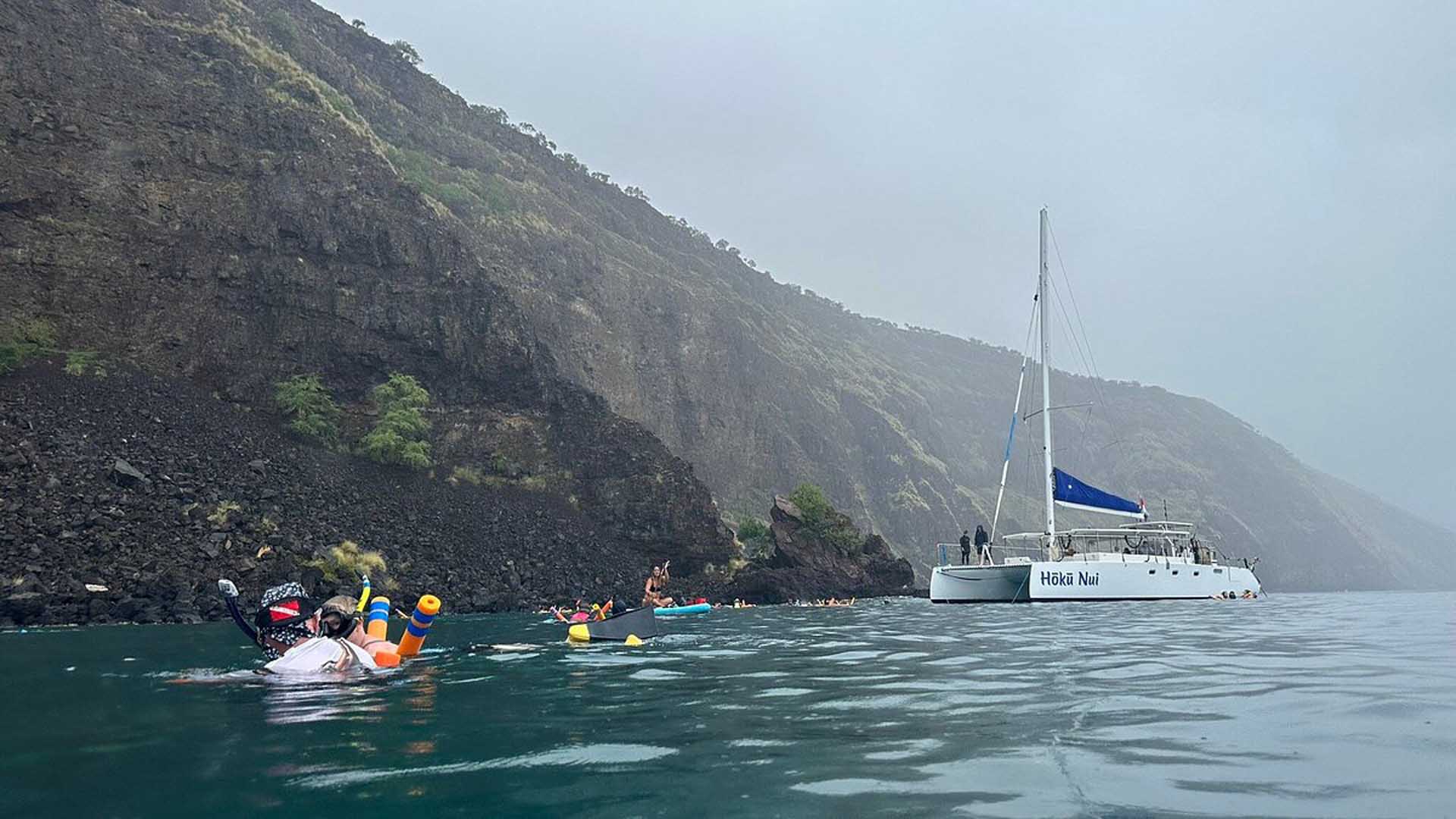
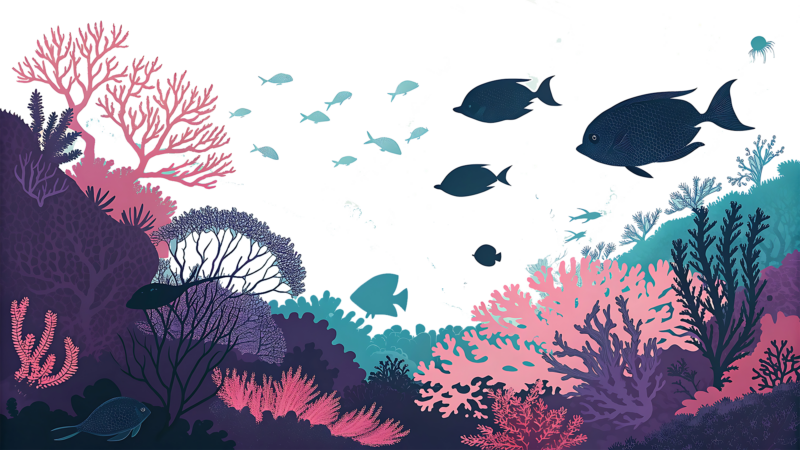
Kealakekua Bay has been a Marine Life Conservation District since 1969. More than fifty years of protection — no fishing, no collecting — has produced one of the highest marine life densities of any nearshore snorkel site in Hawaii.
This is what guests may encounter on a Sea Paradise snorkel tour to the World Famous Captain Cook Monument at Kealakekua Bay. Wildlife is wild, and nothing here is guaranteed on any given morning. http://seaparadise.com/captain-cook-monument/
What Turtles and Large Animals May You See?
Hawaiian green sea turtles (honu) are common at Kealakekua Bay and are seen on most morning departures. They rest on the reef at snorkeling depth, sometimes just below the surface, and are generally untroubled by snorkelers moving slowly and horizontally overhead. Federal law requires maintaining distance from sea turtles, and the marine naturalist briefing covers exactly what that means in the water.
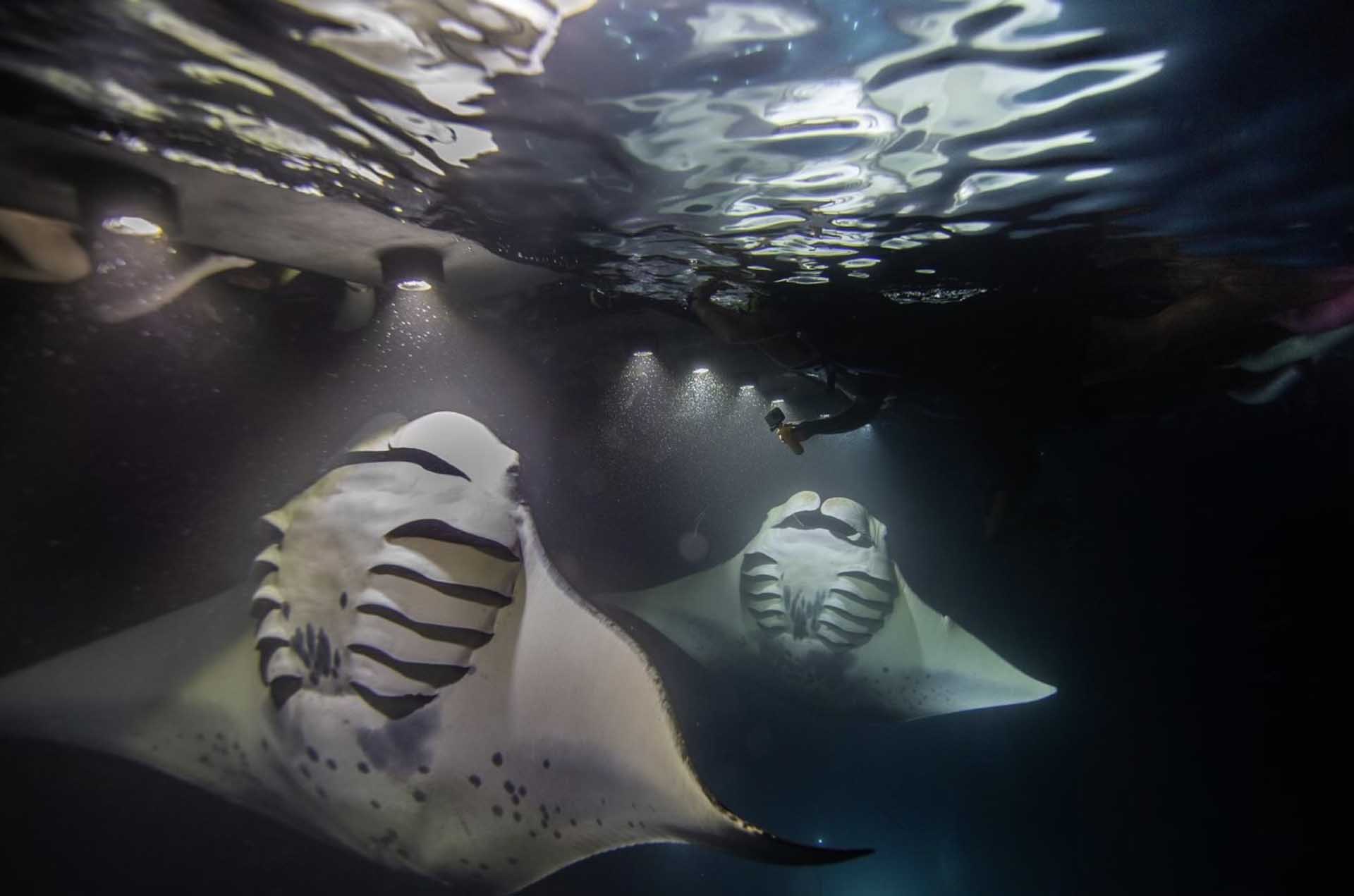
Spotted eagle rays — dark dorsal surface flecked with white spots, long whip-like tail — are seen less reliably than honu but regularly, usually patrolling deeper water along the outer reef edge near the World Famous Captain Cook Monument at Kealakekua Bay.
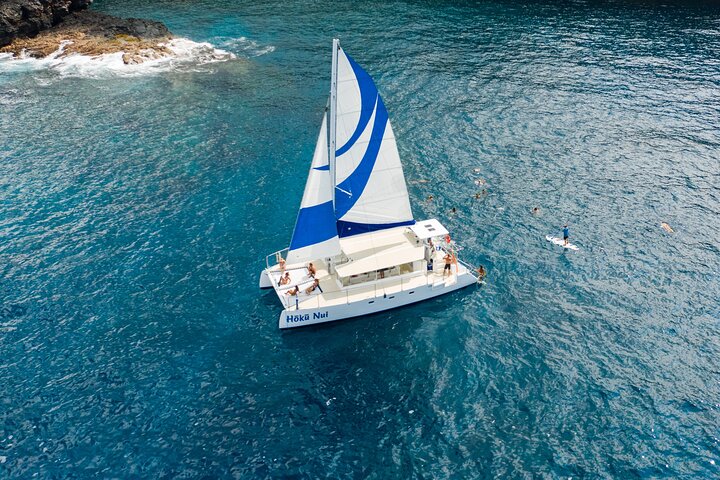
A resident spinner dolphin pod uses the bay as a resting area, most often in the morning, and dolphins are present along this coast year-round. Between December and April, humpback whales are frequently spotted on the sail. Both dolphins and whales are watched from the deck of the Hoku Nui at a respectful distance under NOAA guidelines and the Dolphin SMART program — they are never an in-water encounter.
Which Reef Fish Are You Most Likely to See?
Reef fish diversity here reflects the protected status directly. Yellow tang school in dense bright formations. Moorish idols drift the reef with their trailing dorsal filaments. Parrotfish work the coral in several species, and their crunching is clearly audible underwater.
Humuhumunukunukuapuaʻa — Hawaii’s state fish, the reef triggerfish, Rhinecanthus rectangulus — are regulars on the coral surface. The name means, roughly, triggerfish with a snout like a pig, from the grunting noise it makes. It was named state fish in 1985 and permanently reinstated in 2006.
Butterflyfish appear in several species, and Hawaiian cleaner wrasse work established cleaning stations on the reef, servicing larger fish that queue up and hold still for them. It is one of the more interesting things to watch once someone points it out, and it is exactly the kind of detail the naturalist briefing prepares you for.
What About Eels, Sharks, and Octopus?
Several moray eel species inhabit the crevices and coral cavities throughout the bay. The whitemouth moray is common; yellowmargin and dragon morays turn up occasionally. Morays are not aggressive unless physically threatened, and the briefing covers appropriate behavior around them.
Whitetip reef sharks are occasionally present — a small, non-aggressive, reef-dwelling species that rests under lava ledges and on the seafloor during the day. Sightings are not common but do occur, and the crew will point them out when spotted.
Hawaiian day octopus are present, though their camouflage makes them genuinely difficult to find. The naturalist briefing includes guidance on what to look for. Red Hill, the second morning-tour site when conditions permit, has a higher density of octopus in its lava tube formations.
Why Is the Marine Life Here Different from Other Kona Sites?
The answer is the 1969 designation and everything that has followed from it. A reef that has gone more than fifty years without fishing pressure or collecting develops a fish population that is larger, older, more diverse, and considerably less skittish than one that has not. That is why guests can float still and have the reef carry on around them.
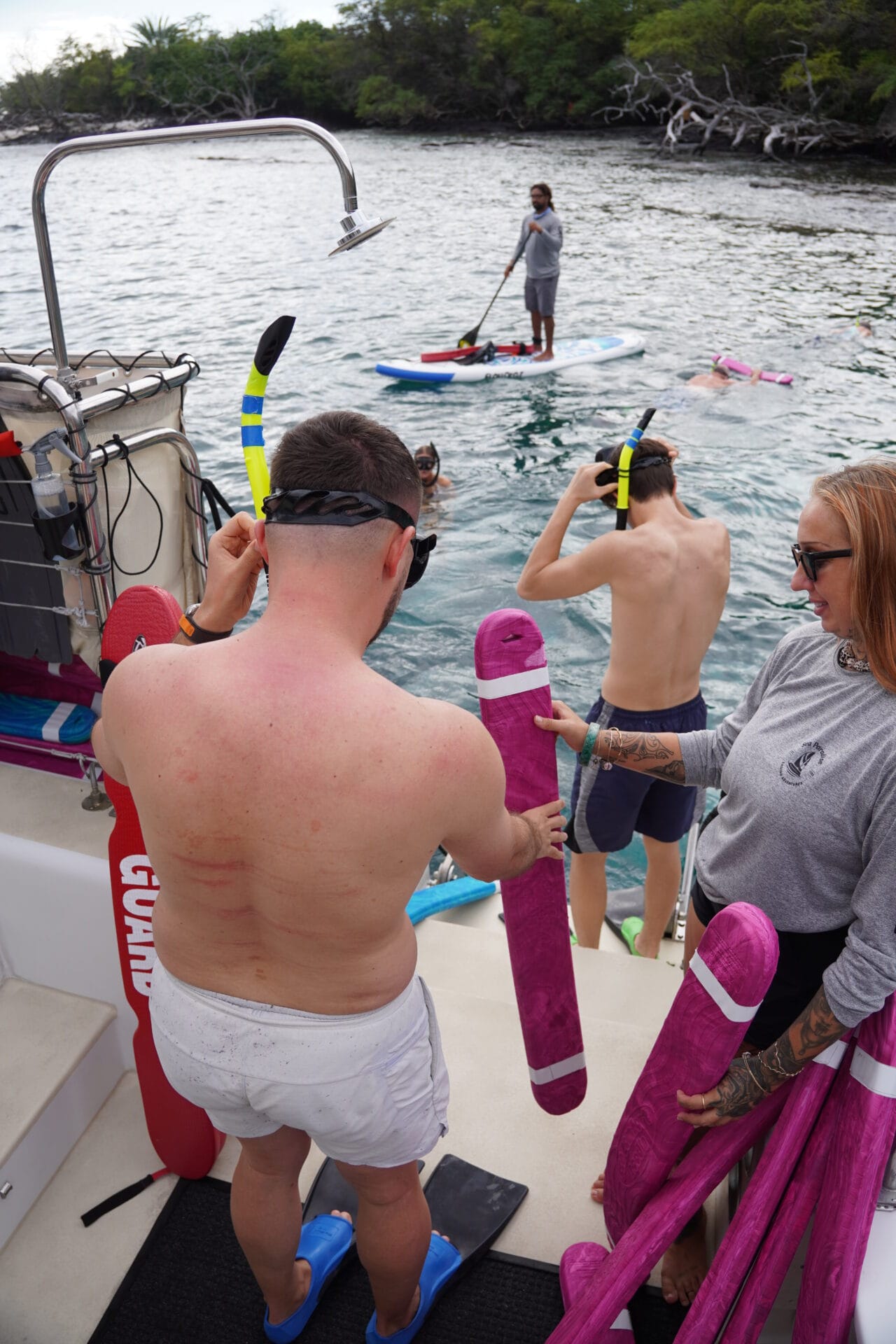
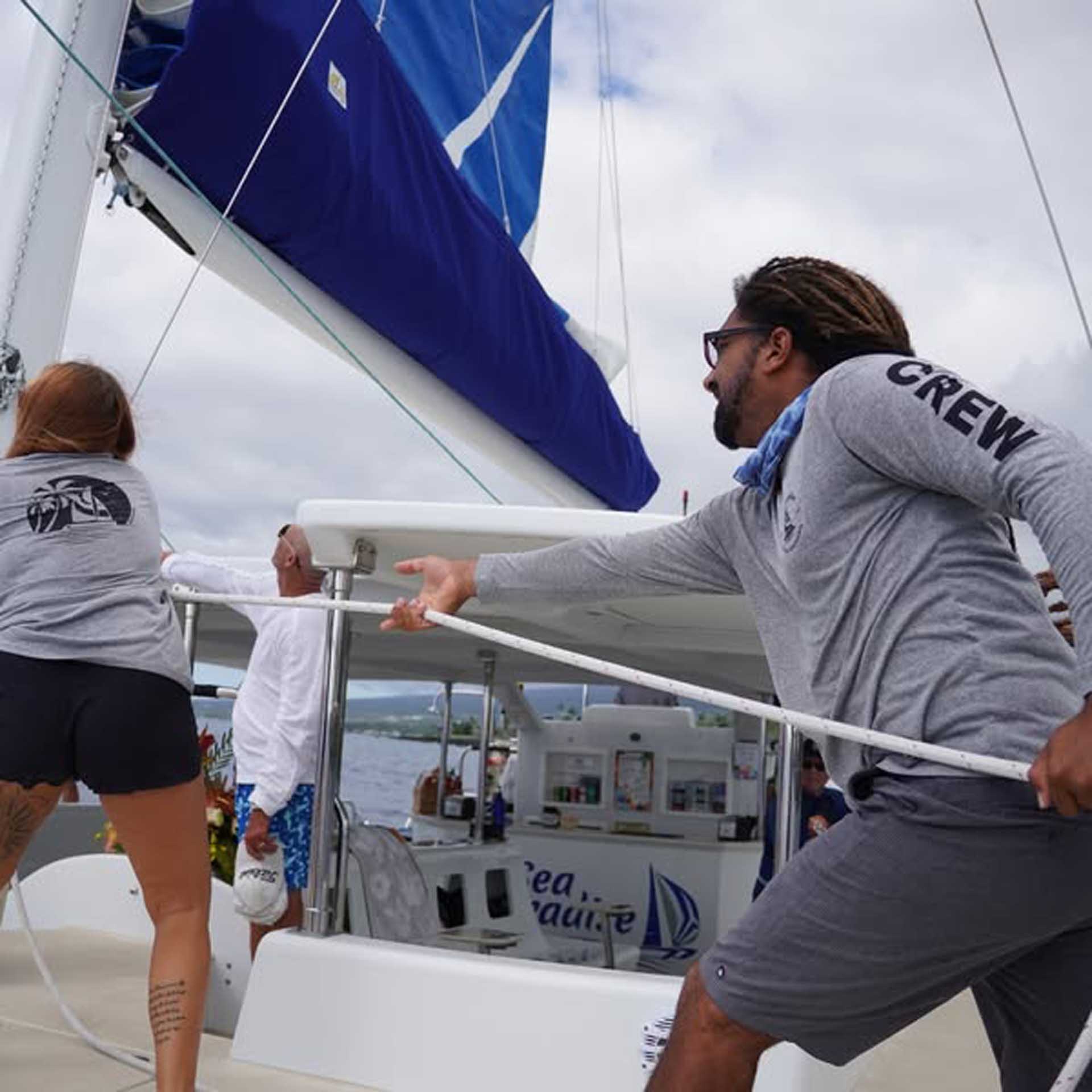
That is also why the operating standards matter. Sea Paradise is a certified member of the Hawaii Ecotourism Association, requires and provides reef-safe mineral sunscreen on every departure, follows NOAA guidelines for all wildlife encounters, participates in Dolphin SMART, and observes the Coral Reef Alliance’s West Hawaii Voluntary Standards for Marine Tourism.
The reef is the product. Protecting it is not a marketing position, and the marine naturalist briefing on every departure is where that gets translated into what guests actually do in the water.
It also explains the one rule guests are sometimes surprised by. Federal law requires maintaining distance from Hawaiian green sea turtles, and NOAA guidelines require the same for resting spinner dolphins and for humpback whales. Sea Paradise crew enforce that consistently, which is why those animals are watched from the deck rather than approached in the water.
What marine life may I see at Kealakekua Bay?
Hawaiian green sea turtles (honu), spotted eagle rays, octopus, Moorish idols, yellow tang, parrotfish, humuhumunukunukuapuaʻa, butterflyfish, Hawaiian cleaner wrasse, several moray eel species, and occasional small whitetip reef sharks. Spinner dolphins and, seasonally, humpback whales are watched from the vessel.
When is the best time to see sea turtles at Kealakekua Bay?
Hawaiian green sea turtles are present at the bay year-round. Morning tours offer the best conditions for seeing honu resting on the reef, before midday activity picks up. Sightings are common but never guaranteed — this is wild marine life.
Are there dangerous marine animals at Kealakekua Bay?
No. The whitetip reef sharks occasionally seen at the bay are small, non-aggressive, and avoid contact with snorkelers. Moray eels will not approach unless physically provoked. The marine naturalist briefing covers appropriate behavior around every species you may encounter.
Can guests enter the water with the dolphins at Kealakekua Bay?
No. Spinner dolphins are watched from the deck of the Hoku Nui at a respectful distance under NOAA guidelines and the Dolphin SMART program, and Sea Paradise crew enforce that consistently. The same applies to humpback whales and to sea turtles, which are protected under federal law. What guests encounter in the water is reef fish and coral. http://seaparadise.com/kealakekua-bay/
What is a humuhumunukunukuapuaʻa?
It is Hawaii’s state fish, the reef triggerfish, Rhinecanthus rectangulus. The name describes a triggerfish with a snout like a pig, from the grunting noise it makes. It was named state fish in 1985 and permanently reinstated in 2006, and it is a regular sight on the coral at Kealakekua Bay.
Are there spinner dolphins at Kealakekua Bay every day?
A resident spinner dolphin pod uses the bay as a resting area, particularly in the morning hours, and dolphins are present along the Kona Coast year-round. Sightings from the boat are common but not daily and not guaranteed. NOAA guidelines require vessels and swimmers to maintain distance from resting spinner dolphins.
Can I see humpback whales while snorkeling in Kona?
Humpback whales pass the Kona Coast between December and April and are frequently spotted from the deck on the sail to and from Kealakekua Bay. They are viewed from the vessel at a respectful distance under NOAA guidelines. Whales are never an in-water encounter on any Sea Paradise tour.
Are there octopus at Kealakekua Bay?
Yes, Hawaiian day octopus are present, but their camouflage makes them genuinely difficult to spot without knowing what to look for. The marine naturalist briefing includes guidance on finding them. Red Hill, the second morning-tour site when conditions permit, has a higher density in its lava tube formations.
What kinds of moray eels live at Kealakekua Bay?
Several species inhabit the crevices and coral cavities throughout the bay. The whitemouth moray is the most common; yellowmargin and dragon morays are sighted occasionally. Morays are not aggressive unless physically threatened, and the naturalist briefing covers appropriate behavior around them.
How does the marine life at Kealakekua Bay compare to other Kona snorkel sites?
Protection since 1969 produces marine life density and coral health that unprotected sites cannot match. The consistent presence of honu, resident spinner dolphins, and healthy coral formations is a direct result of the Marine Life Conservation District designation and more than fifty years of no fishing and no collecting.
How does Sea Paradise protect the reef at Kealakekua Bay?
Sea Paradise is a certified member of the Hawaii Ecotourism Association, requires and provides reef-safe mineral sunscreen on every departure, follows NOAA guidelines for all wildlife encounters, participates in Dolphin SMART, and observes the Coral Reef Alliance’s West Hawaii Voluntary Standards for Marine Tourism.
Will the marine naturalist help me identify what I saw?
Yes. A trained marine naturalist leads the reef briefing on every departure, covering species identification, where on the reef to find them, Hawaiian reef ecology, and responsible snorkeling practice. Crew also identify animals for guests during the snorkel when something notable appears.
Book your tour today! http://seaparadise.com/morning-snorkel-tour
http://seaparadise.com/afternoon-snorkel-tour/