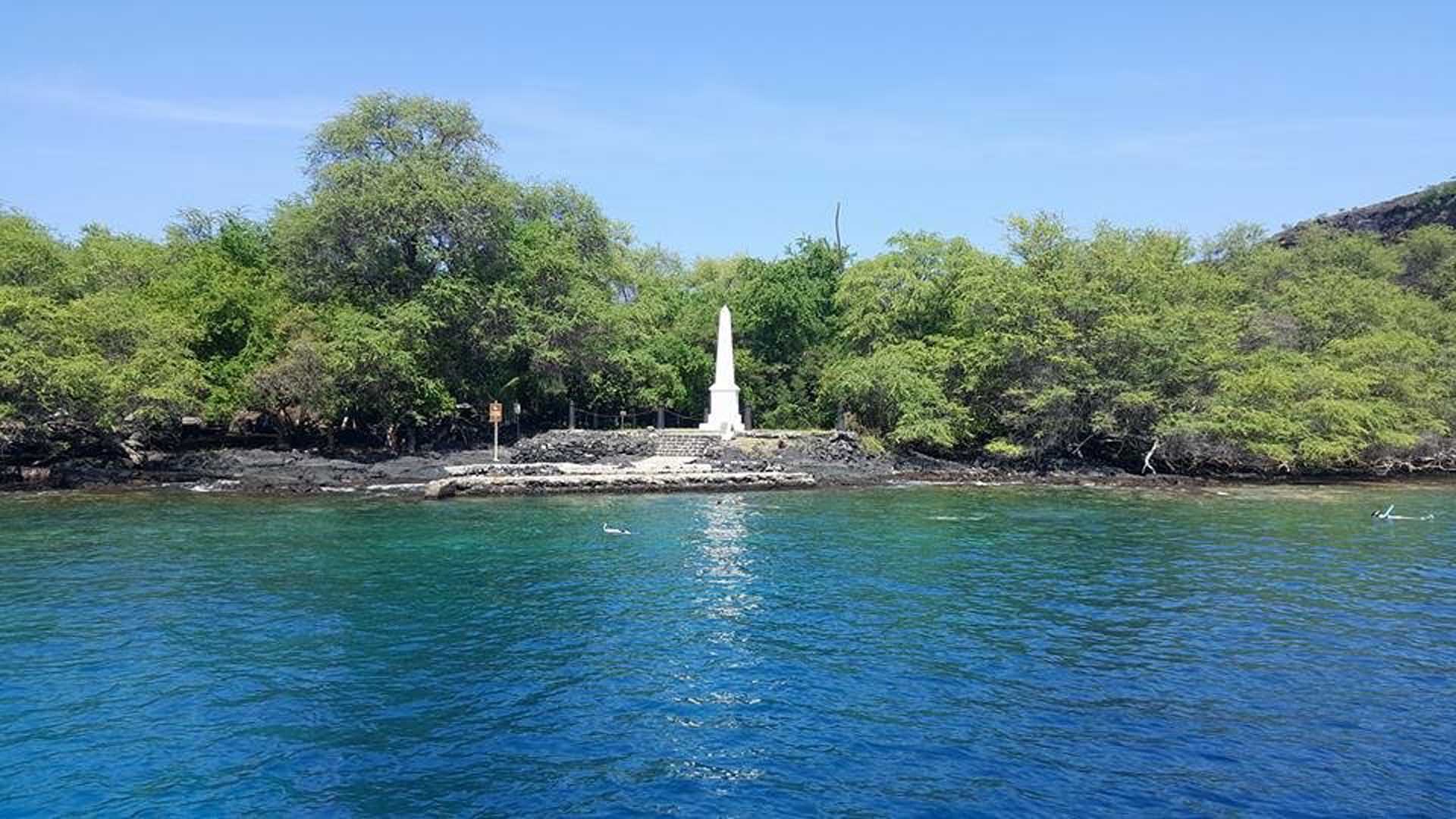
The lava formations at the World Famous Captain Cook Monument at Kealakekua Bay shelter three of the reef’s most fascinating residents. Snorkelers may see moray eels and the Hawaiian day octopus tucked into lava tubes and crevices, and whitetip reef sharks resting under lava ledges. All three spend much of the day hidden, so it pays to know where to look.
Sea Paradise Hawaii has been bringing snorkelers to this reef from Keauhou Bay since 1985. Here is what makes each of these animals remarkable.
What is special about moray eels?
Moray eels have a second set of jaws in their throat. In 2007, researchers Rita Mehta and Peter Wainwright of the University of California, Davis, showed that after a moray bites its prey, these inner “pharyngeal” jaws shoot forward, grab the food and pull it down the throat in a fraction of a second.
The trick makes sense for an animal that hunts in tight spaces. Most fish suck prey into their mouths, but morays generate little suction, so the second jaws do the work inside narrow reef crevices.
Fact: several moray species live at Kealakekua Bay, including the whitemouth and yellowmargin morays. Often, a snorkeler may spot only a head poking out of a hole in the lava.
Fact: never reach into a hole or crack in the reef. That is exactly where a moray lives.
How does the Hawaiian day octopus hide in plain sight?
The Hawaiian day octopus, Octopus cyanea, known in Hawaiian as heʻe, changes color using specialized skin cells called chromatophores. By squeezing or relaxing these cells, it can blend into rock, coral or sand in moments, which makes it one of the reef’s best camouflage artists.
Unlike many octopuses, it does most of its hunting during the day, according to the University of Hawaiʻi at Mānoa. That means snorkelers have a real chance of spotting one on the move.
Are whitetip reef sharks dangerous?
Whitetip reef sharks, Triaenodon obesus, known in Hawaiian as manō lālākea, are small reef sharks that spend much of the day resting in caves and under ledges. They are non-aggressive and generally uninterested in snorkelers. Most are under 5 feet long, and the State of Hawaiʻi lists their maximum size at about 7 feet.
You can identify one by the small white tips on the top of its first dorsal fin and its tail. The body is gray and slightly flat-headed.
Fact: according to the State of Hawaiʻi, whitetips may rest in caves for extended periods. They feed on reef fish, octopus and crustaceans, and they are usually found near coral reefs in water about 25 to 130 feet deep.
Fact: if you see one resting on the bottom, you have seen it at its most typical. Watch quietly from the surface and let it be.
Where may you see them on a Sea Paradise tour?
All three may be seen around the lava formations at the World Famous Captain Cook Monument at Kealakekua Bay, inside a 315-acre Marine Life Conservation District protected since 1969. Other reef fish snorkelers may see there include the humuhumunukunukuapuaʻa, yellow tang, Moorish idols, parrotfish and butterflyfish.
The best way to find them is to move slowly. Float at the surface, look into the shadows of ledges and holes, and give every animal plenty of room. Visibility at the bay often reaches 60 to 80 feet, which makes it far easier to pick out fish from the surface. Our marine naturalist’s reef briefing before the swim is the place to ask what to look for.
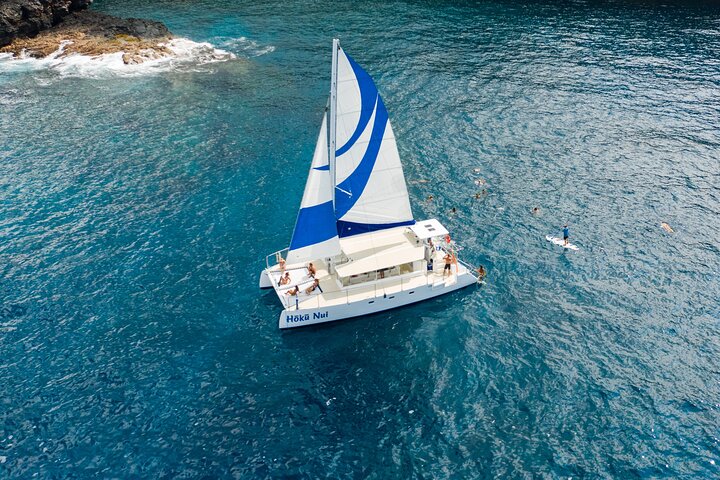
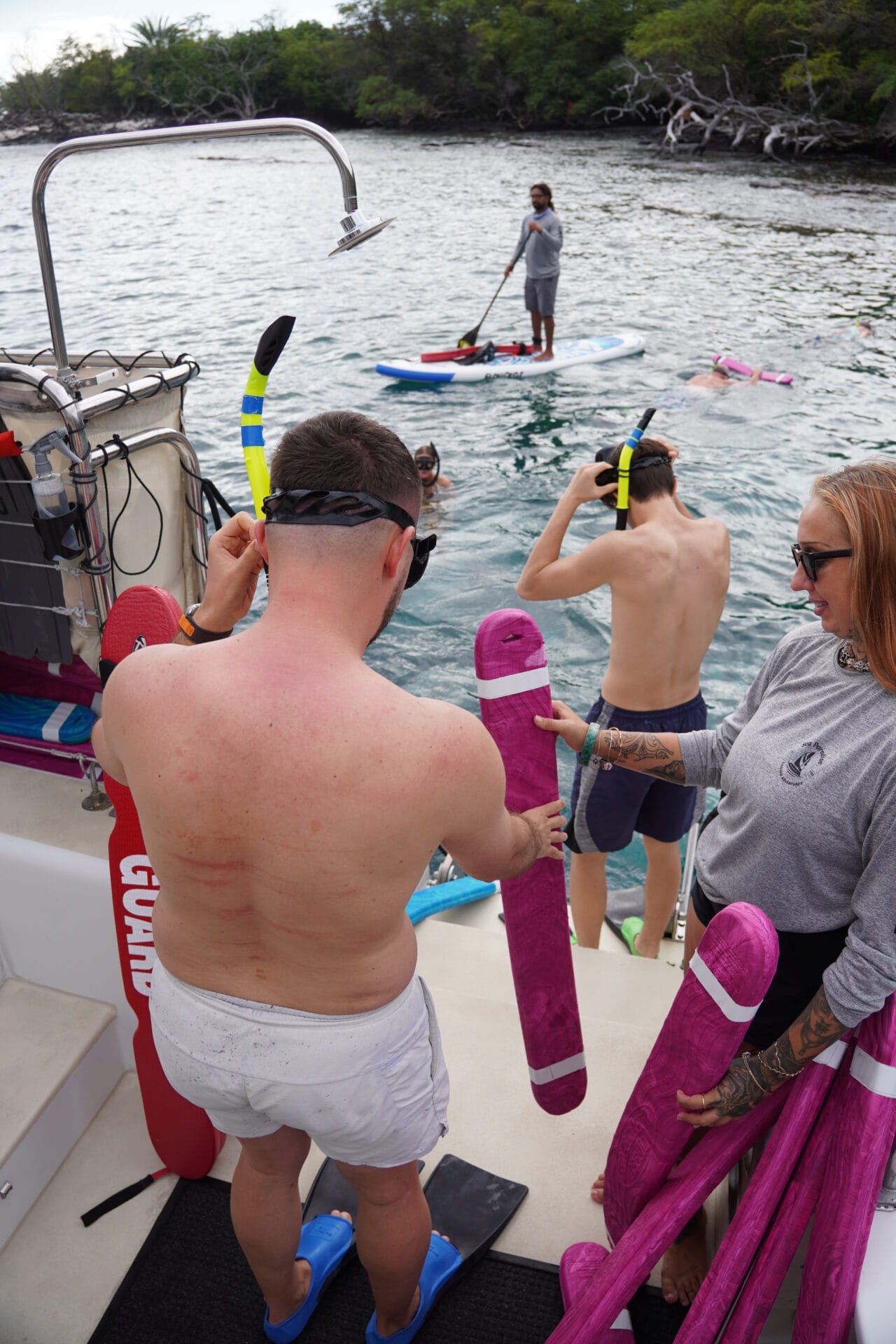
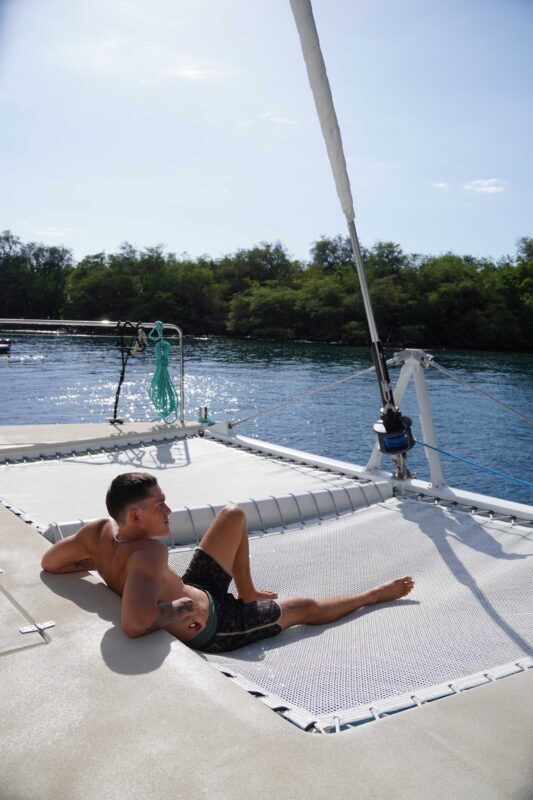
Sea Paradise’s Afternoon Snorkel Tour departs Keauhou Bay at 2:00 PM aboard the Hoku Nui, our 50-foot luxury sailing catamaran. In about three hours, you get a marine naturalist reef briefing, all snorkel gear and light snacks. Ask the naturalist where morays, octopus and whitetips have been seen lately on this reef. For more on the bay, see our Kealakekua Bay guide.
Frequently Asked Questions
Are there sharks at the Captain Cook Monument?
Snorkelers may occasionally see whitetip reef sharks at the World Famous Captain Cook Monument at Kealakekua Bay, usually resting under lava ledges. These small reef sharks are non-aggressive and generally uninterested in snorkelers.
Can you see octopus while snorkeling in Kona?
You may. The Hawaiian day octopus, or heʻe, hunts mostly during the day and is a master of camouflage. Look for small holes in the lava with broken shells outside, a sign of an octopus den.
Do moray eels bite snorkelers?
Moray eels live in holes and crevices in the reef and keep to their dens. The simplest way to stay safe is never to reach into a hole or crack in the reef, and to watch morays from a respectful distance.