Most visitors to the Big Island know the Captain Cook Monument exists. Far fewer know there is no road to it, and fewer still know that the reef directly below it is among the healthiest on the Kona Coast.
The World Famous Captain Cook Monument at Kealakekua Bay is reached by sea. Here is the history, the access problem, and what the snorkeling is actually like.
What Is the World Famous Captain Cook Monument?
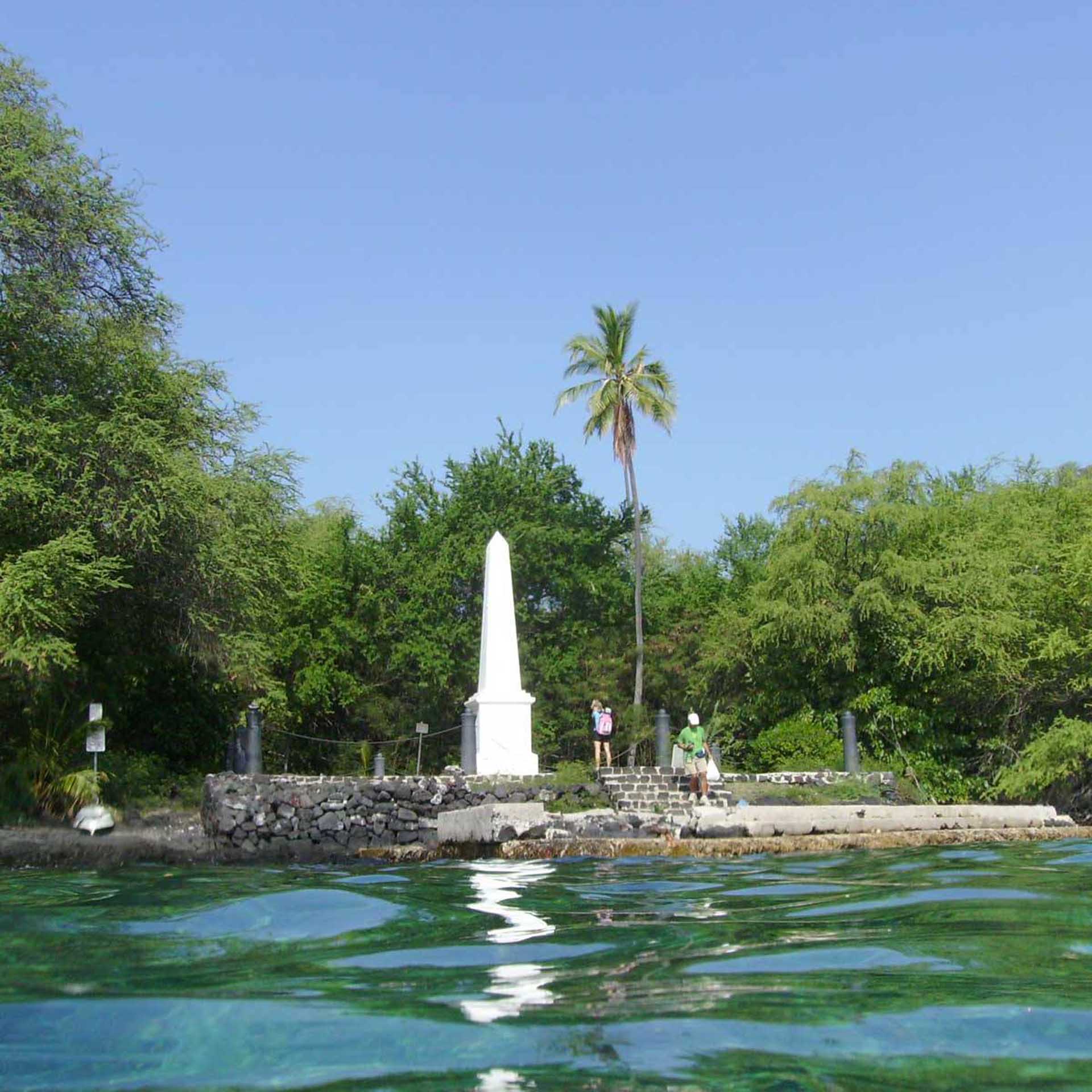
The white obelisk on the north shore of Kealakekua Bay marks the approximate spot where British explorer Captain James Cook was killed on February 14, 1779, during his third Pacific voyage. Cook had arrived at the bay in January 1779 during the Makahiki festival — a period of peace — and was initially welcomed. He returned after storm damage to his ships, and a series of confrontations ended in his death on that shoreline.
The small plot of land around the monument is maintained as British territory, ceded by the Hawaiian government in the nineteenth century. The surrounding bay and reef are Hawaii state waters, protected under the Marine Life Conservation District designation.
It is one of the historical oddities guests ask about most often on the sail down, and the marine naturalist briefing covers the cultural significance of the bay alongside the reef ecology.
http://seaparadise.com/captain-cook-monument/
Why Can’t You Drive to the World Famous Captain Cook Monument at Kealakekua Bay?
Kealakekua Bay is bordered by sea cliffs, and there is no road to the north shore where the monument stands. The road-accessible side of the bay is at Nāpōʻopoʻo on the south shore, across the water — and the shoreline between the two is not walkable.
A steep hiking trail exists and is strenuous, unshaded, and without facilities. Kayakers can paddle roughly a mile across open bay from the south shore launch, weather depending. For most visitors, a tour vessel is the practical way to arrive, and it is the only way to arrive with gear, shade, food, restrooms, and a briefing.
Sea Paradise has operated at the World Famous Captain Cook Monument at Kealakekua Bay since 1985 and visits it on both the morning and afternoon snorkel tours. http://seaparadise.com/kealakekua-bay/
What Is the Snorkeling Like Below the Monument?
The reef beneath the monument is one of the strongest sections of the bay. Kealakekua Bay has been a 315-acre Marine Life Conservation District since 1969 — no fishing, no collecting — and coral cover here has had more than fifty years to recover. Water clarity commonly runs 60 to 80 feet on clear mornings, which is enough to see the full structure of the reef and the open water beyond it from the surface.
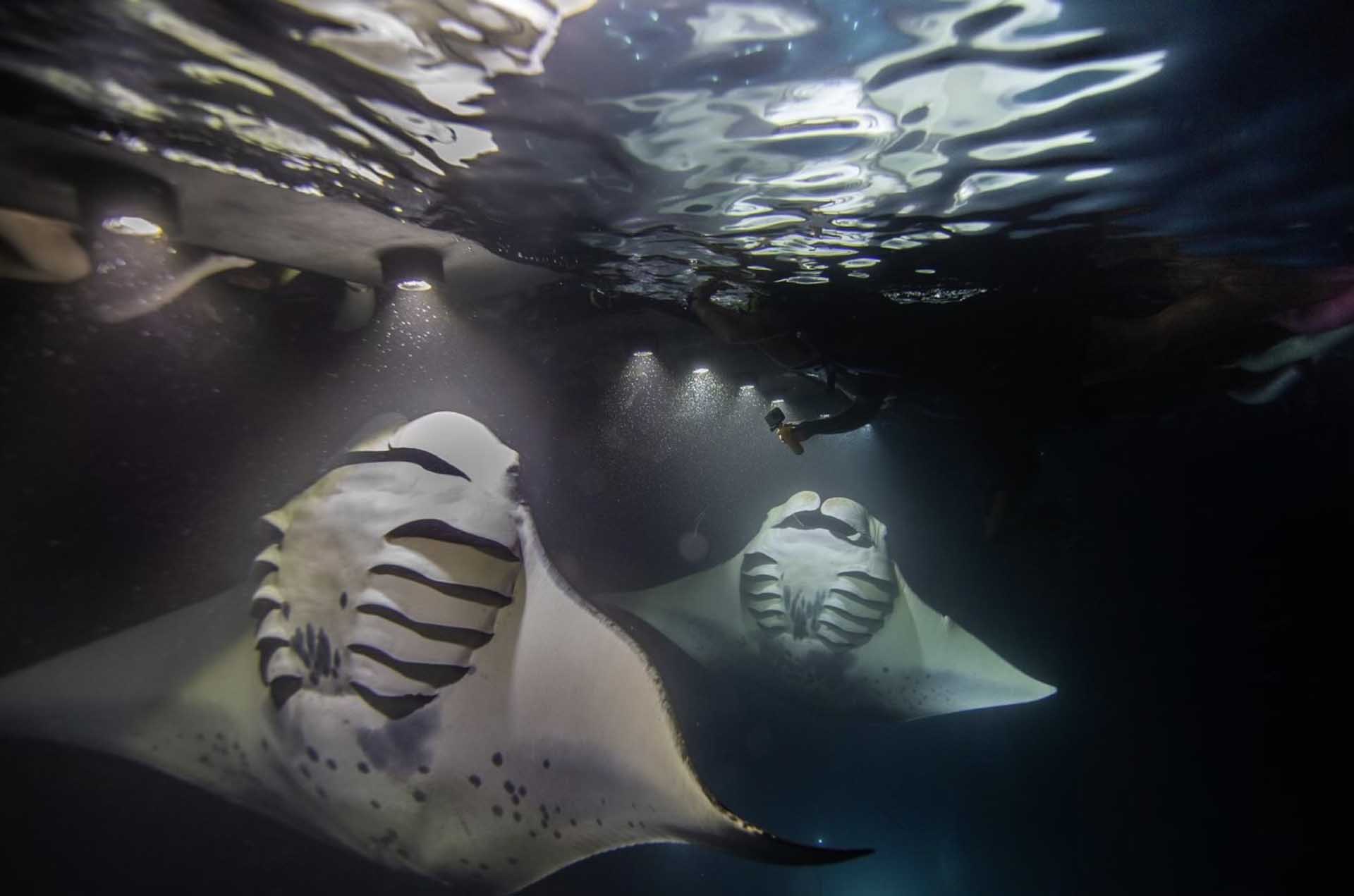
Guests may see Hawaiian green sea turtles (honu) resting on the reef, spotted eagle rays along the outer edge, octopus tucked into the coral, Moorish idols, dense schools of yellow tang, parrotfish audibly crunching coral, humuhumunukunukuapuaʻa — Hawaii’s state fish, the reef triggerfish, whose name describes a triggerfish with a snout like a pig — moray eels in the crevices, and occasional small whitetip reef sharks resting under lava ledges. Whitetip reef sharks are non-aggressive.
Spinner dolphins are present along this coast year-round and often rest near the bay entrance in the morning. They are watched from the vessel at a distance under NOAA guidelines. Between December and April, humpback whales may be spotted from the deck on the sail.
Which Sea Paradise Tour Should You Take to the Monument?
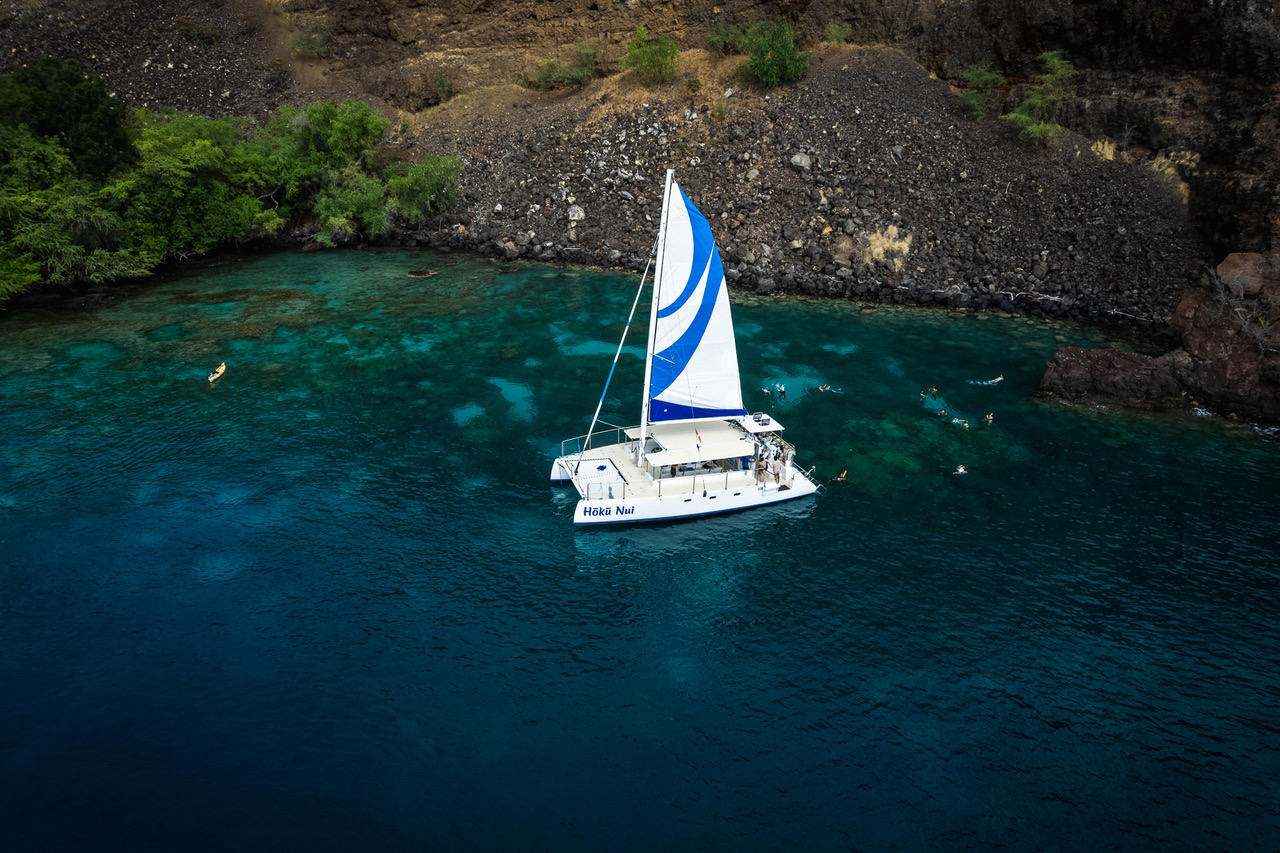
Both snorkel tours visit the World Famous Captain Cook Monument at Kealakekua Bay. The Morning Snorkel Tour departs Keauhou Bay at 8:30 AM with check-in at 8:15 AM, runs about four and a half hours, and adds Red Hill as a second site when conditions permit. Tropical breakfast buffet and deli-style lunch buffet are included, and the boat is back at the pier by approximately 1:00 PM.
The Afternoon Snorkel Tour departs at 2:00 PM with check-in at 1:45 PM, runs about three hours, visits the bay only, and returns by approximately 5:00 PM. Light snacks are included and the full bar opens after the snorkel for the sail home, when the trade winds have built and the coastline is in golden light.
Both depart from the end of the finger pier at Keauhou Bay aboard the Hoku Nui, spaciously designed for 49 guests. All snorkeling guests must be confident swimmers, and non-swimmers may not enter the water.
Where is the World Famous Captain Cook Monument?
The monument stands on the north shore of Kealakekua Bay on the Kona Coast of Hawaii’s Big Island, at the north end of the snorkel area inside the Marine Life Conservation District. There is no road to it. Sea Paradise reaches it by sea from Keauhou Bay, roughly a 45-minute sail south.
Is the Captain Cook Monument really British territory?
Yes. The small plot of land immediately around the monument is maintained as British territory, ceded by the Hawaiian government in the nineteenth century. The surrounding bay and reef are Hawaii state waters protected under the Marine Life Conservation District designation.
Can you drive to the Captain Cook Monument?
No. Kealakekua Bay is bordered by sea cliffs and there is no road to the north shore where the monument stands. The road-accessible side of the bay is at Nāpōʻopoʻo on the south shore, and the shoreline between the two is not walkable.
Can I kayak to the World Famous Captain Cook Monument at Kealakekua Bay?
Kayakers can paddle across from the Nāpōʻopoʻo launch on the south shore, roughly a mile of open bay, and activity inside the conservation district is regulated. Most visitors reach the monument by tour vessel instead, which is the only way to arrive with gear, shade, food, restrooms, and a marine naturalist briefing.
Can I hike to the Captain Cook Monument?
A steep trail exists down to the monument, but it is strenuous, largely unshaded, and has no facilities at either end. Hikers arrive without gear or drinking water unless they carry it in and out. Most visitors choose to arrive by boat.
What happened to Captain Cook at Kealakekua Bay?
Captain James Cook was killed on the shoreline of Kealakekua Bay on February 14, 1779, during his third Pacific voyage. He had arrived in January 1779 during the Makahiki festival, a period of peace, and was initially welcomed. He returned after storm damage to his ships, and a series of confrontations ended in his death.
Is the snorkeling good at the Captain Cook Monument?
The reef beneath the monument is one of the strongest sections of Kealakekua Bay. The bay has been a Marine Life Conservation District since 1969, coral cover has had more than fifty years to recover, and visibility commonly runs 60 to 80 feet on clear mornings.
What may I see snorkeling below the World Famous Captain Cook Monument?
Guests may see Hawaiian green sea turtles (honu), spotted eagle rays, octopus, Moorish idols, yellow tang, parrotfish, humuhumunukunukuapuaʻa — Hawaii’s state fish — moray eels, and occasional small whitetip reef sharks under lava ledges. Wildlife is wild and nothing is guaranteed on any given departure.
Are spinner dolphins always at Kealakekua Bay?
A resident spinner dolphin pod uses the bay as a resting area and is present along this coast year-round, most often in the morning. Sightings from the boat are common but never guaranteed. Dolphins are viewed from the vessel at a respectful distance under NOAA guidelines and the Dolphin SMART program.
Which Sea Paradise tour goes to the Captain Cook Monument?
Both snorkel tours. The Morning Snorkel Tour departs Keauhou Bay at 8:30 AM, runs about four and a half hours, includes breakfast and lunch, and adds Red Hill when conditions permit. The Afternoon Snorkel Tour departs at 2:00 PM, runs about three hours, includes light snacks, and visits the bay only. http://seaparadise.com/keauhou-bay/
Do I need to be a confident swimmer to snorkel at the monument?
Yes. All snorkeling guests on Sea Paradise tours must be confident swimmers, and non-swimmers may not enter the water. Children must swim independently, follow crew directions in open ocean, and wear the provided life jackets. Flotation devices are provided for guests who want additional support.
When is the best time of day to snorkel at Kealakekua Bay?
Morning. Trade winds along the Kona Coast are lighter early in the day, which produces calmer water and clearer visibility at the bay. The afternoon tour reaches the same reef with the trade winds providing excellent sailing on the return, so the choice depends on whether you prioritize water clarity or the sail.
Book your tour today! http://seaparadise.com/morning-snorkel-tour/ http://seaparadise.com/afternoon-snorkel-tour/