
Hawaiians hid the bones of their chiefs in cliff caves because the bones, called iwi, were believed to hold a person’s mana, their spiritual power. Concealment protected that mana from enemies. The cliffs above Kealakekua Bay, Ka Pali Kapu o Keōua, are among the most sacred of these resting places on the Big Island.
Our earlier post covered the history of [[the sacred burial cliffs of Kealakekua Bay|https://seaparadise.com/captain-cook-monument-history-the-sacred-burial-cliffs-of-kealakekua-bay/]. This one looks at the beliefs behind them, and why these sites are still protected by law.
Why were bones so sacred in ancient Hawaii?
In traditional Hawaiian belief, the iwi were the most lasting part of a person, and they carried mana after death. A family that cared for its ancestors’ bones kept that mana close. Iwi needed to return to the earth to complete their journey.
Mana could also be taken. The bones of a defeated or hated chief might be dug up and made into fishhooks or arrow points, a lasting insult to him and his descendants. For a high chief, protecting the iwi mattered as much as protecting the living.
How were royal burials kept secret?
Royal burials were hidden by trusted retainers called kahu, who alone knew the location. Remains were placed in deep pits (lua huna) or hidden caves (ana huna) in mountains, ravines and cliffs, often at night. Some cave entrances were walled up with stone made to look like the surrounding cliff face.
Even royal mausoleums were closely guarded. Hale o Keawe, built around 1740 at Puʻuhonua o Hōnaunau a few miles south of Kealakekua Bay, held the bones of chiefs for generations. It was dismantled in 1830 and has since been reconstructed.
The missionary William Ellis wrote in the 1820s that funerals were held at night so mourners would not be seen, and that people kept a deep dread of the places where the dead were laid.
Fact: the bones of the highest chiefs were sometimes placed in kāʻai, woven sennit caskets shaped roughly like a human figure. Two famous kāʻai, said to hold the bones of the rulers Līloa and Lonoikamakahiki, vanished from Bishop Museum in February 1994. Their whereabouts are still unknown.
Why are the Kealakekua Bay cliffs called Pali Kapu o Keōua?
Ka Pali Kapu o Keōua means “the sacred cliffs of Keōua.” Tradition holds that when Keōua Nui, father of Kamehameha I, died, his remains were placed in a cave about three-quarters of the way up the cliff, and the pali took his name.
The cliff rises above Kaʻawaloa, the old royal village at the north end of the bay. It is often named alongside ʻĪo Valley on Maui and Kaloko on the Big Island as one of Hawaii’s great royal burial places. Over the generations, the cliff became a resting place for other aliʻi too. Not every dark opening you see is a burial site, but the cliff as a whole is treated as sacred ground.
Fact: the cliff is still revealing its secrets. After the October 2006 Big Island earthquakes, falling rock exposed a previously unknown burial cave on the Kealakekua cliff. It was documented privately and then sealed.
Are Hawaiian burial sites protected today?
Yes. In 1988, more than 1,000 ancestral remains were unearthed at Honokahua on Maui to make way for a resort. The public outcry helped drive new state burial laws, and by 1990 Hawaii had set up Island Burial Councils to protect iwi kūpuna (ancestral remains). Congress passed the federal Native American Graves Protection and Repatriation Act the same year.
The old tradition of secrecy continues. The group Hui Mālama I Nā Kūpuna o Hawaiʻi Nei has brought Native Hawaiian remains home from mainland institutions and reburied them according to custom, often moving the iwi at night and in strict secrecy, much as the kahu once did.
Today the Hawaiʻi Island Burial Council helps decide how burial sites on the Big Island are protected. For visitors, the guidance is simple: view the cliffs from a respectful distance, never climb toward a cave opening, and never touch or remove anything.
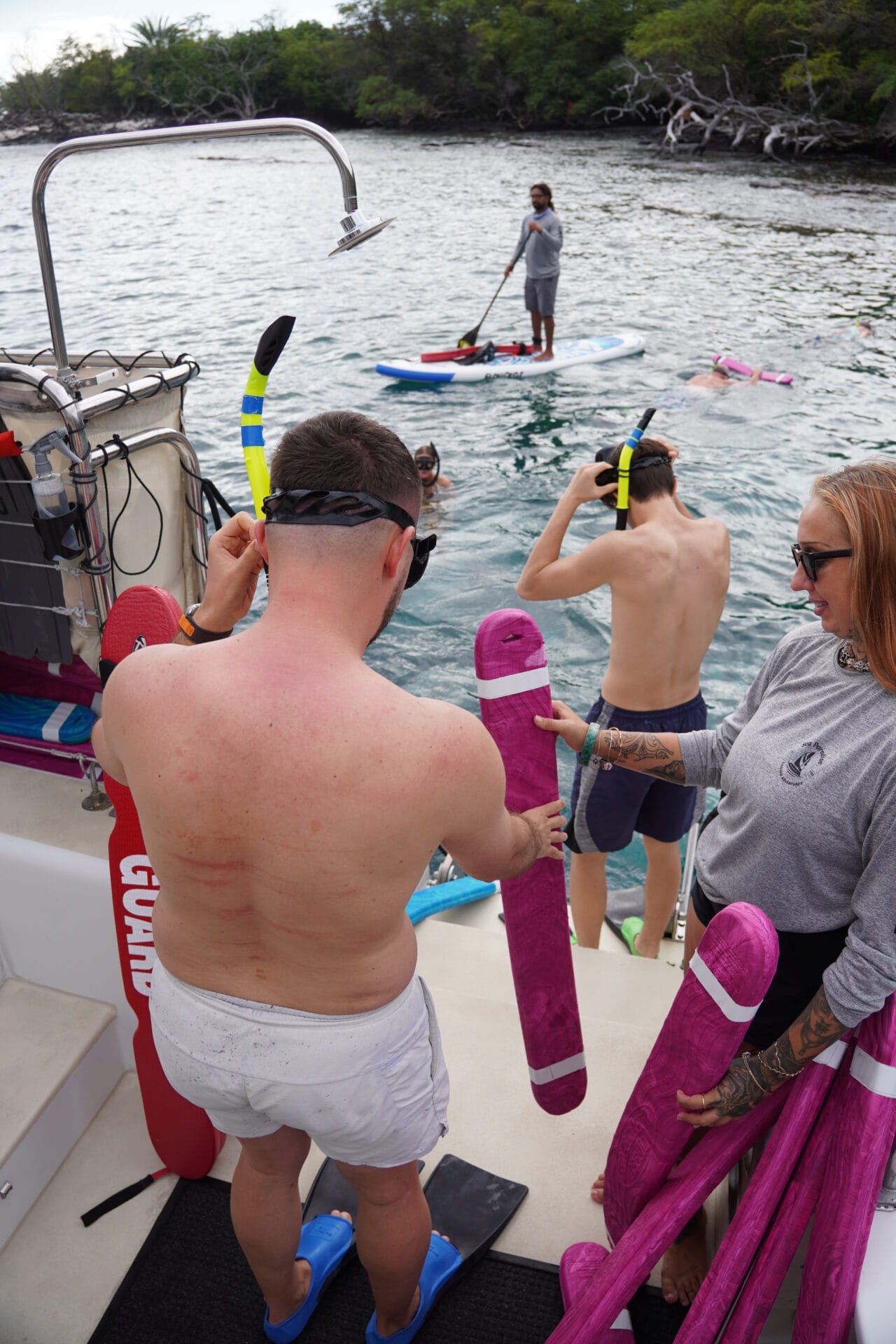
The water is the best place to take in the cliffs. Sea Paradise’s Afternoon Snorkel Tour departs Keauhou Bay at 2:00 PM aboard the Hoku Nui, our 50-foot luxury sailing catamaran, and sails to the World Famous Captain Cook Monument at Kealakekua Bay, at the foot of the pali. For more history and planning tips, see our Kealakekua Bay guide.
Frequently Asked Questions
Why did Hawaiians hide bones in caves?
Hawaiians believed the bones, or iwi, held a person’s mana, their spiritual power. Hiding a chief’s bones in secret caves, often in cliffs, kept enemies from stealing or desecrating them. Only a trusted retainer, the kahu, knew the location.
Can you visit the burial caves at Kealakekua Bay?
No. The caves in Ka Pali Kapu o Keōua, the cliffs above Kealakekua Bay, are sacred burial sites protected under Hawaii law. Visitors should view the cliffs from a respectful distance, such as from a boat, and never climb toward the openings.
What does Pali Kapu o Keōua mean?
It means “the sacred cliffs of Keōua.” The cliffs above the north shore of Kealakekua Bay are named for Keōua Nui, father of Kamehameha I. Tradition holds his remains were placed in a cave high on the cliff.