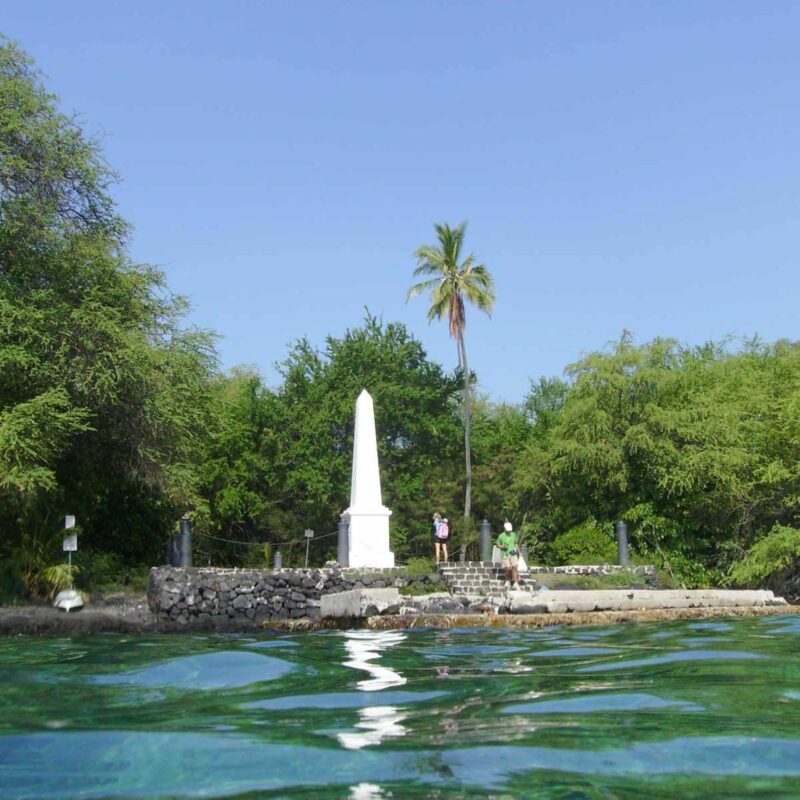
Along the rugged South Kona coastline, where steep volcanic cliffs meet some of the clearest blue water in Hawaii, a brilliant white monument stands near the shore of Kealakekua Bay.
It is the Captain Cook Monument, one of the most recognizable historic landmarks on Hawaii Island.
Yet seeing the monument is only part of the experience.
Below it lies an extraordinary coral reef. Around it stretches the protected water of Kealakekua Bay. And behind it is a complicated chapter of Hawaiian and world history that forever changed the islands.
For visitors to Kona, a journey to the Captain Cook Monument can therefore become much more than a snorkeling trip. It is an opportunity to experience Hawaiian history, geology and marine life in the same remarkable place.
Where Is the Captain Cook Monument?
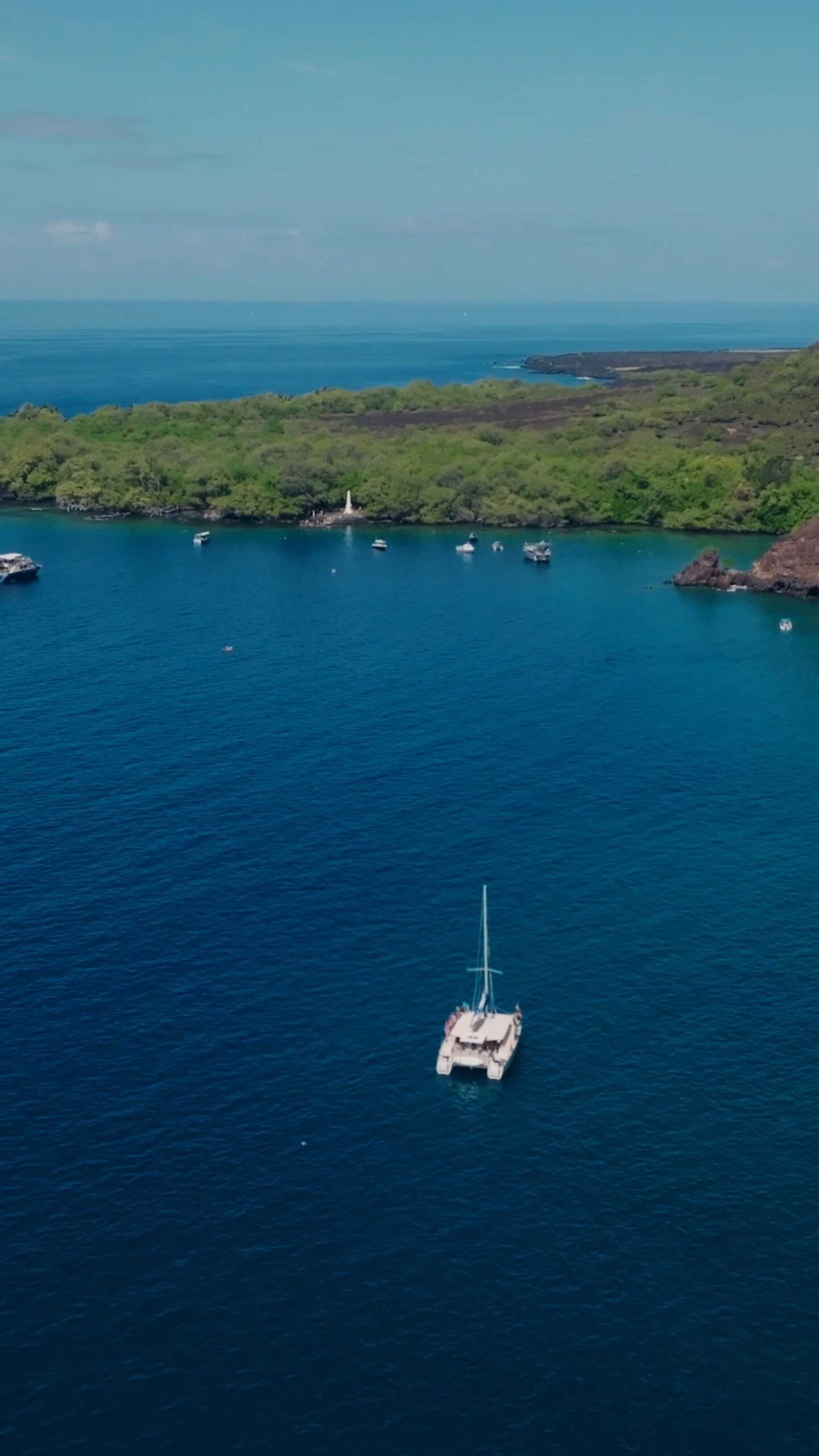
The Captain Cook Monument stands on the northern shore of Kealakekua Bay on the west side of Hawaii Island.
The 27-foot white obelisk was erected in 1874 in memory of British explorer Captain James Cook, who died at Kealakekua Bay on February 14, 1779.
Its remote location is one reason the monument remains so visually striking.
There is no road leading directly to it.
Instead, steep volcanic terrain rises behind the shoreline, while the waters of Kealakekua Bay stretch out in front.
Visitors generally reach the area by boat, permitted kayak excursion or a demanding hike.
For many travelers, arriving from the ocean offers the most comfortable—and arguably most beautiful—perspective.
Captain James Cook Arrives in Kealakekua Bay
Captain James Cook reached Kealakekua Bay in January 1779 during his third Pacific voyage.
His arrival occurred during Makahiki, an important season in traditional Hawaiian life associated with Lono, agriculture, peace, celebration and ceremony.
Cook and his ships were initially welcomed.
After departing the bay, however, one of the ships suffered damage and the expedition returned.
Relations had changed.
Tensions eventually escalated following the theft of a boat belonging to Cook’s expedition. Cook attempted to take the Hawaiian chief Kalaniʻōpuʻu as leverage for its return.
A confrontation followed on February 14, 1779.
Cook was killed near the shoreline.
The event became one of the pivotal moments in the history of contact between Hawaii and the Western world.
The Monument Visitors See Today
Nearly a century later, the white monument was erected near the location of Cook’s death.
Today it stands dramatically against the dark volcanic landscape.
From the ocean, the contrast is unmistakable: brilliant white stone, black and brown lava cliffs, green vegetation and intensely blue Pacific water.
But for snorkelers, something equally remarkable is waiting below the surface.
Why Is Snorkeling Near Captain Cook Monument So Famous?
The waters surrounding the monument are within the Kealakekua Bay Marine Life Conservation District.
Protected marine environments can give coral reefs and reef species an opportunity to thrive with reduced human pressures.
At Kealakekua Bay, the result is an underwater environment that has made the area one of Hawaii Island’s best-known snorkeling destinations.
Visibility can be exceptional.
On a clear day, snorkelers may look down through brilliant blue water toward coral formations and schools of tropical reef fish.
Possible marine-life encounters can include butterflyfish, tangs, parrotfish, wrasses, moray eels and many other Hawaiian reef inhabitants.
As with any wild environment, specific animal sightings can never be guaranteed—and that unpredictability is part of what makes exploring a living reef so exciting.
The Reef Begins Almost Immediately
One of the fascinating characteristics of snorkeling near the Captain Cook Monument is the transition between land and deep ocean.
Close to shore, coral habitat begins in relatively shallow water.
Moving outward, the reef gradually descends toward deeper blue.
That creates different underwater perspectives within a relatively compact area.
A snorkeler can spend time studying individual reef fish and coral formations and then look outward toward the dramatic blue water beyond the reef.
Getting There Is Part of the Experience
A destination this beautiful deserves a memorable journey.
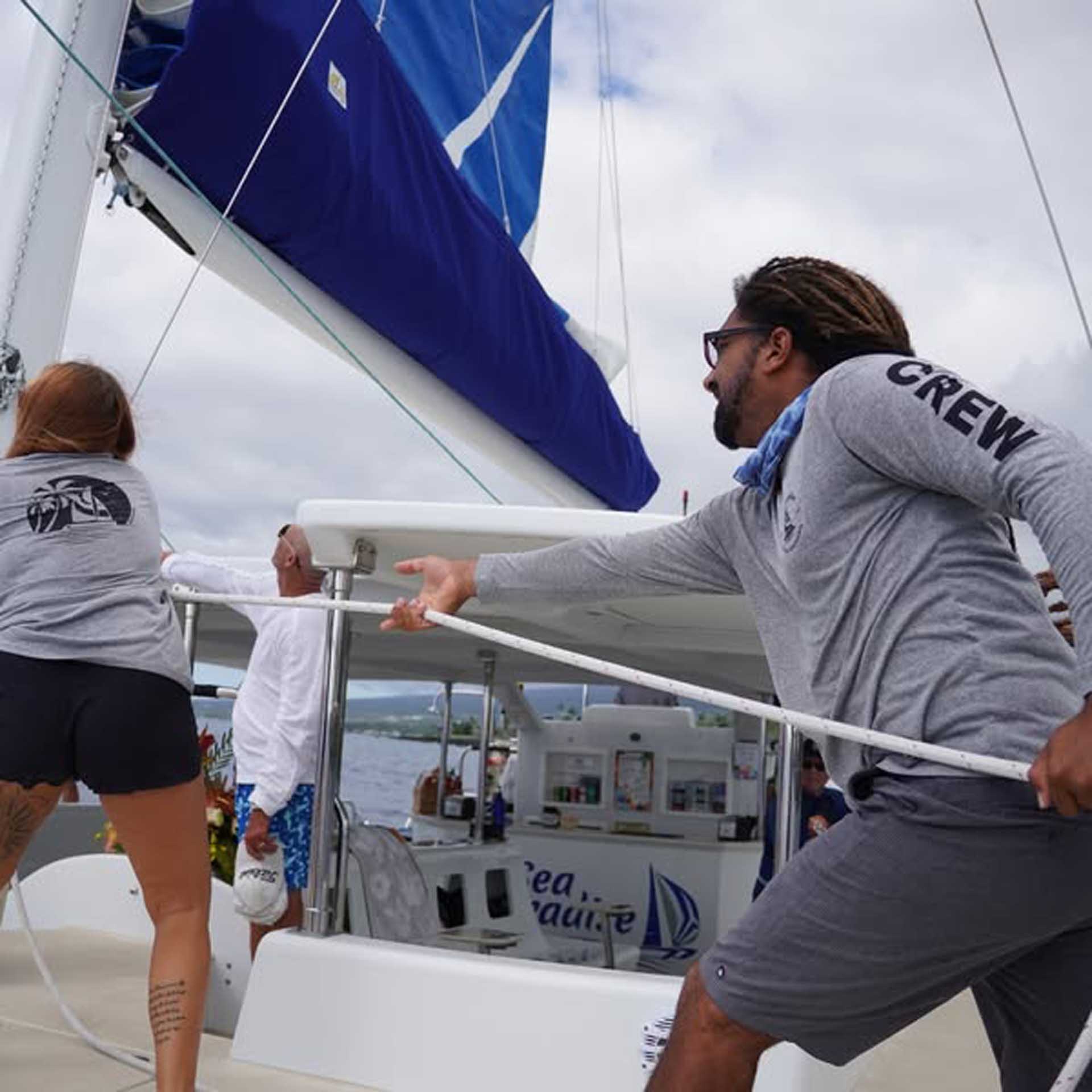
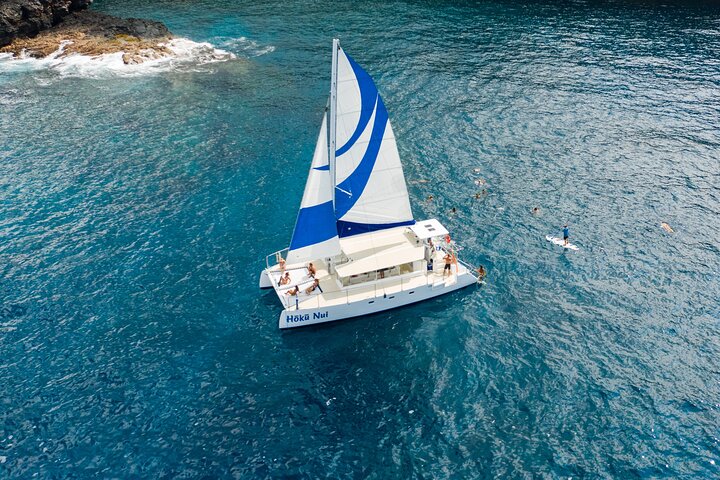
Sea Paradise departs from historic Keauhou Bay aboard the Hoku Nui, our 50-foot sailing catamaran.
The approximately 45-minute journey toward Kealakekua Bay follows the Kona Coast, providing a completely different perspective of Hawaii Island.
From offshore, you can appreciate the enormous scale of the volcanic landscape.
Lava formations meet the Pacific. Sea cliffs rise above hidden coves. The slopes of Hualālai and Mauna Loa create the massive backdrop that makes the Kona Coast unlike almost anywhere else.
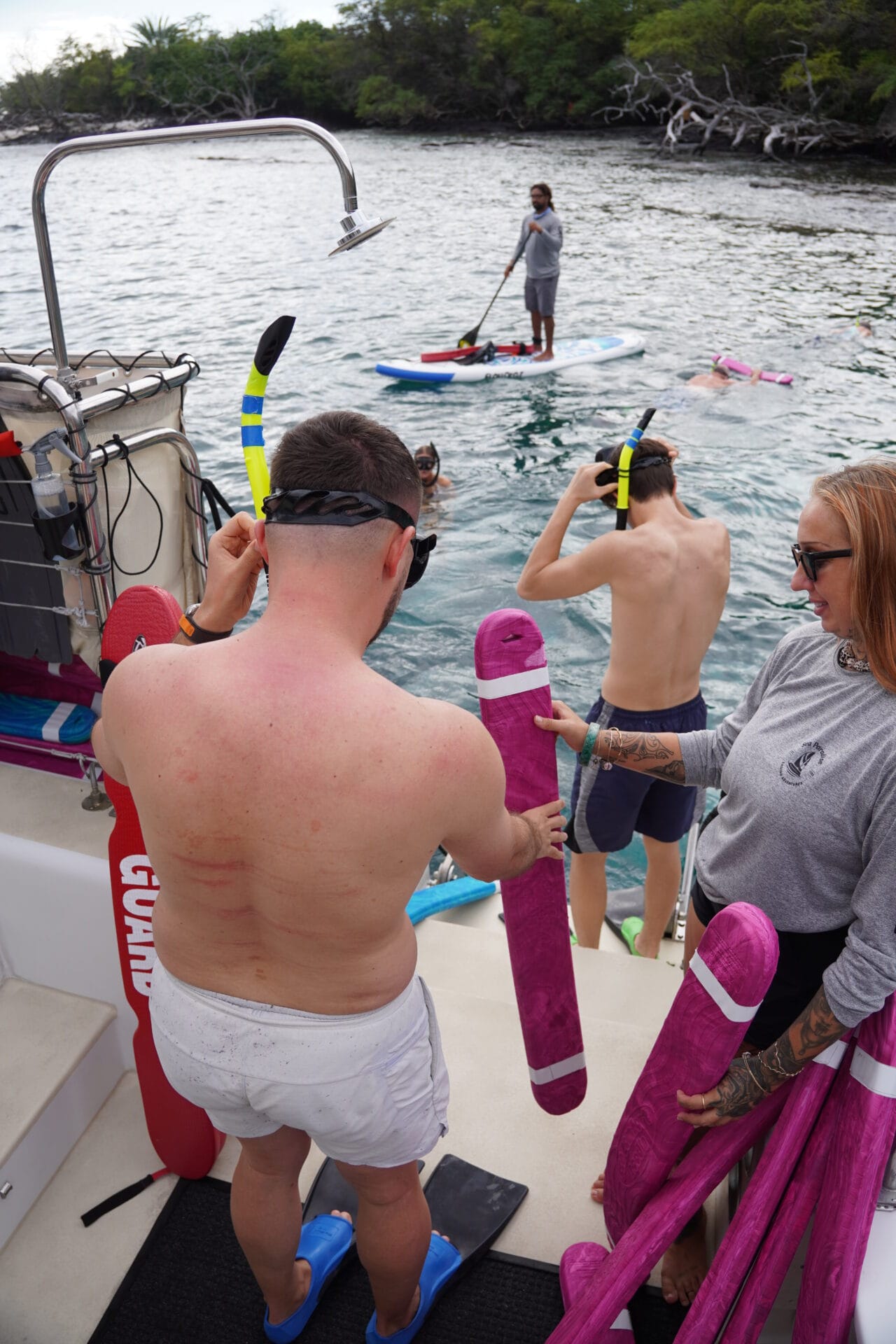
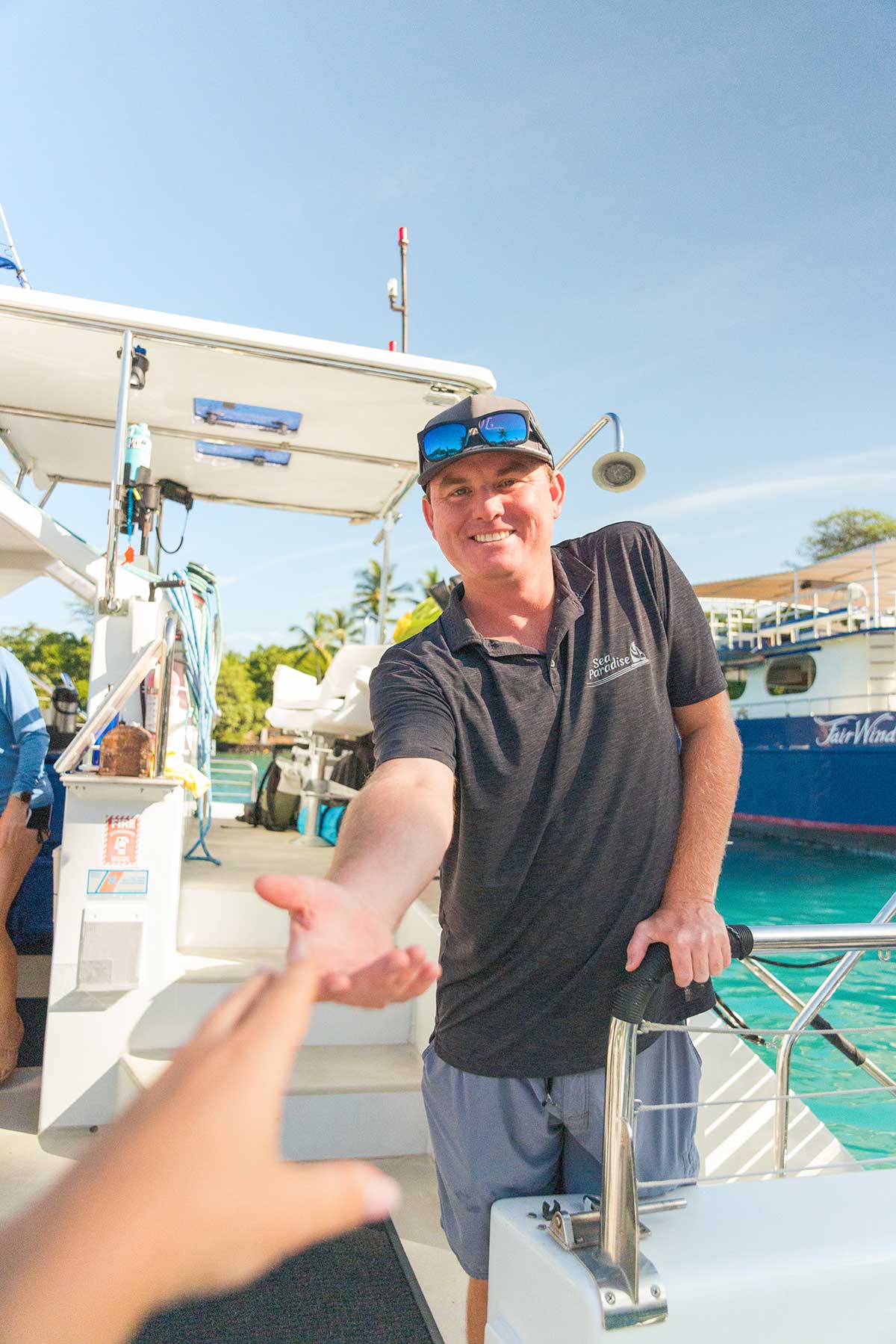
And because Hoku Nui is a large, twin-hull catamaran, guests have a significantly more spacious and stable platform than they would experience aboard many smaller vessels.
That matters.
Your snorkeling adventure doesn’t begin when you jump into the water.
It begins when the boat leaves Keauhou Bay.
Why Boat Size Matters on a Kona Snorkeling Tour
Not every snorkel boat provides the same experience.
Hoku Nui measures 50 feet and uses a catamaran design with two hulls.
The wider twin-hull platform provides excellent stability while underway and at the snorkeling destination.
For guests who are new to ocean excursions, families traveling together or people who simply appreciate having room to move around, that difference can make an ocean adventure much more comfortable.
Hoku Nui also provides wide water-entry staircases, shaded seating, onboard restrooms/changing rooms and freshwater showers.
Instead of treating the boat merely as transportation, Hoku Nui becomes part of the experience.
A Living Classroom Beneath the Surface
Kealakekua Bay is also an ideal place to slow down.
Snorkeling isn’t about racing across the reef.
Float quietly.
Watch.
A fish may emerge from beneath a coral ledge. A school may suddenly change direction as if moving with a single mind. Sunlight may create shifting patterns across the reef below.
The longer you observe, the more the underwater landscape begins to reveal itself.
This is one reason protected places like Kealakekua Bay deserve respect.
Visitors aren’t entering an aquarium.
They’re entering a living ecosystem.
Avoid standing on or touching coral, give wildlife plenty of space and allow the animals to determine the encounter.
History Above, Hawaii Below
There are beautiful snorkeling locations throughout Hawaii.
There are also fascinating historic sites.
What makes the Captain Cook Monument area unusual is the combination.
While floating over a Hawaiian coral reef, you can look toward shore and see a monument connected to events that occurred more than two centuries ago.
The same cliffs surrounded Kealakekua Bay.
The same Pacific Ocean met this shoreline.
The landscape connects present-day visitors with a much larger story.
The Best Way to Experience Captain Cook Monument
For many Kona visitors, the ideal experience combines the history of the destination with time in the water and the pleasure of sailing the coastline.
Sea Paradise’s morning and afternoon snorkel tours depart Keauhou Bay aboard Hoku Nui and travel to Kealakekua Bay.
Once there, guests can experience the protected waters near the Captain Cook Monument while enjoying the comfort and stability of a 50-foot catamaran.
It’s a very different experience from simply checking another Hawaiian landmark off a list.
You sail there.
You hear its story.
You see the monument against the cliffs.
And then you discover an entirely different world beneath it.
Frequently Asked Questions About Captain Cook Monument
Where is Captain Cook Monument?
The Captain Cook Monument is located on the northern shore of Kealakekua Bay in South Kona on Hawaii Island.
Can you drive to Captain Cook Monument?
No road leads directly to the monument. Visitors generally reach the area by boat, permitted kayak excursion or hiking trail.
Is there good snorkeling at Captain Cook Monument?
Yes. The waters surrounding the monument are within the protected Kealakekua Bay Marine Life Conservation District and are widely known for excellent visibility, coral habitat and abundant tropical reef life.
How tall is the Captain Cook Monument?
The white obelisk is approximately 27 feet tall and was erected in 1874.
When did Captain Cook die in Hawaii?
Captain James Cook died at Kealakekua Bay on February 14, 1779.
Can I visit Captain Cook Monument from Kona by boat?
Yes. Sea Paradise offers snorkeling excursions from Keauhou Bay aboard the 50-foot Hoku Nui sailing catamaran.
Discover Kealakekua Bay With Sea Paradise
Some Hawaiian experiences stay with you because they’re beautiful.
Others stay with you because they have a story.
The Captain Cook Monument and Kealakekua Bay offer both.
Come sail the Kona Coast aboard Hoku Nui, discover one of Hawaii’s most important historic locations and experience the extraordinary underwater world waiting beneath the surface.
Ready to explore? Discover Sea Paradise’s Kona snorkeling tours and experience Kealakekua Bay from the water.
Book your tour today! https://www.seaparadise.com/