
There is no road to it. That is the first thing to understand about the snorkel area at the World Famous Captain Cook Monument at Kealakekua Bay. You can see the obelisk from across the water, you can find it on a map, and you cannot drive to it. Three ways in exist, and they are not equally good for everyone.
Sea Paradise has sailed into this bay since 1985, so what follows is written from the water rather than from a guidebook.
Why Can You Not Drive to the World Famous Captain Cook Monument at Kealakekua Bay?
The monument sits on the north shore of the bay at Ka’awaloa, on a flat of old lava with no road access. The 27-foot white obelisk was erected in 1874, ninety-five years after Captain James Cook died on that shoreline on 14 February 1779. It was built by sea and it is still reached by sea, on foot, or not at all.
What makes the effort worth it is underwater rather than above it. Kealakekua Bay was designated a Marine Life Conservation District by the State of Hawaii in 1969. Within its 315 acres, taking most marine life is prohibited, and nearly six decades of that protection have left the coral among the most intact on the Big Island. Visibility runs 60 to 80 feet.
What Are the Hike and the Kayak Crossing Actually Like?
The Captain Cook Monument Trail descends from Highway 11 near Napo’opo’o Road — look for the three royal palm trees. It is roughly two and a half hours each way, steeply graded, with limited shade and no facilities. Understand what that means in practice: the return leg is the climb, in full Kona sun, at the hottest part of the day, carrying whatever you brought with you.
That includes your mask, snorkel, fins, water for several hours, and anything you want to eat. There is no shade at the bottom, no fresh water, and no facilities. If conditions in the bay turn while you are down there, the trail is your only way out.
It is a genuinely rewarding hike for people who are equipped for it and honest with themselves about the climb back. It is not a casual walk, and it is a poor choice with children, in the afternoon, or on a day when you have a flight to catch.
Kayaking is the middle option and the most commonly underestimated one. Tours operate from Napo’opo’o Beach and the paddle runs 45 to 60 minutes each way in calm conditions. The crossing is open water. Wind and swell build through the morning along this coast, and the paddle back is into whatever has developed while you were snorkeling.
Experienced paddlers with their own gear manage it regularly. If your open-water kayaking experience is limited, the bay is not the place to find that out, and a kayak is a difficult thing to manage while also looking after snorkel gear and a less confident member of your group.
What Does Reaching the Monument by Boat Involve?
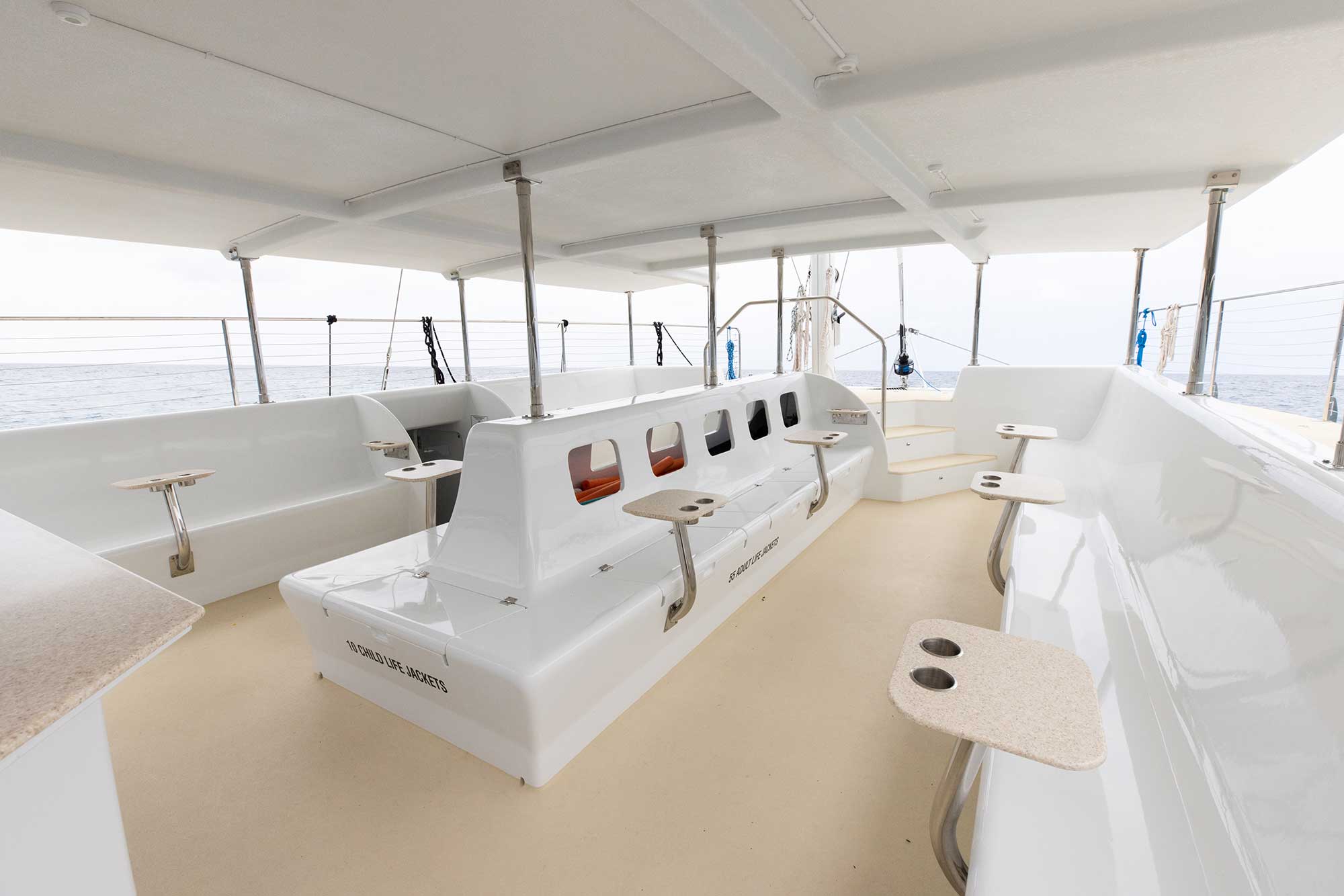
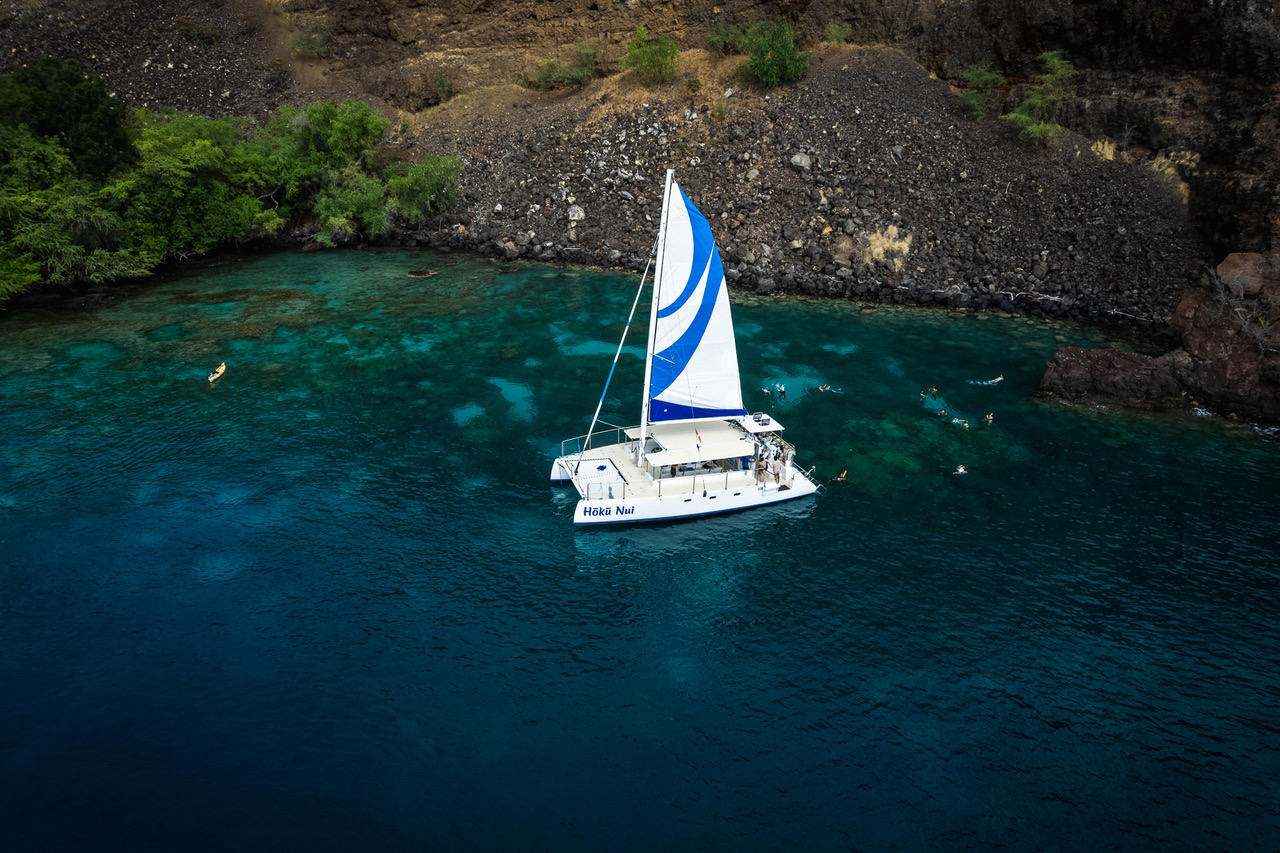
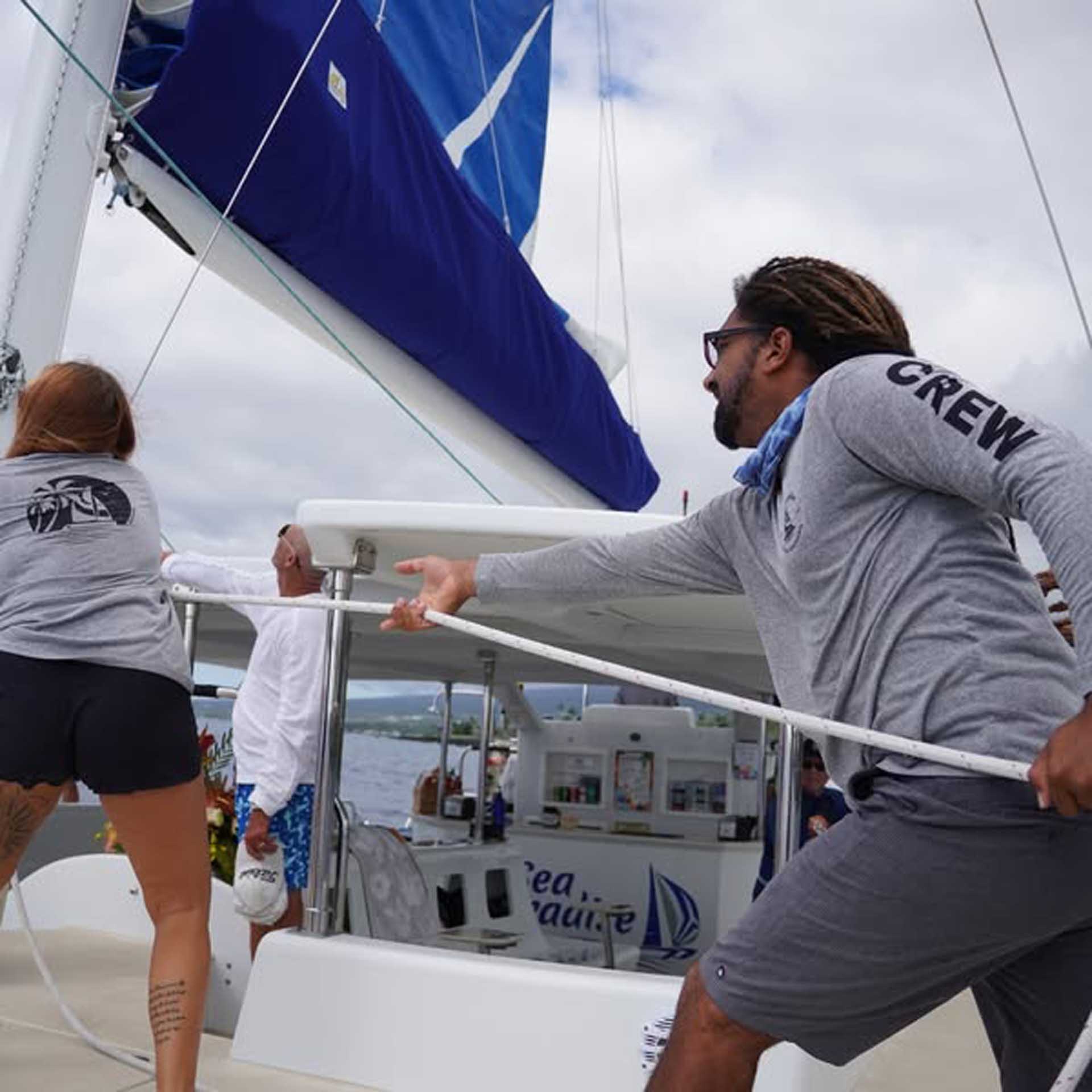
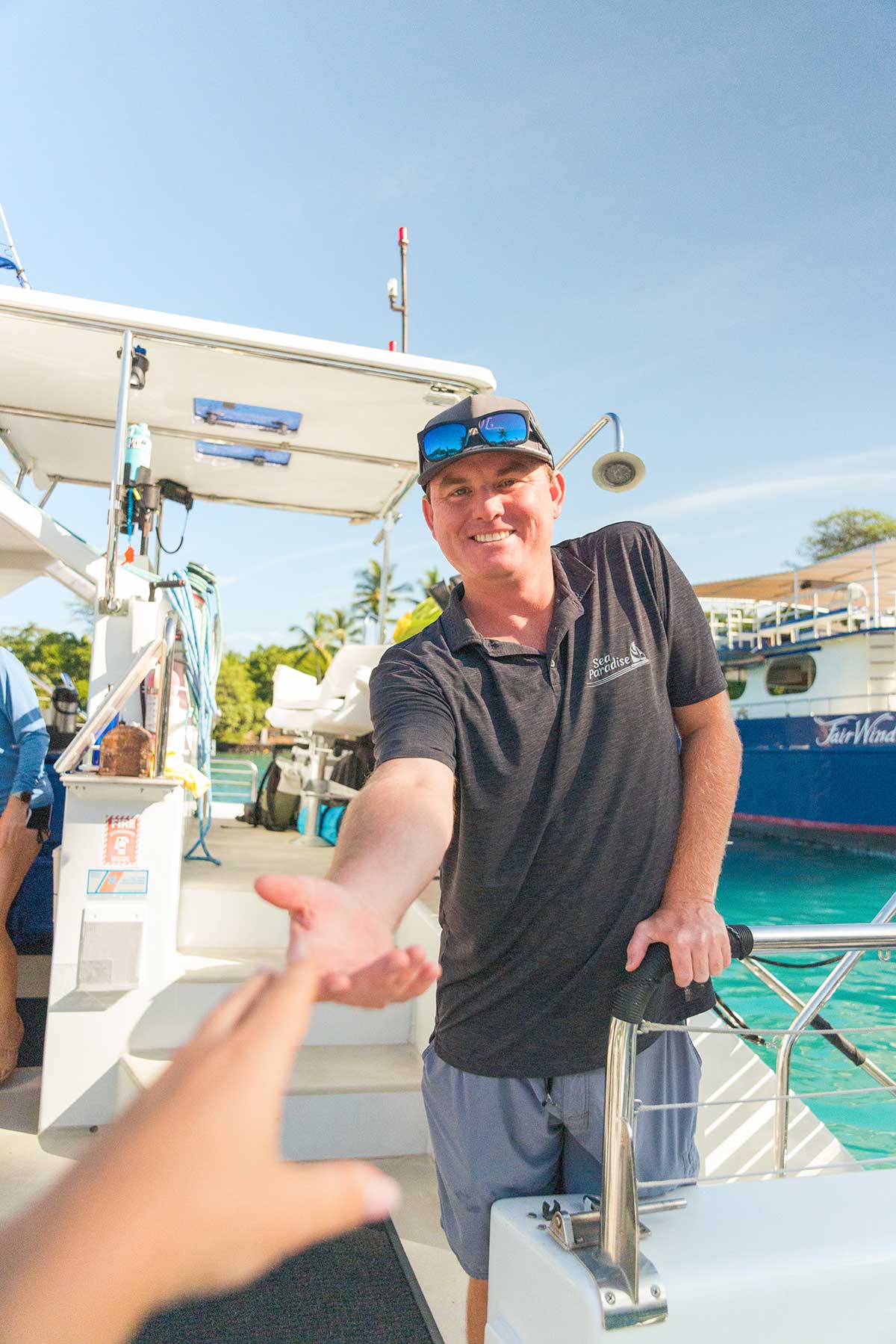
A boat tour removes the logistics and puts the effort into the part you came for. The Hoku Nui, a 50-foot luxury sailing catamaran spaciously designed for 49 guests, departs Keauhou Bay pier, about five miles north, and sails south along the Kona Coast into the bay. The sail takes roughly 45 minutes each way.
The Morning Snorkel Tour leaves at 8:30 AM and returns around 1:00 PM, roughly four and a half hours. Trade winds are lighter in the morning, which usually means calmer water and better visibility. Tropical breakfast, a deli-style lunch buffet, all snorkel gear and a marine naturalist reef briefing are included, and the morning tour also sails to the Red Hill Area on the way back when weather permits, where underwater lava arches and tubes sit at snorkeling depth.
The Afternoon Snorkel Tour departs at 2:00 PM and runs about three hours, with light snacks and all gear included.
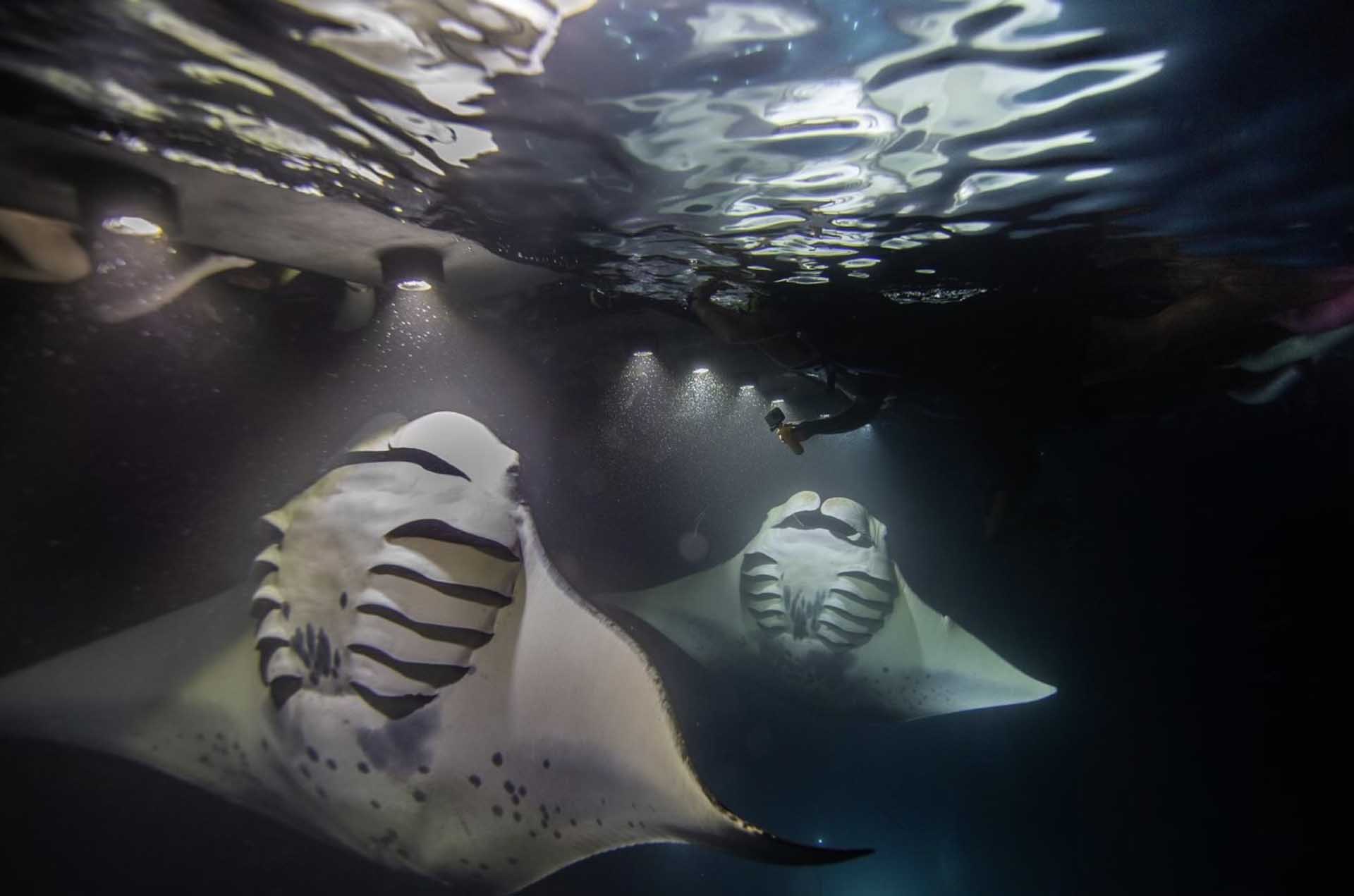
In the water, snorkelers may see parrotfish, yellow tang, Moorish idols, octopus, moray eels and humuhumunukunukuapua’a, the Hawaiian reef triggerfish and Hawaii’s state fish. Whitetip reef sharks rest under the lava ledges and are not aggressive. From the deck, guests may spot Hawaiian green sea turtles, spinner dolphins and spotted eagle rays along the coastline, and humpback whales between December and April.
Which Option Is Right for You?
If you are an experienced hiker travelling light, the trail gives you the bay to yourself and costs nothing. If you are a confident open-water paddler with your own equipment, the kayak is a good day.
For everyone else — families, first-time snorkelers, anyone with a schedule, anyone who would rather spend their energy underwater than on a climb — the boat is the sensible answer. One requirement applies whichever way you arrive: all snorkeling guests must be confident swimmers. Non-swimmers may not enter the water.
Book directly at seaparadise.com. More than one operator has tried to pass itself off as Sea Paradise, so it is worth knowing whose boat you are stepping onto.
Frequently Asked Questions
How long does it take to hike to the Captain Cook Monument?
Allow around two and a half hours for the Captain Cook Monument Trail, which descends from Highway 11 to the shoreline at Ka’awaloa. The return leg is the climb, in full sun, carrying your own snorkel gear and water. There is no shade, fresh water or facilities at the bottom.
Can you snorkel at the Captain Cook Monument without a tour?
Yes. Independent snorkelers reach the World Famous Captain Cook Monument at Kealakekua Bay by hiking the trail or paddling a kayak across the bay. You bring your own equipment, manage your own safety in open water, and handle getting in and out without boat support.
What time of day is best for snorkeling at Kealakekua Bay?
Morning. Trade winds along the Kona Coast are consistently lighter before midday, which means calmer seas and clearer underwater visibility. Sea Paradise schedules its 8:30 AM departure around those conditions, and has done since 1985.