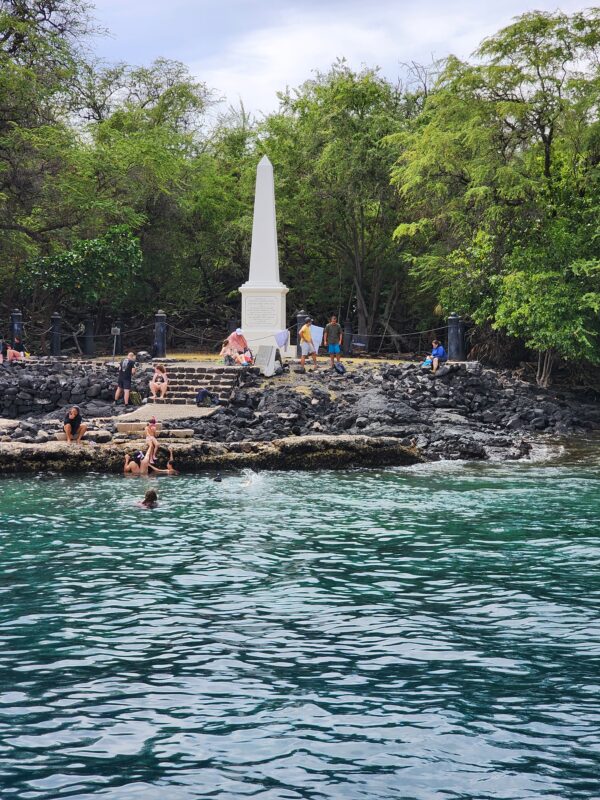
Standing against the rugged northern shoreline of Kealakekua Bay is one of the Big Island’s best-known landmarks: the World Famous Captain Cook Monument.
The 27-foot white obelisk was erected in 1874 and commemorates British explorer Captain James Cook, who died at Kealakekua Bay on February 14, 1779.
But the monument is only part of the story.
The waters surrounding it are part of a protected Marine Life Conservation District and offer some of the most celebrated snorkeling on Hawaii Island.
Can You Drive to the Captain Cook Monument?
No.
There is no road directly to the monument or the snorkeling area beside it.
Visitors can reach the location by boat, kayak or a strenuous hiking route. For many travelers, arriving by boat provides the easiest and most comfortable way to experience the area.
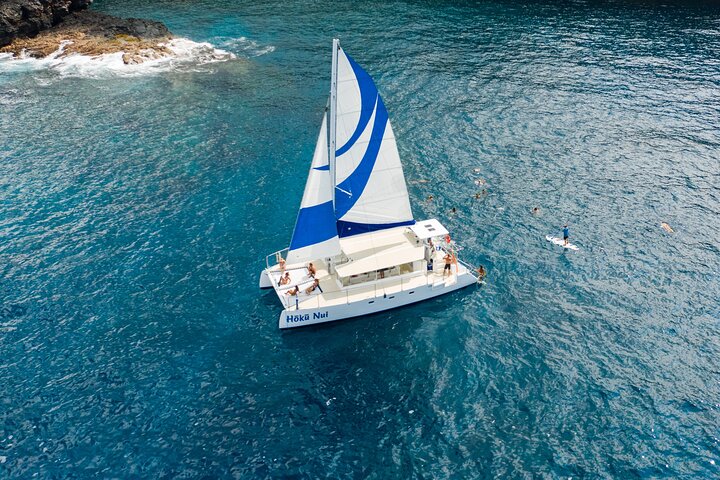
Sea Paradise departs from Keauhou Bay and sails to Kealakekua Bay aboard the Hoku Nui, its 50-foot luxury sailing catamaran.
Why Is the Snorkeling So Good?
The waters surrounding the monument have been protected within the Kealakekua Bay Marine Life Conservation District since 1969.
The reef supports diverse marine life, and water visibility near the monument can frequently reach approximately 60–80 feet under good conditions.
Snorkelers may encounter colorful reef fish and other marine species in clear Pacific water while the white monument rises from the shoreline above.
It is a setting where Hawaiian natural history and human history meet.
Understanding the History
Captain James Cook arrived at Kealakekua Bay during his third Pacific voyage in January 1779.
His arrival occurred during Makahiki, an important period in the Hawaiian calendar associated with Lono.
After initially departing the bay, Cook’s ships returned following storm damage. Tensions later escalated, culminating in a confrontation on February 14, 1779, during which Cook was killed.
Cook’s arrival and death should not be viewed as the beginning of Kealakekua Bay’s history.
The area was culturally and spiritually important to Native Hawaiians long before European contact. Understanding that context is essential to appreciating the significance of the bay today.
Sail There in Comfort
Getting to the monument can be part of the experience rather than merely transportation.
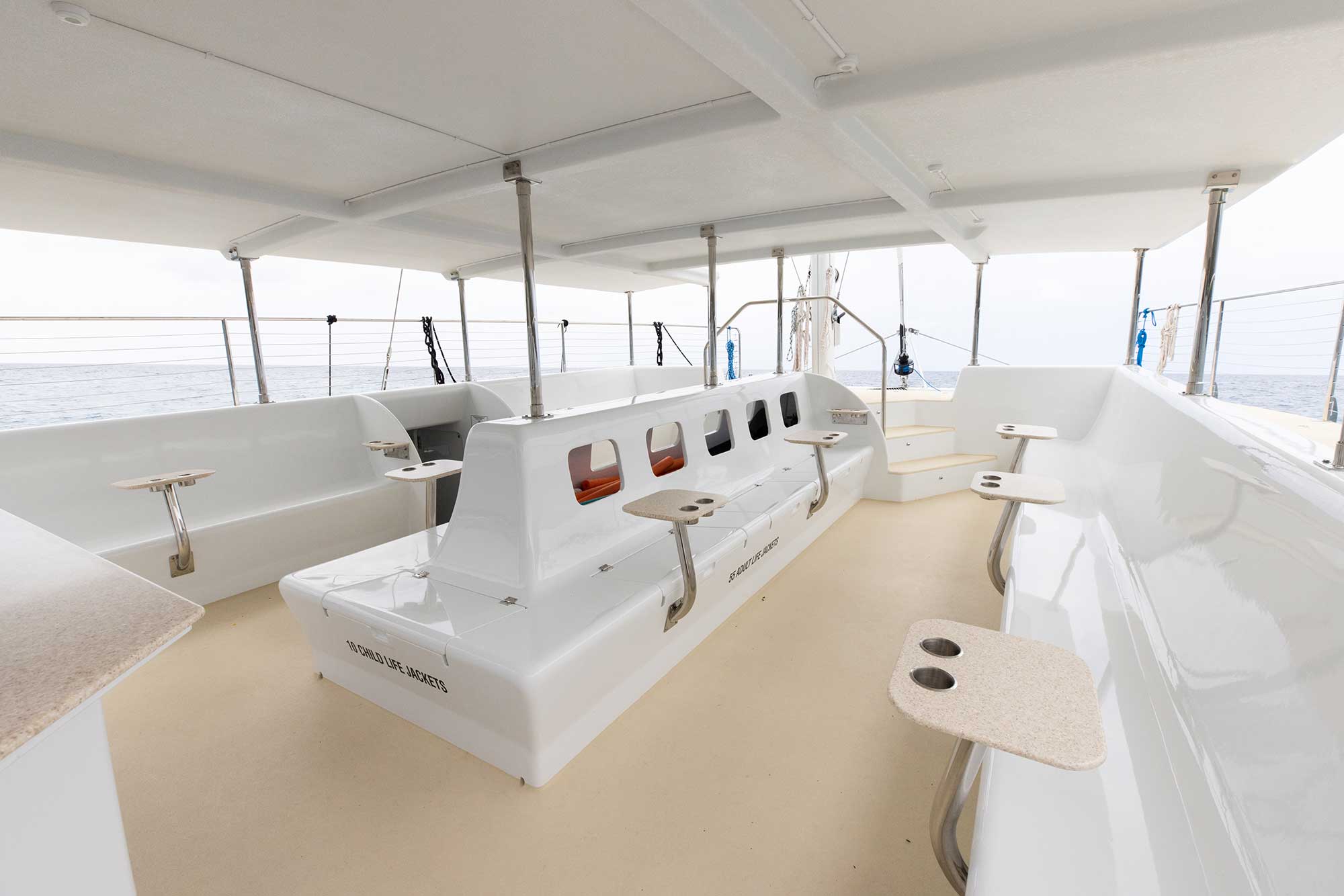
The Hoku Nui is a 50-foot luxury sailing catamaran with a wide twin-hull design that offers significantly more stability and deck space than a small RIB or rigid-hull boat.
Guests can relax with shaded seating, spacious restrooms/changing rooms, freshwater showers and wide staircases for entering the water.
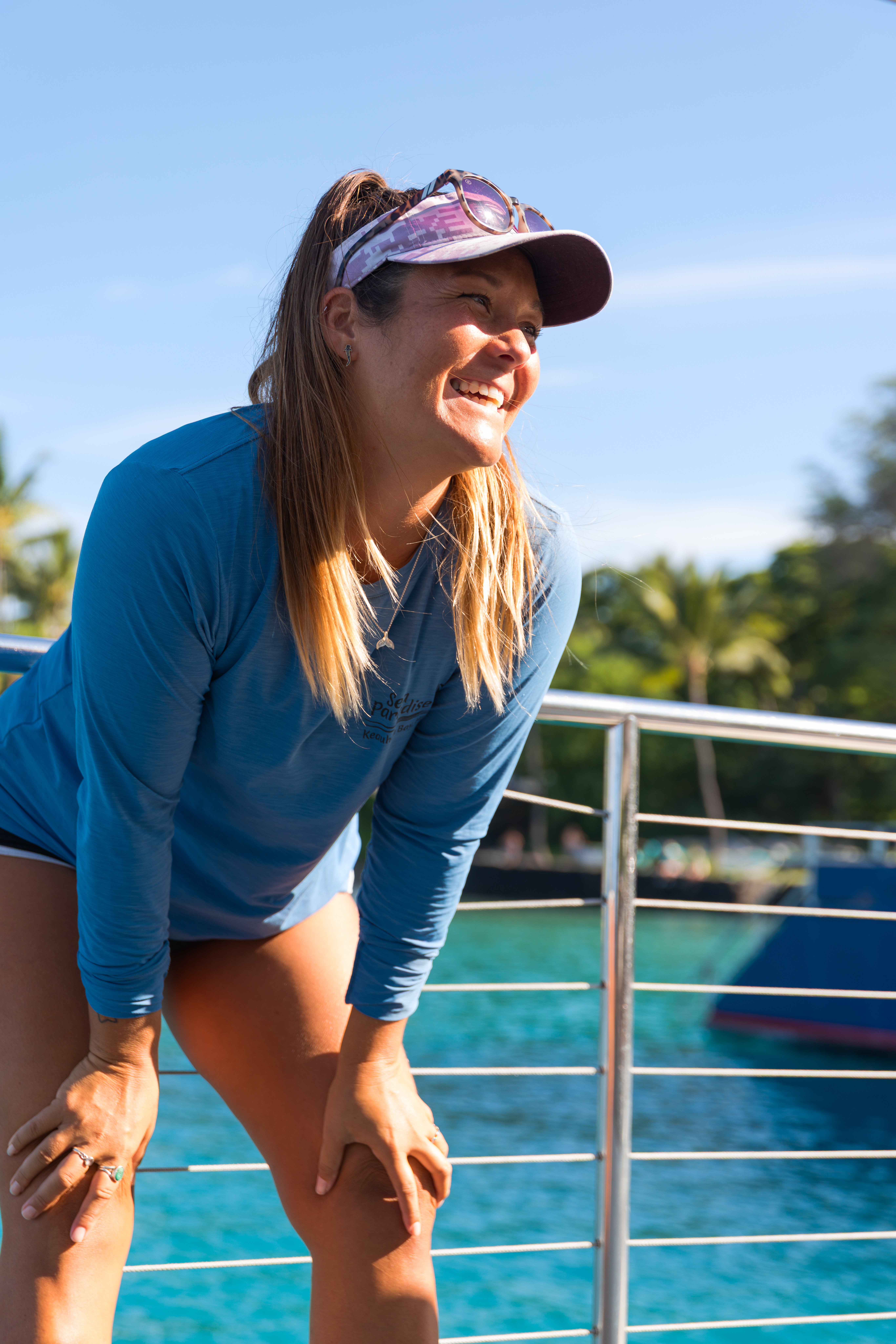
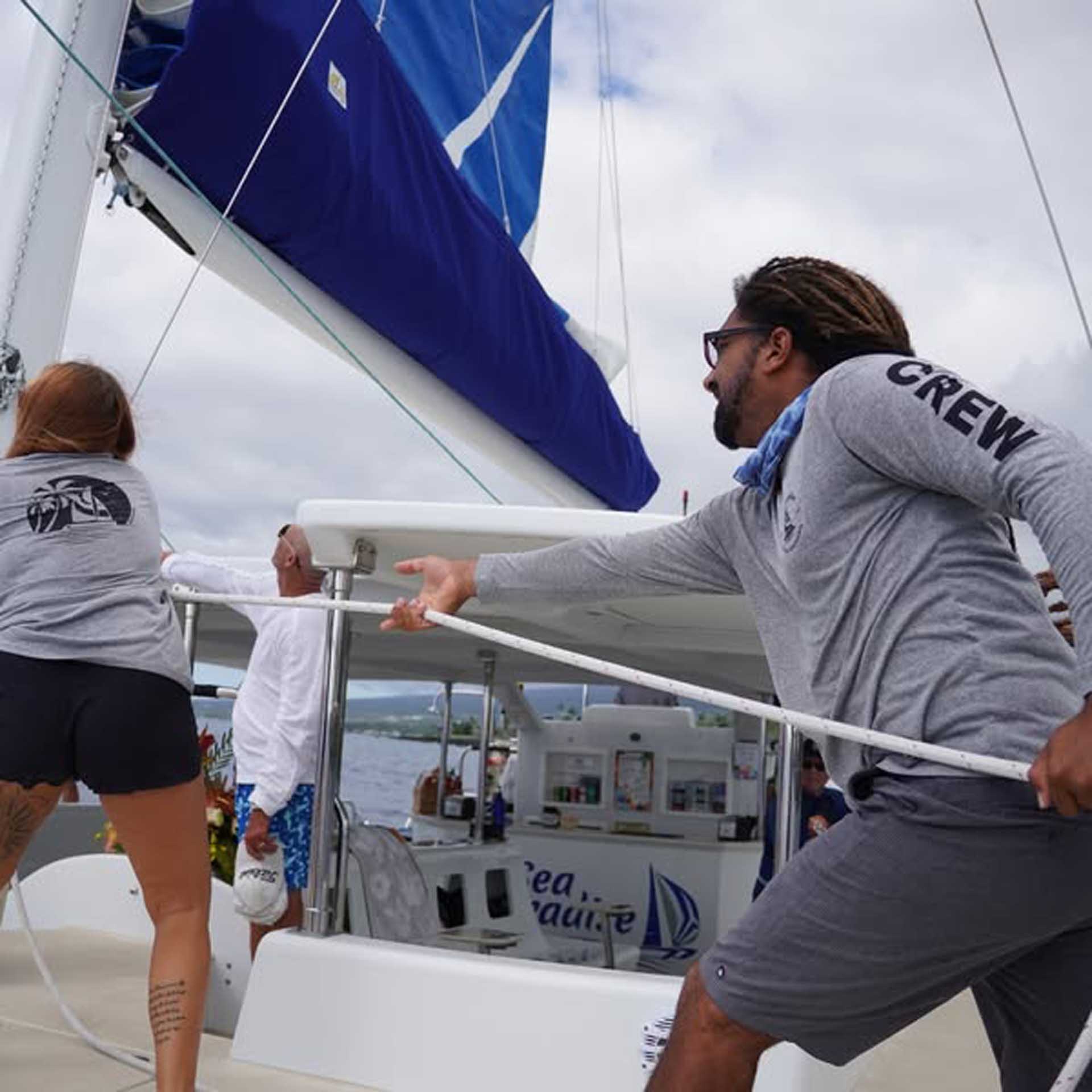
Sea Paradise has been sailing this coastline since 1985, bringing more than 40 years of Kona ocean experience to every tour.
Don’t Compare Destinations Alone
Many visitors search online for “Captain Cook snorkeling tours” and assume companies offering the same destination provide essentially the same experience.
They don’t.
One tour may place you aboard a small inflatable-style vessel.
Another puts you aboard a spacious 50-foot luxury sailing catamaran.
One company may be relatively new to the coastline.
Sea Paradise has operated here for more than four decades.
When you’re going to spend hours on the Pacific, those differences matter.
Experience One of the Big Island’s Most Remarkable Places
The Captain Cook Monument is not simply something to photograph from shore.
Experiencing the site from the water gives visitors an entirely different perspective.
You can look toward the historic white monument, snorkel above the protected reef and take in the dramatic volcanic coastline surrounding Kealakekua Bay.
For travelers searching for Captain Cook Monument snorkeling, Kealakekua Bay snorkeling or one of the best snorkel tours in Kona, Sea Paradise offers a combination of history, marine education, experienced crew and catamaran comfort that goes far beyond simply getting you to the destination.
Come aboard the Hoku Nui.
Sail down the Kona Coast.
And discover one of the places where Hawaii’s history and marine environment come together.