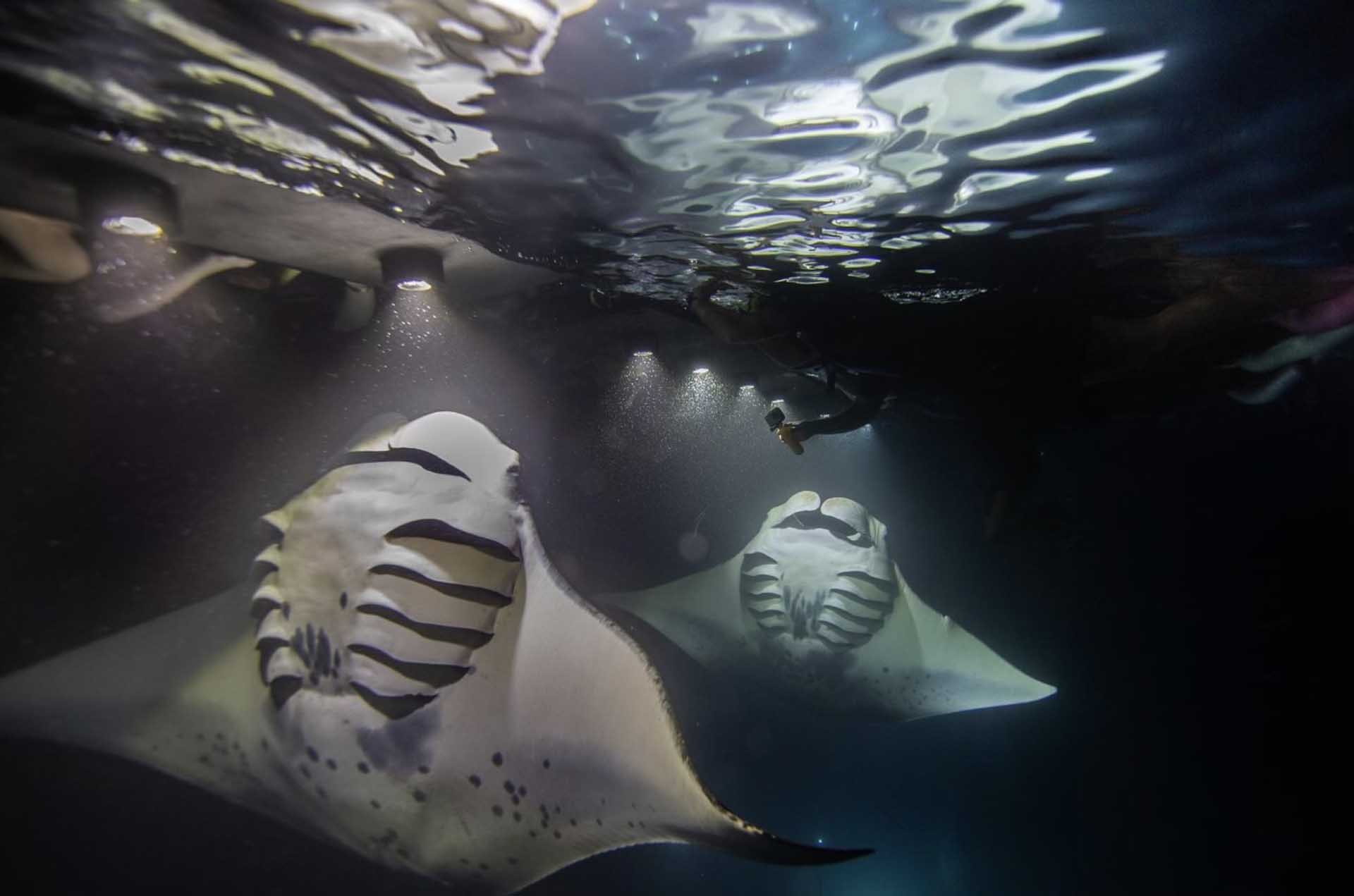
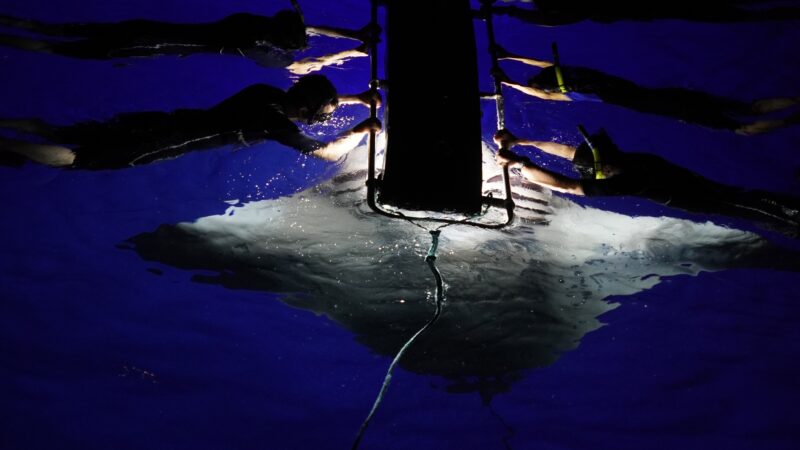
Imagine floating on the surface of the Pacific Ocean after dark.
Below you, underwater lights illuminate clouds of tiny plankton.
Then an enormous shadow appears.
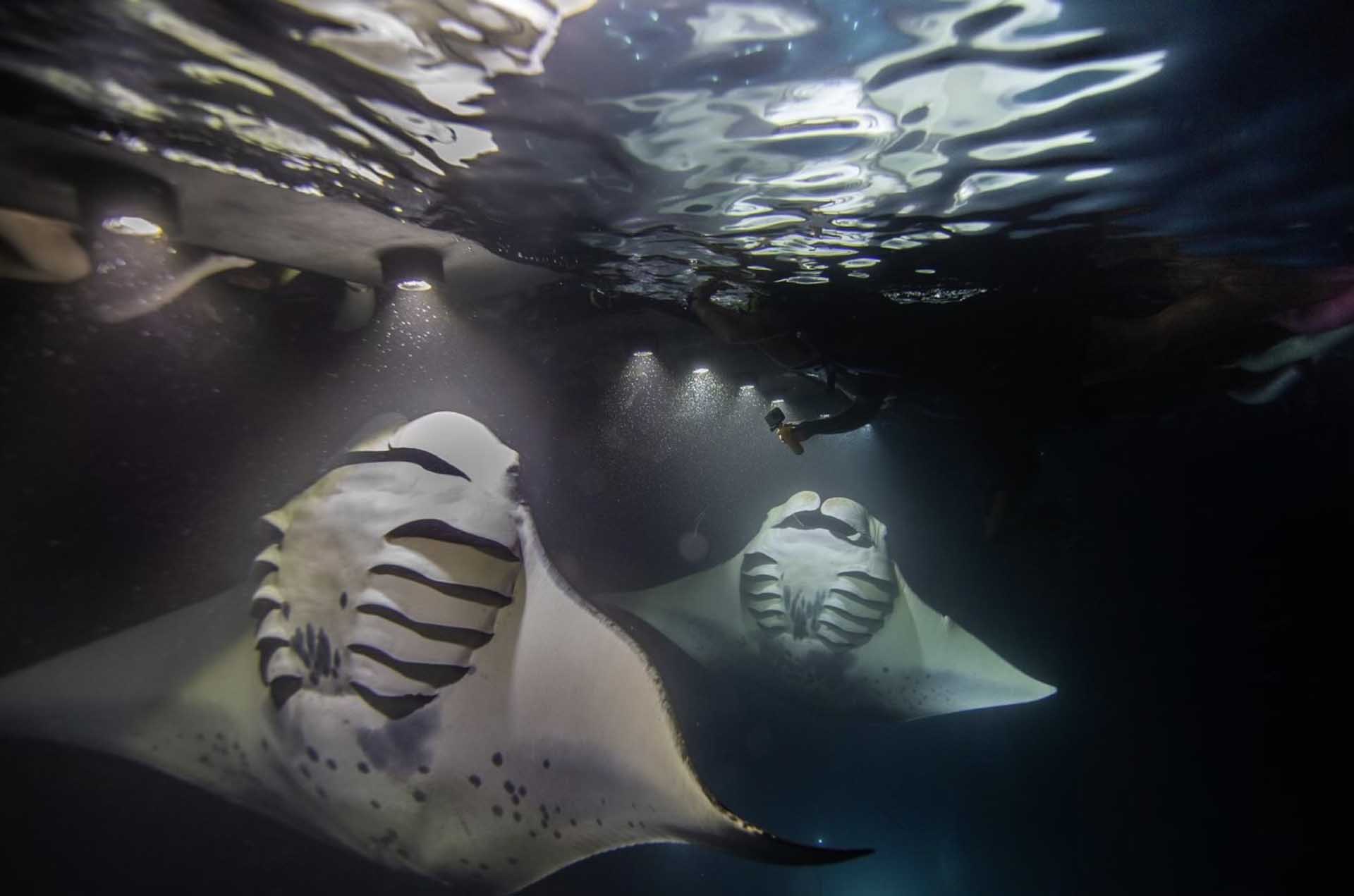
A reef manta ray rises through the water, spreads its wings and glides beneath you before turning into a graceful barrel roll to feed.
This is the nighttime manta ray experience that has made Kona, Hawaii famous.
And Sea Paradise has been introducing visitors to these remarkable animals from Keauhou Bay since 1985.
How Many Manta Rays Live Along the Kona Coast?
More than 450 individual reef manta rays have been identified and catalogued along the Kona Coast.
Researchers can identify individual mantas because each animal has a unique pattern of spots on the underside of its body—similar to a human fingerprint.
This allows scientists and manta advocates to photograph and track individual rays over many years.
Some have even become Kona celebrities.
Lefty, first identified in 1979, is part of the area’s manta history. Other well-known mantas include Big Bertha and Obama Ray.
What Is the Manta Ray Sighting Rate in Kona?
Sea Paradise currently reports 85–95% sighting rates on organized nighttime manta tours.
That level of consistency is extraordinary for a completely wild animal encounter.
But it is important to understand that these are not captive or trained animals.
They decide whether to appear.
There is never a way to control nature, which is precisely why seeing a manta ray in the wild can be such an extraordinary experience.
Why Do Mantas Come to the Lights?
The answer is food.
Reef manta rays are filter feeders that consume tiny organisms including plankton.
Underwater lights attract and concentrate plankton near the surface. Kona’s resident mantas have learned that these illuminated areas can provide an excellent feeding opportunity.
This behavior has historical roots at Keauhou.
During shoreline construction in the 1970s, lights directed over the water attracted plankton. Manta rays discovered the food source and began returning.
The modern manta experience grew from that remarkable accident.
What Is Manta Village?
There are several established manta viewing locations along the Kona Coast, but Manta Village near Keauhou Bay is the original site and has the longest documented history.
Sea Paradise travels to Manta Village from nearby Keauhou Bay, meaning guests can reach the viewing area without a long boat ride.
Are Manta Rays Dangerous?
Manta rays can grow very large, but they are not stingrays and do not possess a venomous stinger.
They are filter feeders interested in microscopic food—not people.
Responsible manta tourism nevertheless requires respecting the animals.
Sea Paradise practices passive observation. Guests should never touch, chase or dive toward manta rays.
Instead, snorkelers remain at the surface and allow the mantas to approach naturally.
Why Should You Choose an Experienced Manta Operator?
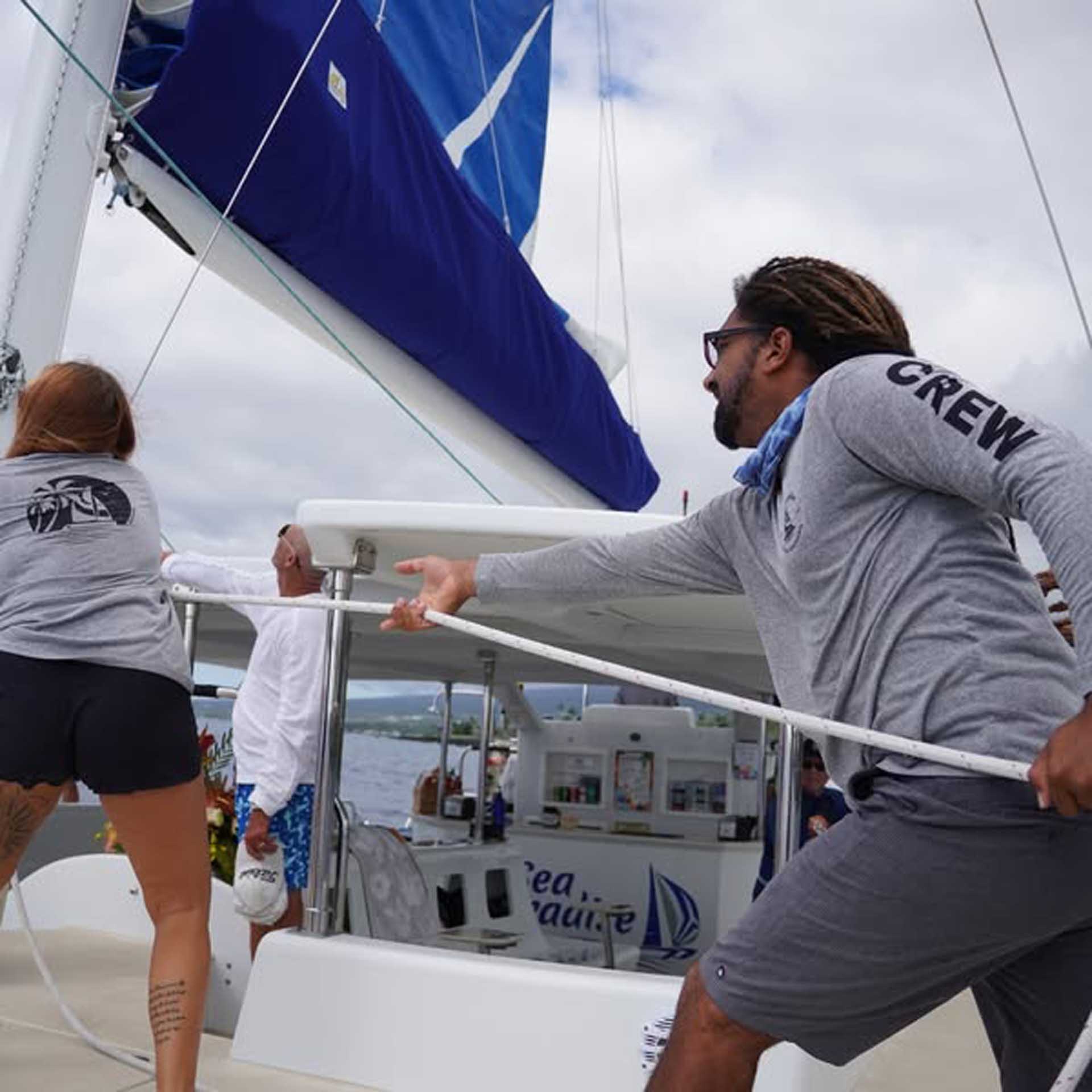
Nighttime ocean excursions require knowledgeable captains, experienced crews and proper safety procedures.
Sea Paradise has been conducting manta excursions since 1985, making it one of the Kona Coast’s original manta tour operators.
Its USCG-licensed captains bring years of direct knowledge of Kona waters, and marine education is incorporated into the experience.
Sea Paradise also works with organizations connected to manta research and advocacy.
The Hoku Nui Difference
Your manta encounter shouldn’t begin by being packed into an uncomfortable little boat.
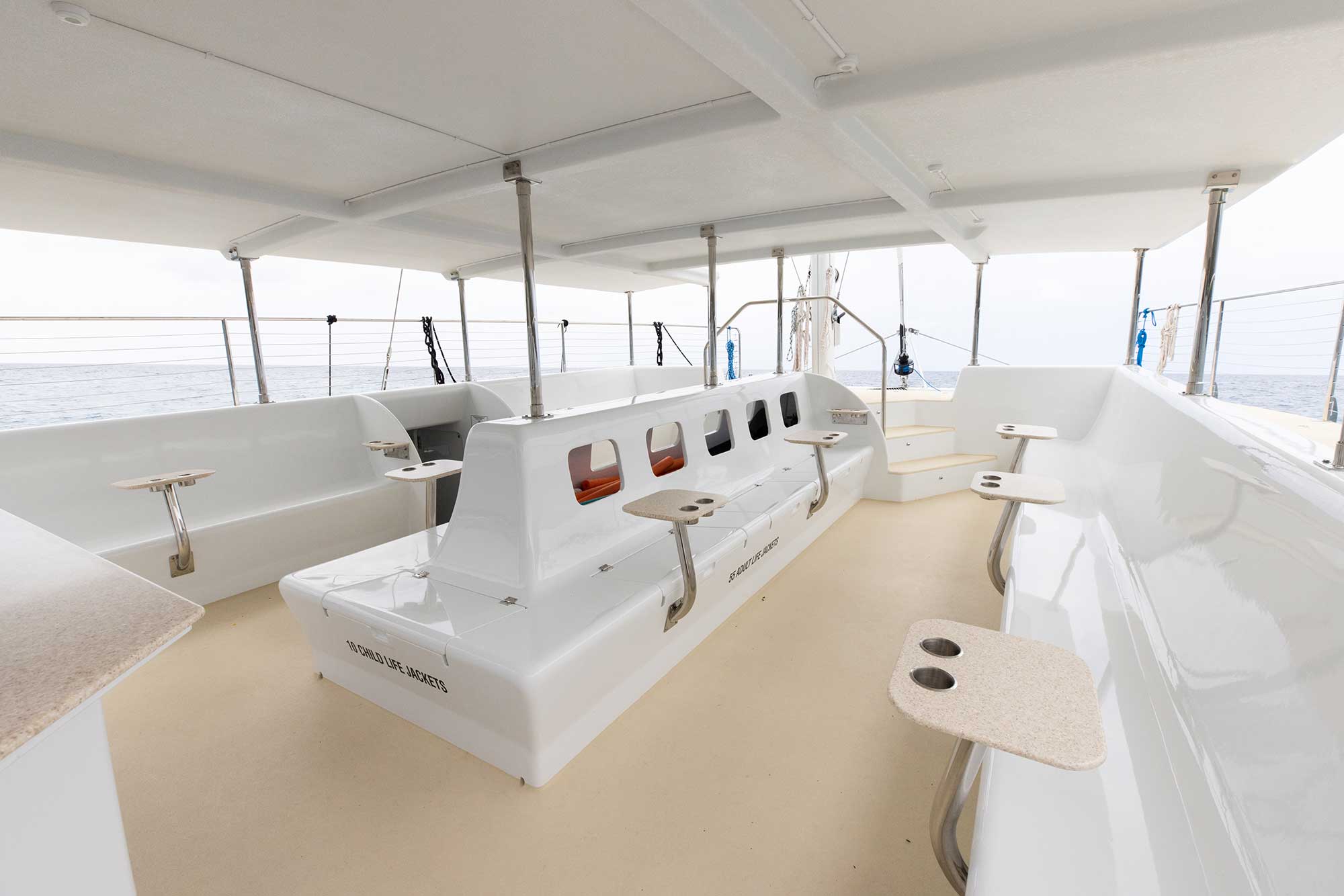
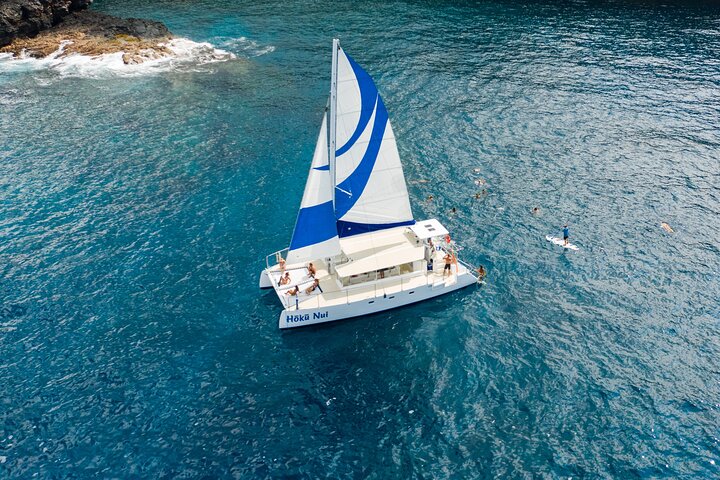
Sea Paradise Hawaii transports guests aboard the Hoku Nui, a 50-foot luxury sailing catamaran.
The wide twin-hull vessel provides more stability and deck space than many small RIB-style boats and includes shaded seating, freshwater showers, two spacious restrooms/changing rooms and wide stairways for water entry.
That matters before the snorkel.
And it matters even more when you climb out of the Pacific after dark.
Don’t be misled by imitators offering what sounds like an identical manta experience.
Look closely at the boat.
Look closely at the operator.
And look at how long they’ve actually been doing it.
Experience Kona’s Gentle Giants
Kona’s resident manta population is one of Hawaii Island’s extraordinary natural treasures.
More than 450 known individuals, year-round viewing opportunities and 85–95% reported sighting rates have helped make the Kona Coast one of the world’s great places to encounter reef manta rays.
Sea Paradise Hawaii adds more than 40 years of experience and the comfort of the 50-foot Hoku Nui.
For travelers searching for one of the most memorable things to do on the Big Island, few moments compare to floating beneath the stars while one of Kona’s enormous manta rays rises from the darkness below.
Come meet the gentle giants of Kona with Sea Paradise.